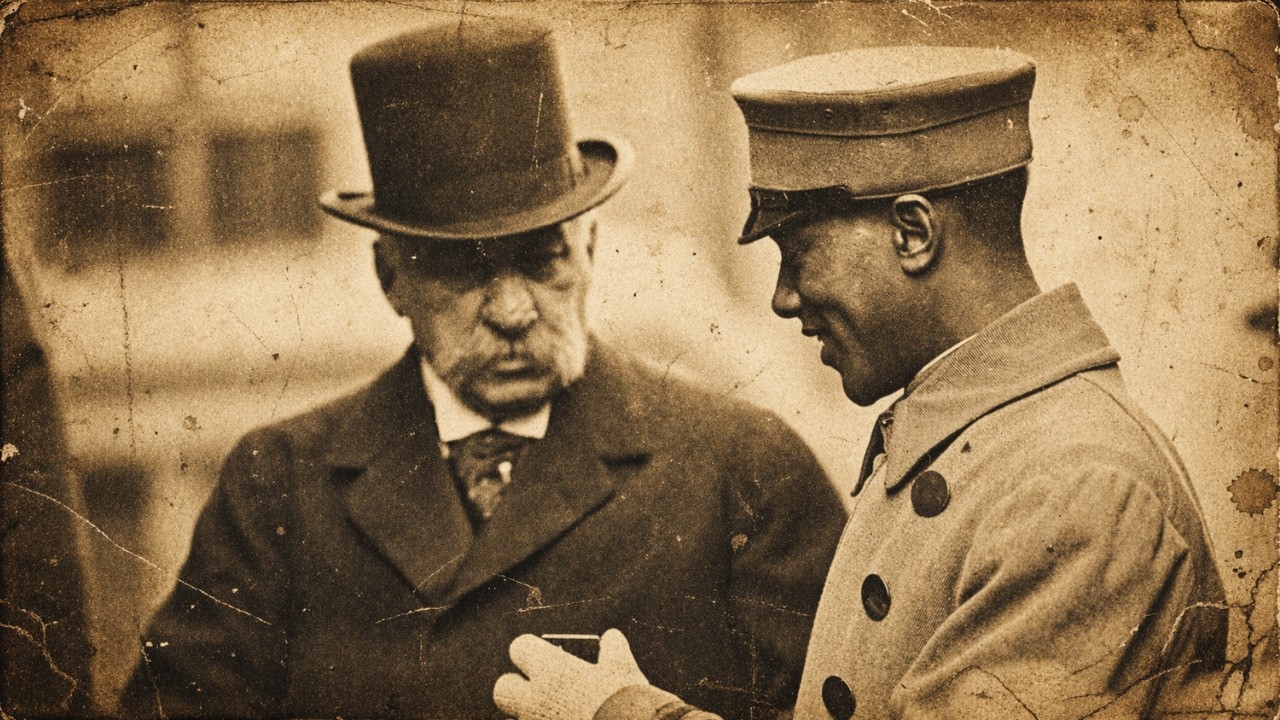
J.P. Morgan was supposed to be on the Titanic.
His private suite was reserved.
His people were booked.
His ship was ready to sail.
Then—
days before departure—
one of the most powerful bankers on Earth canceled.
The explanation was illness.
But the Titanic sailed without him.
John Jacob Astor boarded.
Benjamin Guggenheim boarded.
Isidor Straus boarded.
Three enormously wealthy American businessmen stepped onto the same ship Morgan had decided not to take.
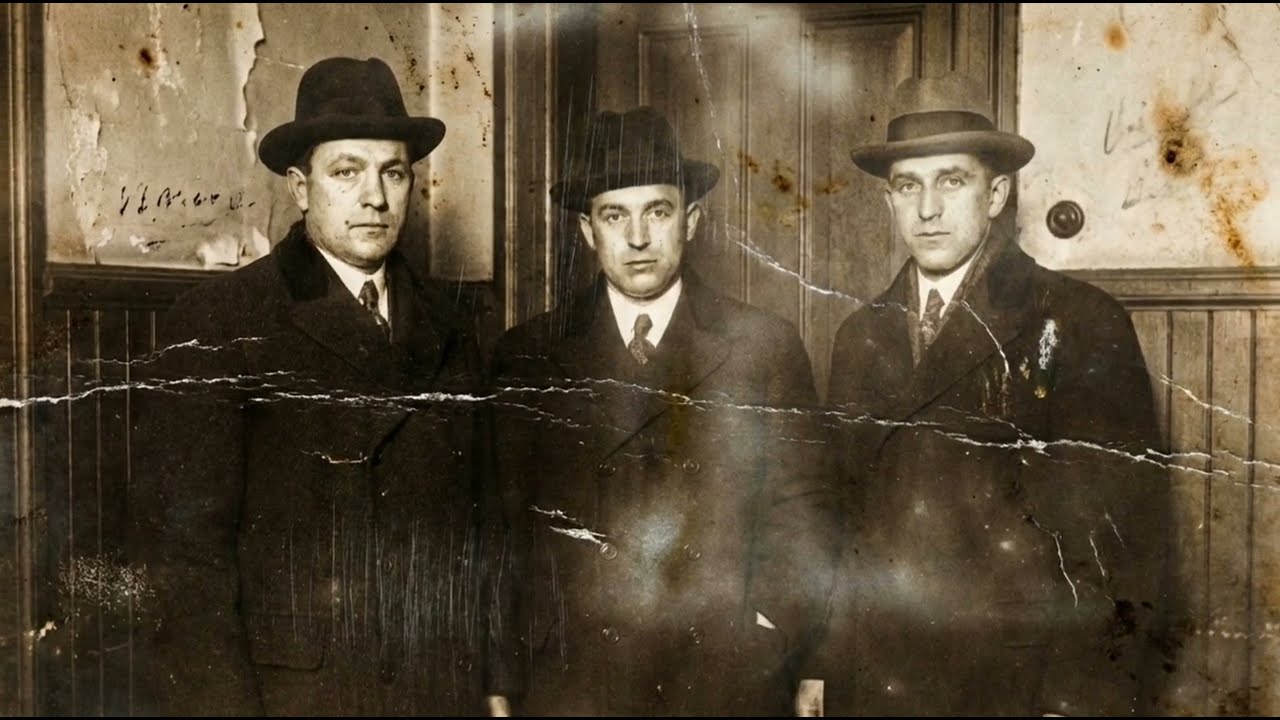
Four days later—
all three were dead.
Morgan was alive.
And eighteen months after the disaster, President Woodrow Wilson signed the Federal Reserve Act.
That sequence has fueled one of the darkest financial theories ever attached to the Titanic.
But before deciding what it means, there is one fact that matters more than all the others:
There is no known document proving Astor, Guggenheim and Straus were organizing together to stop the Federal Reserve.
None.
So this story cannot begin with a verdict.
It begins with a question.
What exactly happened between a secret banking meeting in 1910—
the Titanic disaster in 1912—
and the transformation of American banking in 1913?
Because once those events are placed beside one another, the coincidence becomes almost impossible to ignore.
November 1910.
Jekyll Island, Georgia.
A small group of powerful financial and political figures traveled secretly to an exclusive private club.
Among them were Senator Nelson Aldrich and men connected to some of the most powerful banking interests in America.
They did not want attention.
The trip was deliberately discreet.
Even the participants later acknowledged the secrecy surrounding it.
Their problem was enormous.
America had no modern central bank.
The Panic of 1907 had demonstrated how vulnerable the financial system could become when confidence collapsed.
Banks failed.
Credit froze.
Depositors panicked.
And one man had played an extraordinary role in stopping the catastrophe.
J.P. Morgan.
Morgan gathered powerful bankers and financiers and helped organize private rescues of institutions threatened by the panic.
The episode demonstrated his enormous influence.
But it also exposed something disturbing.
Why should the stability of the American financial system depend so heavily on one private banker?
Banking reform became increasingly difficult to avoid.
At Jekyll Island, the group worked on a proposal for a new reserve system.
The eventual Federal Reserve Act would not simply reproduce their original plan; years of political fighting substantially changed it.
But Jekyll Island became part of the genealogy of America’s new central banking structure.
And because the meeting had been secret—
it became fertile ground for suspicion.
Then, less than two years later, another name connected to enormous financial power entered the story.
J.P. Morgan.
Again.
This time—
because of a ship.
The Titanic belonged to White Star Line.
White Star had been acquired by International Mercantile Marine, the shipping combine associated with J.P. Morgan.
Morgan planned to travel on Titanic’s maiden voyage.
He had accommodation reserved.
Then he canceled.
Why?
His office reportedly attributed the decision to health and personal circumstances.
The cancellation itself is not evidence of wrongdoing.
People cancel voyages.
Plans change.
Powerful businessmen alter schedules.
But what happened next guaranteed that Morgan’s absence would never be remembered as an ordinary cancellation.
April 10, 1912.
Titanic departed Southampton.
Among the first-class passengers was John Jacob Astor IV.
One of the richest men in America.
Astor was forty-seven.
Young by the standards of his social class.
Recently remarried.
His wife Madeleine was pregnant.
He was returning to the United States after months abroad.
Astor possessed extraordinary wealth, social standing and influence.
He boarded at Cherbourg.
Four nights later—
he was standing on the deck of a dying ship.
Nearby was another fortune.
Benjamin Guggenheim.
Mining wealth.
Silver.
Copper.
Industrial power.
When the seriousness of the situation became clear, Guggenheim and his valet reportedly changed into formal evening clothes.
Accounts later attributed a remarkable sentiment to him:
He intended to face death dressed like a gentleman.
He never reached New York.
Then there was Isidor Straus.
Immigrant.
Businessman.
Former congressman.
Co-owner of Macy’s.
His wife Ida was offered an opportunity to leave in a lifeboat.
She reportedly refused to abandon him.
The couple remained together.
Neither survived.
Three enormous fortunes.
Three influential families.
Three men aboard the same ship.
All gone in a single night.
And the man whose financial empire controlled Titanic’s parent company—
wasn’t there.
That is the image that created the mystery.
But it still isn’t proof.
For the theory to work, another claim must be established:
Were these three men actually enemies of the central banking plan?
And here—
the evidence becomes much weaker.
Astor had money.
Guggenheim had money.
Straus had money and political experience.
They certainly possessed the capacity to influence American politics.
But capacity is not the same thing as intent.
The source behind this theory portrays them as potential financial obstacles to the concentration of banking power.
Yet no surviving document cited in the account shows the three men sitting together and declaring:
“We will stop the Federal Reserve.”
No letter.
No joint organization.
No documented anti-Federal Reserve campaign linking all three.
That distinction is critical.
Otherwise a strange coincidence becomes a conclusion before the evidence has earned it.
But the theory doesn’t stop there.
Because Morgan’s cancellation isn’t the only strange detail people have attached to Titanic.
There was another ship.
Olympic.
Olympic and Titanic were sister ships.
Built by Harland and Wolff in Belfast.
Similar enough that casual observers could easily confuse them.
Then, in September 1911, Olympic collided with HMS Hawke.
Olympic was damaged.
Repairs were expensive.
And decades later, an extraordinary theory emerged.
What if White Star secretly switched the identities of Olympic and Titanic?
What if the damaged Olympic sailed under Titanic’s identity so an insurance loss could eliminate a financially troubled vessel?
It’s a sensational theory.
It’s also one for which mainstream Titanic scholarship has not accepted the necessary physical evidence.
The ships had documented structural differences.
Construction records exist.
Photographs exist.
Identification marks and wreck evidence have been examined.
So the “switch theory” cannot responsibly be presented as established history.
But its persistence tells us something important.
People keep returning to Titanic because the disaster contains details that feel almost scripted.
Morgan cancels.
Olympic had already been damaged.
Titanic sails.
Wealthy passengers die.
The ship strikes ice on its maiden voyage.
And another ship is sitting only miles away.
Doing nothing.
That ship was Californian.
And unlike the switch theory—
the controversy surrounding Californian is very real.
Late on April 14, Titanic entered an area where ice warnings had been transmitted.
The ship continued at high speed.
The sea was unusually calm.
There was no moon.
Those conditions could make an iceberg extremely difficult to detect.
The lookouts did not have binoculars available.
Then—
iceberg ahead.
The collision itself lasted moments.
The consequences unfolded for hours.
Titanic began transmitting distress calls.
Rockets were fired into the night.
And somewhere on the horizon, officers aboard Californian saw rockets.
Californian had already stopped because of ice.
Her captain was Stanley Lord.
Crew members informed him about what they were seeing.
Yet Californian did not immediately steam toward Titanic.
That failure became one of the most controversial elements of the disaster.
Why didn’t they move?
Was the ship they observed really Titanic?
How far away was it?
What did they believe the rockets meant?
British and American investigations examined these questions, and Lord’s conduct remained controversial for the rest of his life.
He defended himself repeatedly.
The debate survived him.
But regardless of which interpretation one accepts, the result is horrifyingly simple.
Titanic was sinking.
A nearby ship did not arrive in time.
More than 1,500 people died.
Among them—
Astor.
Guggenheim.
Straus.
And then the financial theory jumps forward.
Not years.
Months.
America was changing rapidly.
In February, the Sixteenth Amendment was declared ratified, giving Congress a durable constitutional foundation for taxing incomes without apportionment among the states.
In April, the Seventeenth Amendment was ratified, establishing direct election of U.S. senators.
And throughout the year, Washington fought over banking reform.
The final Federal Reserve legislation emerged from a long political battle involving competing plans, progressive reformers, bankers, Democrats, Republicans and President Woodrow Wilson.
It was not simply the Jekyll Island plan copied into law.
But the basic problem discussed years earlier remained:
America wanted a banking system capable of responding to financial panics and providing a more elastic currency.
December 23, 1913.
Congress approved the Federal Reserve Act.
Wilson signed it that evening.
And this date became the final piece in the Titanic conspiracy narrative.
Jekyll Island.
November 1910.
Titanic.
April 1912.
Federal Reserve Act.
December 1913.
Three events.
Three years.
Place them on a screen one after another and they look devastating.
But timelines can create illusions.
The important question isn’t whether the dates line up.
They do.
The question is whether someone caused the middle event in order to produce the final one.
And that requires evidence the timeline alone cannot provide.
A plan.
Communication.
Operational decisions.
Money.
Orders.
Correspondence.
Something connecting the banking battle directly to Titanic’s sinking.
Without that—
we have coincidence, unanswered questions and speculation.
Not proof of murder.
Yet one detail keeps the story alive.
J.P. Morgan really did cancel.
Titanic really was connected to his shipping combine.
Astor, Guggenheim and Straus really did die.
Jekyll Island really happened.
The Federal Reserve really followed.
And that mixture of documented fact and missing connection is precisely what makes the theory so powerful.
Because the human mind hates an unfinished pattern.
But there is another problem with the theory.
It sometimes portrays the Federal Reserve as though a handful of private bankers simply seized America’s money supply on December 23, 1913.
The reality is more complicated.
The Federal Reserve System combines public governmental authority with regional Reserve Banks possessing an unusual quasi-public structure.
Its Board of Governors is a federal agency.
The twelve regional Reserve Banks have member banks that hold required stock, but that stock does not operate like ordinary corporate ownership.
That distinction matters.
Because if we exaggerate what happened in 1913, we weaken the genuine historical mystery rather than strengthen it.
And the genuine mystery is already compelling enough.
America had experienced devastating banking panics.
Powerful financiers met secretly to design reform.
Congress spent years fighting over what that reform should become.
One of the most powerful bankers in the country controlled the corporate structure above Titanic’s owner.
He canceled his voyage.
Several extremely wealthy men did not.
They died.
Then America’s banking architecture changed.
No conspiracy is required for those facts to be fascinating.
But no serious investigation should pretend that fascination itself is evidence.
So instead of asking:
“Did J.P. Morgan sink the Titanic?”
Ask the harder question:
What evidence would have to exist for us to know?
Morgan’s correspondence.
White Star executive communications.
Insurance records.
Shipyard documentation.
Passenger booking records.
Telegrams.
Financial correspondence from Astor, Guggenheim and Straus.
Records showing whether any of them were actually financing organized opposition to banking reform.
Those documents matter far more than a dramatic timeline.
Because if the three men were genuinely preparing to obstruct central banking legislation—
some trace should exist somewhere.
Not necessarily a manifesto.
But meetings.
Political contacts.
Payments.
Letters.
Lawyers.
Senators.
Organizations.
Money leaves records.
Power leaves records.
Opposition leaves records.
And that’s where the theory faces its most uncomfortable problem.
The dramatic evidence is everywhere.
The connective evidence is not.
There is one final legend worth mentioning precisely because it shows how quickly Titanic accumulated mythology.
The mummy.
For generations, stories claimed Titanic carried a cursed Egyptian mummy or priestess connected to a chain of previous disasters.
The story became famous.
But the British Museum has rejected the claim that its so-called “Unlucky Mummy” was aboard Titanic.
Why does that matter?
Because Titanic became more than a shipwreck almost immediately.
It became a canvas.
People projected fears onto it.
Class.
Technology.
Greed.
Arrogance.
Fate.
Capitalism.
Superstition.
Financial power.
The supposedly unsinkable ship disappearing beneath black water on its maiden voyage was almost too symbolic to remain merely an accident.
People needed it to mean something.
And once that happens—
every coincidence becomes tempting.
Morgan’s cancellation.
Astor’s death.
Guggenheim’s death.
Straus’s death.
Californian’s failure to arrive.
Jekyll Island.
December 1913.
Put them together carelessly and you can manufacture certainty.
Put them together carefully—
and you get something much more interesting.
A genuine historical puzzle about the difference between what happened—
and what we can prove about why it happened.
At 2:20 in the morning on April 15, 1912, Titanic disappeared beneath the North Atlantic.
The water closed over the ship.
John Jacob Astor never returned home.
Benjamin Guggenheim never returned home.
Isidor and Ida Straus never returned home.
J.P. Morgan lived another eleven months.
He died in Rome in March 1913.
He did not live to see President Wilson sign the Federal Reserve Act that December.
That fact alone complicates the neatest version of the conspiracy.
History usually does.
The closer you look, the less perfectly the pieces fit.
And perhaps that is exactly why this story survives.
Because there is enough truth to make you uncomfortable.
Enough coincidence to make you suspicious.
Enough missing evidence to stop you from proving the darkest conclusion.
And one image that refuses to disappear:
April 1912.
The world’s most famous ship pulls away from Europe.
Three enormously wealthy men are aboard.
The financial titan connected to the company that owns her—
has canceled.
Four nights later, the ship is gone.
The three men are gone.
And within twenty months, America has a new central banking system.
Coincidence?
Possibly.
Conspiracy?
The surviving evidence doesn’t prove it.
But somewhere between those two answers lies the reason people are still opening century-old passenger lists, banking records and congressional documents—
looking for the one piece of paper that would finally tell us whether J.P. Morgan was simply lucky…
or whether someone knew far more before Titanic sailed than history has ever been able to prove.