Thomas Jefferson was refused.
Not by Congress.
Not by a bank.
Not by a foreign government.
By a group of carpenters.
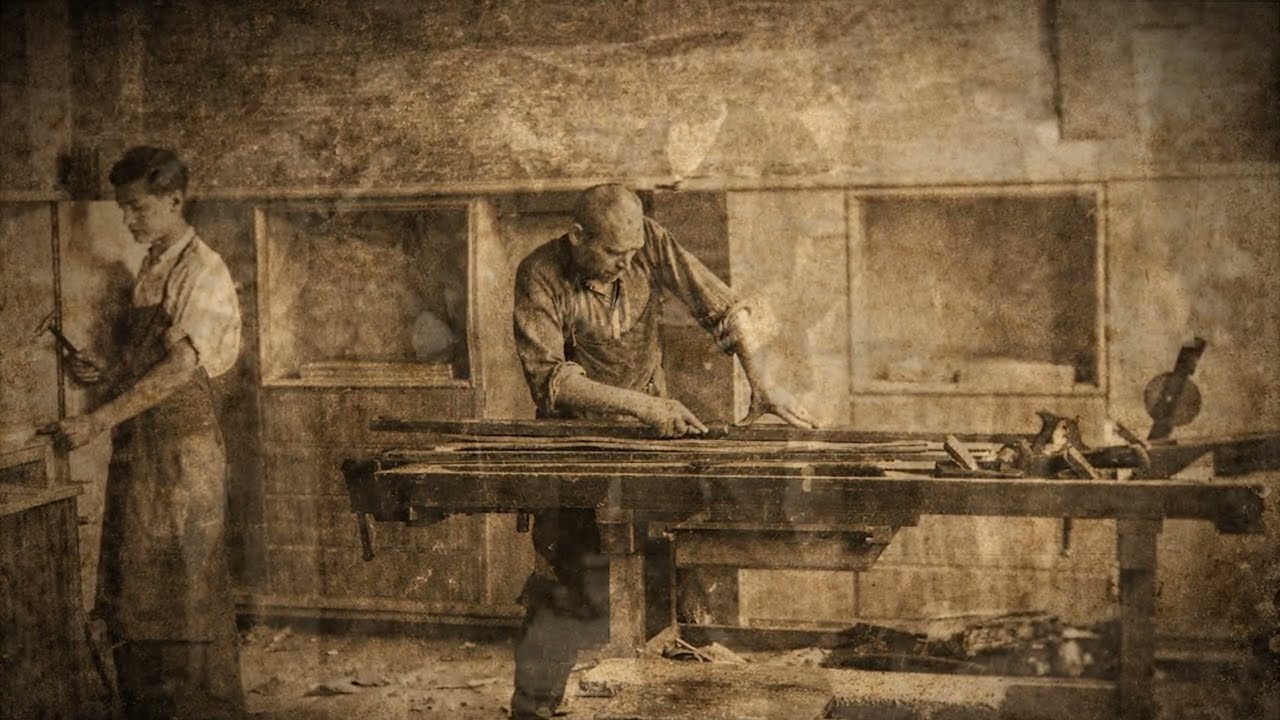
In 1817, the former President of the United States asked the Carpenters’ Company of Philadelphia for a copy of one of its pricing books.
They said no.
Jefferson had designed Monticello.
He had studied architecture for decades.
He had served as governor, diplomat, secretary of state and president.
None of that mattered.
The book was for members.
And inside it was something Jefferson apparently wanted badly enough to request personally:
The rules by which skilled craftsmen calculated what work should cost.
Not whatever a desperate customer could be persuaded to pay.
Not a price dictated by a distant financial institution.
A system developed and guarded by the craftsmen themselves.
That refusal sounds trivial.
It isn’t.
Because once you begin following that book through American history, you run into a much larger question.
Before national banks dominated American finance—
before standardized national banknotes—
before mortgages, payroll systems and financial institutions stood between so many Americans and the things they needed—
how did ordinary people actually build houses, finance work, pay craftsmen and organize economic life?
And why, beginning during the Civil War, did so much of that system change?
The tempting answer is conspiracy.
That someone deliberately destroyed an older economic order.
The historical evidence does not establish something that simple.
But the transformation itself was real.
And the deeper you follow it—
the stranger the story becomes.
It begins in Philadelphia.
More than fifty years before American independence.
A group of master builders organized what became the Carpenters’ Company of the City and County of Philadelphia.
Do not picture a modern corporation.
No quarterly earnings call.
No anonymous shareholders demanding returns.
This organization belonged to craftsmen.
Builders.
Carpenters.
Men whose reputations depended on structures remaining standing long after they had been paid.
They regulated professional standards.
Shared technical knowledge.
Trained younger craftsmen.
And maintained price books used to calculate construction work.
The system was built around expertise.
A young craftsman did not simply declare himself a master carpenter.
He learned under experienced men.
Apprenticeship could consume years of his life.
He learned wood.
Joinery.
Measurement.
Construction.
Materials.
Estimating.
And perhaps most importantly—
judgment.
Because a building was not a disposable product.
If you built badly, the evidence remained in the community.
Everyone could see it.
Your reputation lived inside your work.
And reputation mattered because economic life was intensely local.
The person building your house might worship beside you.
Buy food from your neighbor.
Hire your son.
Know your father.
Borrow from someone you knew.
Sell to someone who knew whether your word meant anything.
That produced a form of economic discipline modern Americans rarely experience.
If you cheated someone today, you may never see them again.
In an eighteenth-century community—
you might see them every week for the rest of your life.
And the Carpenters’ Company tried to formalize part of that trust.
Its price books established standardized ways to measure and price construction work.
Work could be evaluated according to agreed units.
Measurements mattered.
Established rates mattered.
Skilled measurers could determine the value of completed work.
This did not eliminate conflict.
It did not create some perfect pre-capitalist utopia.
But it created something fascinating:
A trade attempting to regulate fairness from inside the profession itself.
And the men operating within that system built some of the most important structures in early America.
Carpenters’ Hall.
Construction began in 1770.
Four years later, delegates of the First Continental Congress met there.
Members of the company were also connected to major Philadelphia building projects, including the Pennsylvania State House complex we now associate with Independence Hall.
The buildings survived.
The organization survived.
And the price books survived.
But Jefferson couldn’t have one.
Why?
The simplest explanation is professional control.
Trade knowledge had value.
Membership had value.
The rules belonged to the organization.
But the episode also reveals something easy to miss about early America.
Economic authority did not always flow downward from government or outward from banks.
Sometimes it lived inside associations.
Trades.
Churches.
Families.
Neighbors.
Local institutions.
And money itself worked differently.
In colonial America, currency could be painfully scarce.
People still worked.
Buildings still rose.
Farms still produced.
Goods still moved.
So how?
Barter.
Book credit.
Commodity money.
Private arrangements.
Local paper currencies.
Promises recorded between people who expected to deal with one another again.
A Bureau of Labor Statistics study of historical wages later described barter as widespread during the early settlement period, when scarce currency played a limited role in many wage payments.
That does not mean everyone simply traded chickens for chairs.
Economic arrangements could be sophisticated.
A craftsman performs work today.
The customer owes him.
The debt is recorded.
Perhaps it is settled later in cash.
Perhaps in goods.
Perhaps through another transaction.
Credit exists—
without a modern credit card.
Financing exists—
without a national consumer-finance corporation.
Trust itself becomes part of the infrastructure.
Then add banks.
Before the Civil War, America had no single uniform national paper currency comparable to what would emerge afterward.
State-chartered banks issued notes.
Thousands of different designs circulated.
A note from one bank might trade at full value nearby—
and at a discount hundreds of miles away.
Another bank might fail—
turning its notes into worthless paper.
Counterfeiting complicated everything further.
Merchants used bank-note reporters to determine what unfamiliar currency might actually be worth.
To modern eyes, this looks chaotic.
And sometimes it was.
Bank failures hurt people.
Counterfeits spread.
Discounts varied.
Financial panics could be devastating.
But here is the important distinction:
Disorder does not mean nothing functioned.
America still built.
Traded.
Expanded.
Manufactured.
Farmed.
And communities used multiple mechanisms simultaneously to keep economic life moving.
Money was only one layer.
Reputation was another.
Local credit another.
Guild and trade relationships another.
Family another.
Community another.
That is the world Jefferson’s mysterious pricing book belonged to.
Then America entered the Civil War.
And Washington suddenly needed money on a scale the old system had never been designed to provide.
That is where the story changes.
Fast.
February 25, 1863.
Abraham Lincoln signed the National Currency Act.
The Senate vote had been extraordinarily close.
23 to 21.
Two votes separated passage from defeat.
And behind the legislation was an emergency larger than currency.
War debt.
The Union was spending staggering amounts of money.
Armies had to be fed.
Uniformed.
Transported.
Armed.
Railroads supplied.
Ships constructed.
Soldiers paid.
Washington needed buyers for federal debt.
Treasury Secretary Salmon P. Chase helped build a system that connected banking directly to that need.
Banks entering the new national system would purchase United States government bonds.
Those bonds would be deposited as security.
National banknotes could then be issued against them under federal rules.
That relationship mattered enormously.
Government debt supported the currency.
And the currency system created demand for government debt.
The two became connected.
So was the National Currency Act about stabilizing America’s chaotic banknote system?
Yes.
Was it also about financing the Union government?
Absolutely.
Those explanations are not mutually exclusive.
The dangerous mistake is pretending only one existed.
The Civil War required a more powerful fiscal machine.
The national banking system became part of that machine.
Then Washington did something that made the transformation much harder to reverse.
It attacked the competing currency.
State-bank notes.
Congress eventually imposed a 10 percent tax on notes issued by state banks.
The effect was devastating.
Issuing those notes became economically unattractive.
State-bank currency rapidly disappeared from ordinary circulation.
Within only a few years—
one of the most visible features of the old monetary world had largely vanished.
Think about the speed of that transformation.
Before the Civil War:
Thousands of different banknotes.
Afterward:
A national banking framework tied to federal bonds.
The country had not merely changed its money.
It had changed where monetary authority lived.
And only nine months before Lincoln signed the National Currency Act—
he had signed another law that would transform the country.
The Homestead Act.
May 20, 1862.
160 acres.
A filing fee.
Live on the land.
Improve it.
Meet the requirements.
Eventually claim ownership.
It became one of the most powerful promises in American mythology.
Free land.
Go west.
Build something.
Own it.
But “free” concealed a brutal economic reality.
Land itself might be inexpensive to claim.
Making that land productive was not.
You needed tools.
Seed.
Animals.
Building materials.
Food while waiting for crops.
Transportation.
Equipment.
Time.
A family could acquire the legal opportunity to own land—
and still lack the capital necessary to survive on it.
A piece of paper could give you 160 acres.
It could not give you a plow.
Or livestock.
Or seed.
Or a house.
Or enough food to survive a failed harvest.
Many homestead claims were abandoned.
So place the two laws beside each other.
1862:
The federal government dramatically expands access to western land.
1863:
The federal government restructures national banking during a wartime debt crisis.
Does that prove the banking legislation was secretly created to force homesteaders into debt?
No.
The source does not establish that.
But putting the laws beside each other reveals the larger transformation happening simultaneously.
America was opening enormous amounts of land—
while constructing a far more centralized financial system capable of moving capital across an expanding continental economy.
Land needed development.
Development required capital.
Capital increasingly moved through institutions operating inside a national framework.
The frontier and the financial system were growing together.
Then industrialization accelerated.
And the economic relationship between worker and community began changing again.
Picture the craftsman of the earlier system.
He owns tools.
He possesses a skill.
His reputation belongs to him.
His customer knows him.
Payment may be negotiated through cash, goods or credit.
Now picture the industrial worker of the late nineteenth century.
The company owns the mine.
The company owns the house.
The company owns the store.
And sometimes—
the company even controls the money.
Company scrip.
Workers in some industrial communities received private substitutes for currency redeemable primarily within the employer’s economic system.
You work for the company.
The company pays you.
Then you take the payment—
back to the company.
Food.
Housing.
Supplies.
Everything flows through the same institution.
This was especially notorious in mining communities.
The old song would later summarize the trap perfectly:
You work.
You owe.
You cannot get ahead.
The problem wasn’t merely low wages.
It was dependence.
If your employer is also your landlord—
your merchant—
your creditor—
and the issuer of the medium in which you are paid—
leaving becomes far more difficult.
Debt can become a chain without ever looking like one.
By the late nineteenth century, company towns existed across industrial America.
Some were paternalistic experiments intended to provide orderly housing and services.
Others became infamous for exploitation.
Then one company town became a national symbol.
Pullman.
George Pullman built an industrial town outside Chicago around his railroad sleeping-car company.
Homes.
Shops.
Public spaces.
Everything carefully controlled.
To outsiders, it could look like industrial order made physical.
Then the depression of the 1890s struck.
Pullman cut wages.
But workers complained that rents and other costs did not fall enough with them.
The anger exploded.
Strike.
Then boycott.
Rail traffic was disrupted across enormous portions of the country.
Federal intervention followed.
Violence followed.
People died.
And a federal commission investigating the conflict sharply criticized Pullman’s system.
The dream of the perfectly controlled company town had revealed its darker side.
A worker whose economic life was concentrated under one employer could become terrifyingly vulnerable when that employer changed the terms.
Compare that with the earlier local system.
The guild did not necessarily employ every craftsman.
The neighbor extending credit did not necessarily own your house.
The person purchasing your work did not necessarily issue your currency.
Industrialization concentrated relationships that had previously been distributed.
That concentration created enormous productive power.
Factories could build more than guild workshops ever could.
Railroads could connect markets no local barter network could reach.
National banking could mobilize capital on a scale community credit never could.
America became richer.
More productive.
More connected.
But something had changed.
Efficiency increased.
Distance increased too.
The person controlling your economic future increasingly might not know your name.
And this is where the story becomes tempting to oversimplify.
It would be easy to say:
The old system was good.
The new system was evil.
History does not cooperate.
The guild world had exclusion.
Apprenticeships could be restrictive.
Women and racial minorities faced enormous barriers.
Local credit could collapse.
Banknotes could become worthless.
Economic opportunity depended heavily on geography, family and social standing.
The national system solved real problems.
It created standardized currency.
Mobilized wartime finance.
Expanded national credit.
Helped integrate a continental economy.
But solving one problem can create another.
And one small American community offers a fascinating example of what happened to economic arrangements that remained deliberately local.
The Amish.
When an Amish family faces a major financial burden—
the first response may not resemble modern commercial insurance.
Community responsibility matters enormously.
Members contribute.
Families help one another.
Church districts organize assistance.
The principle is old:
Risk is shared by people who know one another.
That philosophy eventually collided with the federal Social Security system.
Many Amish objected on religious grounds to participating in government insurance programs when their faith required their own communities to care for members.
The conflict lasted years.
Eventually Congress created an exemption for qualifying members of certain religious groups.
Today, eligible individuals can apply using IRS Form 4029 for exemption from Social Security and Medicare taxes under specific conditions.
But be careful with what that proves.
It does not prove that Congress outlawed America’s entire earlier mutual-aid economy.
It does prove something narrower and more interesting:
A modern national social-insurance system can collide with communities whose internal economic obligations operate according to fundamentally different assumptions.
One system says:
Pool risk nationally through compulsory contributions.
The other says:
Our religious community assumes responsibility directly.
Both are systems of shared obligation.
But authority resides in different places.
Government.
Or community.
And that returns us to Jefferson.
Because the real thread running through this story is not simply money.
It is authority.
Who decides what work is worth?
Who decides who may practice a trade?
Who extends credit?
Who guarantees the debt?
Who issues money?
Who carries risk?
Who helps you when something goes wrong?
In early America, many of those answers could be local.
Guild.
Church.
Family.
Neighbor.
State bank.
Employer.
Merchant.
By the late nineteenth and twentieth centuries, more of those relationships increasingly passed through larger institutions.
National banks.
Corporations.
Federal programs.
Insurance systems.
Capital markets.
The transformation was not one moment.
1863 mattered enormously.
But America did not wake on February 26 with guilds suddenly erased and national banks controlling every transaction.
The change unfolded across decades.
Industrialization.
Urbanization.
Railroads.
Corporations.
Federal taxation.
Banking reform.
Mass production.
Wage labor.
All of them pushed economic life toward larger systems.
And then the source points toward one final mystery.
The records.
Genealogists know the frustration.
Follow an American family backward through the twentieth century and the trail can be remarkably detailed.
Addresses.
Birth certificates.
Draft registrations.
Census records.
Marriage records.
Occupations.
Then move deeper into the nineteenth century—
and the trail becomes harder.
For Black American families, the problem becomes especially severe before emancipation because enslaved people were often not individually named in federal population schedules.
The 1870 census therefore holds extraordinary importance.
It was the first federal census after emancipation and the first in which millions of formerly enslaved Americans appeared by name in the population schedules.
Then comes another gap.
Most of the 1890 federal population census is gone.
A 1921 fire in the Commerce Department building severely damaged surviving records.
Other losses and administrative decisions followed.
By the 1930s, most of what remained had been destroyed.
For genealogists—
the loss is devastating.
The missing census sits almost exactly where researchers desperately want more information about families emerging from Reconstruction and entering industrial America.
But does the destruction of the 1890 census prove somebody intentionally erased evidence of an older economic system?
No.
The source does not establish that.
And this is where the story becomes more powerful if we resist the conspiracy.
Because we don’t need one.
The documented transformation is already enormous.
America really did move from intensely local networks of production and credit toward national banking.
The Civil War really did accelerate federal financial power.
National bank currency really did displace state-bank notes.
Industrialization really did move millions from independent and small-scale production into wage labor.
Company towns really did concentrate economic control.
Mutual-aid traditions really did survive in communities such as the Amish.
And vast portions of the documentary record really have disappeared.
Those facts are dramatic enough.
The mystery is not whether a secret group met somewhere and decided to erase the old America.
The more interesting question is how an economic system can disappear without anyone needing to destroy it deliberately.
One law changes banking.
Another expands land settlement.
A railroad connects distant markets.
A factory replaces workshops.
A corporation employs thousands.
Wages replace barter.
National currency replaces local notes.
Insurance replaces mutual aid.
Professional licensing replaces some guild functions.
Banks scale credit.
People move away from the communities where everyone knew their reputation.
One generation grows up inside the old system.
The next grows up inside both.
The third knows only the new one.
Then eventually—
the old way begins to look impossible.
Primitive.
Chaotic.
Unrealistic.
Until someone opens an old book—
or finds an old chair.
An oak chair.
Built sometime in the 1840s.
Almost two centuries later—
still level.
No wobble.
No creak.
The craftsman who built it is probably gone from memory.
His workshop may be gone.
His account books may be gone.
His customers are gone.
The economic network around him is gone.
But the chair remains.
And perhaps that is the most unsettling evidence in this entire story.
Not evidence of a conspiracy.
Evidence of a different relationship with work.
A craftsman knew that the object carried his reputation.
A community knew what his labor was worth.
Credit could exist between people who knew each other.
Economic relationships could be personal enough that cheating someone meant living beside the person you cheated.
Then scale changed everything.
America gained enormous things from that scale.
National markets.
Industrial power.
Mass production.
Standardized money.
Access to capital.
Infrastructure impossible for small communities to finance alone.
But scale always has a price.
The farther economic authority moves from the people inside the transaction—
the more rules, intermediaries and institutions are required to replace the trust that distance destroyed.
That may be what Jefferson’s rejected request really reveals.
A former President of the United States asked for the rules.
The craftsmen said no.
Because in their world—
Washington did not automatically outrank the trade.
The authority belonged to the people who had spent their lives learning the work.
And less than fifty years later—
America would begin building a financial system powerful enough to connect the entire continent.
Maybe nobody “made us forget” the old system.
Maybe something stranger happened.
It became unnecessary to remember it.
The guild disappeared.
The local notes disappeared.
The community credit disappeared.
The craftsmen died.
The records burned.
The institutions grew.
And eventually—
all that remained was an oak chair that still didn’t wobble—
and a pricing book that even Thomas Jefferson wasn’t allowed to read.