They broke his body on a wheel.
Tore at his flesh with burning pincers.
Crushed his limbs.
Cut off his head.
Then burned what remained.
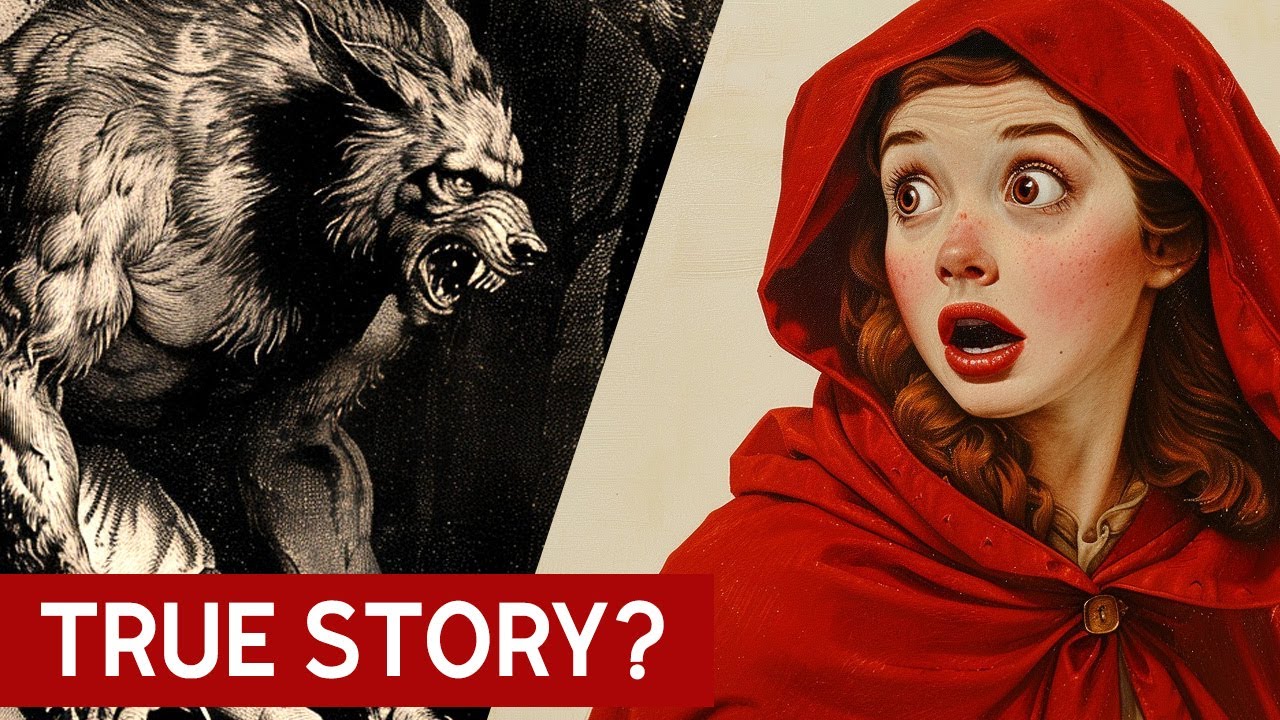
And when the execution was finally over, authorities placed the severed head of Peter Stump above the figure of a wolf—
as a warning to everyone who passed.
The year was 1589.
Stump had confessed to crimes so horrifying that pamphlets carrying his story spread across Europe.
He claimed Satan had given him a magical belt that transformed him into a monstrous wolf.
He confessed to murdering and devouring children.
Attacking women.
Killing livestock.
Practicing black magic.
Even cannibalism.
But there was one enormous problem.
His confession came under torture.
We may never know how much of the story was true.
Yet the legend escaped the execution ground.
And some have wondered whether men like Peter Stump—and the werewolf panic surrounding his era—helped create one of the most famous monsters ever placed inside a children’s story.
The wolf from Little Red Riding Hood.
Because long before there was a little girl skipping through the forest with a basket—
long before a hunter cut open the wolf and rescued Grandmother—
an older version of the story contained something much darker.
A werewolf.
A murdered grandmother.
A girl unknowingly eating her flesh and drinking her blood.
Then removing her clothes—
one piece at a time—
before climbing into bed with the creature.
This was not originally the bedtime story most of us remember.
And perhaps most disturbing of all—
the wolf may never have been meant to represent an animal.
He may have represented a man.
Today, Little Red Riding Hood feels almost harmless.
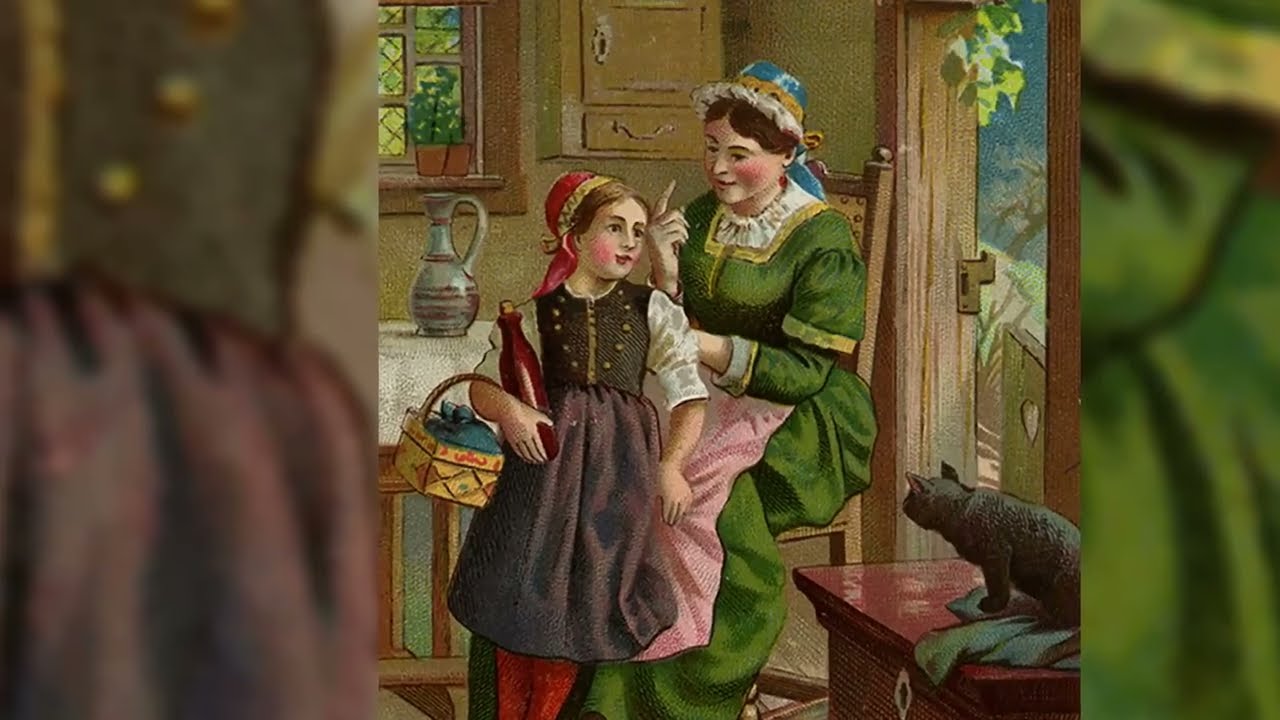
A mother sends her daughter through the forest to visit her sick grandmother.
The girl carries food.
Her mother warns her:
Stay on the path.
Don’t talk to strangers.
Then the wolf appears.
He questions her.
Discovers where Grandmother lives.
Distracts the girl with flowers.
Then races ahead.
Grandmother is swallowed.
The wolf puts on her clothes.
Climbs into her bed.
And waits.
Little Red Riding Hood eventually arrives.
Something feels wrong.
Grandmother looks different.
Then comes one of the most recognizable exchanges in Western storytelling.
What big ears you have.
What big eyes you have.
What big hands you have.
And finally—
what a terribly big mouth you have.
“All the better to eat you with.”
The wolf attacks.
In the version popularized by the Brothers Grimm, he swallows the girl.
Then falls asleep.
A huntsman arrives.
Hears the strange snoring.
Finds the wolf.
Cuts open its belly.
Little Red Riding Hood emerges alive.
Then Grandmother.
They fill the wolf with stones.
When he awakens and tries to escape—
the weight kills him.
The child survives.
Grandmother survives.
The predator dies.
Order is restored.
And Little Red Riding Hood learns the lesson:
Obey your mother.
Don’t wander from the path.
Don’t trust strangers.
A perfect children’s warning.
Except—
that wasn’t the warning in one of the most important earlier literary versions.
Because more than a century before the Grimms published their tale—
Charles Perrault’s Little Red Riding Hood had no heroic huntsman.
No miraculous rescue.
And no happy ending.
The wolf wins.
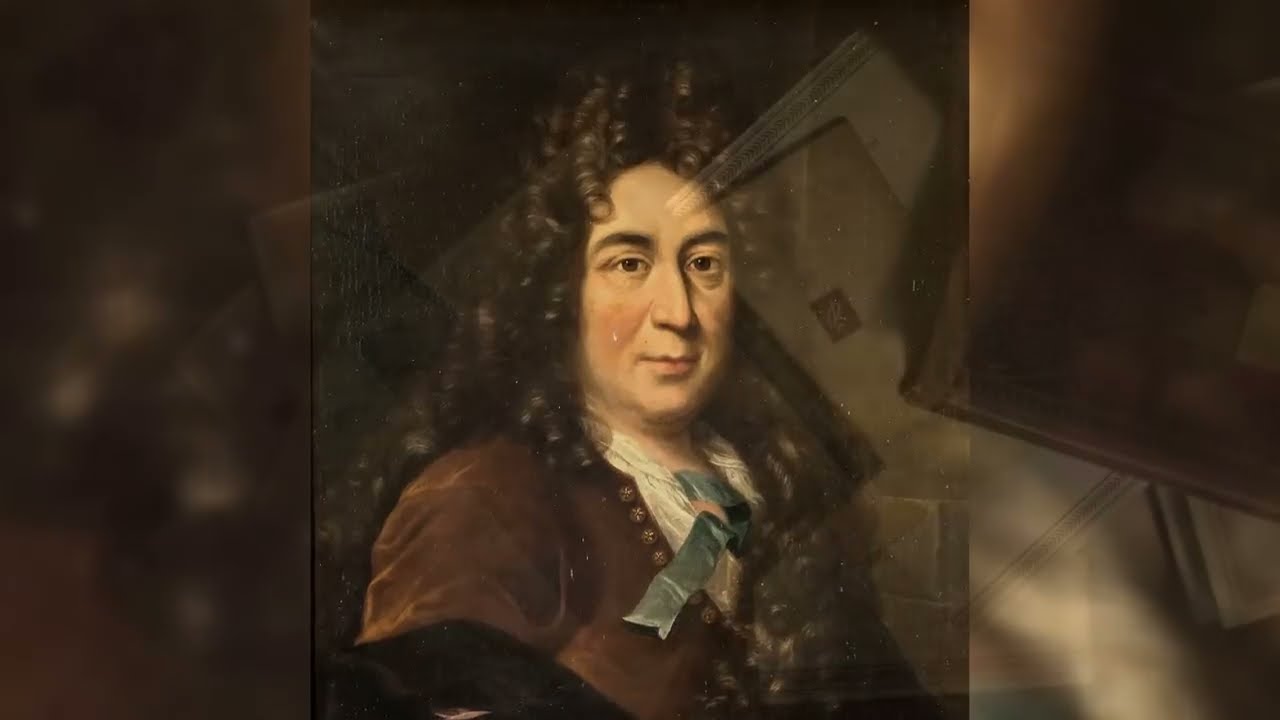
In 1697, Charles Perrault published Le Petit Chaperon Rouge.
His heroine was young, innocent and strikingly beautiful.
And Perrault added something that would become inseparable from her forever.
Red.
Before this literary version, the heroine was not necessarily identified by the famous red hood familiar today.
Perrault transformed the garment into her identity.
But his story was far more adult than many later adaptations.
The wolf reaches Grandmother first.
Kills and eats her.
Then waits in bed.
Little Red Riding Hood arrives.
And the scene becomes increasingly uncomfortable.
The wolf invites her into bed.
She removes her clothes.
Then joins him.
Only after she is beneath the covers does the famous examination begin.
Arms.
Legs.
Ears.
Eyes.
Teeth.
Then the wolf devours her.
End.
No woodsman bursts through the door.
Nobody cuts open the wolf.
The girl does not return home.
Perrault then explains the moral.
And suddenly—
the wolf stops looking like a wolf.
He warns young women about strangers.
Especially charming ones.
Polite ones.
Quiet ones.
Sweet ones.
Men who follow young women into homes and streets.
Because, Perrault essentially warns—
the most dangerous wolves may be the ones who don’t look dangerous.
Now the entire story changes.
The forest is no longer merely a forest.
The wolf is a predator in more than one sense.
And Little Red Riding Hood becomes a warning about sexual danger.
Seduction.
Trust.
And the vulnerability of young women.
This interpretation fits the aristocratic world Perrault knew.
He spent time around the court of Louis XIV.
Marriage, reputation and sexuality carried enormous social consequences.
Young women from elite families were expected to guard their virtue carefully.
A charming man could destroy a woman’s future without ever showing fangs.
So Perrault gave the predator a wolf’s face.
And he gave the girl—
red.
That color has generated centuries of interpretation.
Red could represent danger.
Sin.
Sexuality.
Maturity.
Blood.
Some later scholars have connected the cloak with puberty and menstruation.
Others warn against assuming every color choice hides a coded sexual message.
But once Perrault places a young woman in red—
undressing beside a wolf—
the imagery becomes difficult to ignore.
Yet even Perrault’s version was not the darkest form of the story.
Because behind it lies an older oral tradition often called:
The Story of Grandmother—
or The False Grandmother.
And there—
the wolf becomes something else entirely.
A girl is traveling toward her grandmother’s home.
At a crossroads—
she meets a werewolf.
Not simply a talking animal.
A creature capable of existing somewhere between human and wolf.
He asks which path she intends to take.
The path of needles?
Or the path of pins?
She chooses one.
The werewolf chooses another.
He reaches Grandmother first.
Then kills her.
But unlike the familiar fairy tale—
he doesn’t simply swallow her.
He prepares what remains.
When the girl arrives, food is waiting.
Meat.
Drink.
She begins eating.
Then a cat reveals the horror.
The girl is consuming her own grandmother.
Flesh.
Blood.
A grotesque meal.
A reversal of family.
A parody of sacred ritual.
Then the werewolf calls her toward the bed.
She begins undressing.
One garment at a time.
“What should I do with my apron?”
Throw it into the fire.
“What about my dress?”
Into the fire.
Her skirt.
Her stockings.
Everything.
Burned.
Piece by piece, the girl eliminates every barrier between herself and the creature waiting in bed.
Then she joins him.
And the familiar questions begin.
But something has changed.
The girl is not quite as helpless as Perrault’s heroine.
She realizes she is in danger.
She tells the werewolf she needs to go outside.
He refuses.
She insists.
Finally, he allows it—
but ties a rope to her ankle so she cannot escape.
Outside, the girl sees her chance.
She unties the rope.
Fastens it to something else.
Then runs.
The creature waits.
Eventually realizes what she has done.
And gives chase.
But the girl reaches safety.
No huntsman saves her.
No man arrives with scissors.
She saves herself.
And that may be one of the most important differences in the entire history of Little Red Riding Hood.
The older heroine can recognize the danger—
deceive the predator—
and escape.
Later versions made her more innocent.
More passive.
More dependent upon rescue.
But the older story gave her teeth of her own.
And surrounding that older tale are symbols that would have terrified European audiences during the late medieval and early modern periods.
Crossroads.
Talking animals.
Cannibalism.
Blood.
Werewolves.
The possibility of witchcraft.
The Devil.
This is where the story begins moving away from fairy tale—
and toward the world of actual historical fear.
Because between the fifteenth and seventeenth centuries, Europeans were not merely telling stories about werewolves.
Some were putting alleged werewolves on trial.
Today, when we hear “werewolf,” we imagine a transformation.
Full moon.
Human bones twisting.
Hair erupting from skin.
A man becoming a half-human, half-wolf monster.
Much of that visual language owes more to modern popular culture than to early European belief.
Historical werewolves could be imagined in different ways.
Sometimes a person was believed to transform completely into an ordinary-looking wolf.
Sometimes magical objects enabled the transformation.
Sometimes the werewolf was connected directly with witchcraft or Satan.
The wolf already carried powerful Christian symbolism.
Christ was the shepherd.
The faithful were his flock.
What attacks the flock?
The wolf.
So the animal became an easy metaphor for evil.
Predation.
The Devil.
Then came real criminal cases.
And few were more notorious than Peter Stump.
Or Peter Stumpp.
The alleged Werewolf of Bedburg.
His story erupted across Europe near the end of the sixteenth century.
According to surviving sensational accounts, Stump was a farmer living near Bedburg in Germany.
He appeared outwardly respectable.
Then horrifying accusations emerged.
He was accused of sorcery.
Murder.
Cannibalism.
Incest.
Sexual violence.
And transforming into a wolf.
According to the confession attributed to him, he had practiced dark magic from childhood.
Eventually—
Satan supposedly appeared.
And gave him a magical girdle.
When Stump put it on—
he could transform into the likeness of a powerful wolf.
Large.
Ravenous.
With enormous eyes.
Sharp teeth.
And tremendous strength.
In this form, according to the story circulated after his arrest, he hunted victims.
Children.
Women.
Animals.
The accusations became increasingly grotesque.
He supposedly killed his own son.
Committed incest with his daughter.
Murdered pregnant women.
Devoured human flesh.
To sixteenth-century readers—
Peter Stump wasn’t merely a murderer.
He was every nightmare merged into one body.
Serial predator.
Cannibal.
Sorcerer.
Heretic.
Sexual deviant.
Werewolf.
Servant of Satan.
Then came the execution.
October 31, 1589.
And authorities made sure nobody would forget it.
Stump was placed on a wheel.
His flesh was reportedly torn with heated pincers.
His limbs were broken.
He was beheaded.
His body burned.
His daughter and a woman associated with him were also executed.
Then came the final warning.
A pole.
A wheel.
The image of a wolf.
And Stump’s severed head displayed above it.
This was punishment transformed into theater.
The message was not simply:
This man is dead.
It was:
Look what happens to monsters.
Printed pamphlets carried the story beyond Bedburg.
And that is where the Little Red Riding Hood question becomes irresistible.
Could a notorious “werewolf” accused of attacking women and children have influenced stories about a predatory wolf hunting a young girl?
Possibly.
But we cannot prove it.
And there is another serious problem.
Stump confessed under torture.
That means his confession cannot simply be treated as a reliable criminal record.
Some or many of the atrocities attributed to him may have been exaggerated, coerced or shaped by the religious and supernatural beliefs of his interrogators.
He may have been a murderer.
He may have been an innocent victim of hysteria.
He may fall somewhere between those extremes.
The surviving evidence does not allow certainty.
But whether Peter Stump was truly responsible for every crime attributed to him is almost secondary to his impact as a legend.
Europe heard about a man—
who became a wolf—
and hunted human beings.
That story was real in people’s minds.
And folklore feeds on fear.
But what if the wolf in Little Red Riding Hood did not need to come from an imaginary werewolf at all?
Because Europeans had another reason to fear wolves.
Real ones.
For centuries, wolves and humans competed for territory.
Livestock.
Food.
Space.
Across parts of Europe, governments paid bounties for dead wolves.
Campaigns attempted to eradicate them.
Stories described wolves attacking travelers and children.
Some accounts were exaggerated.
Others were not.
And during periods of war, famine, severe winter or disease—
the boundary between wilderness and settlement could collapse.
One of the most extraordinary wolf stories comes from Paris.
The winter of 1450.
The city had endured years of instability.
Defenses were damaged.
Cold became severe.
And according to later historical accounts, wolves entered the city.
Among them was a particularly famous animal sometimes called Courtaud—
associated with a shortened tail.
Stories portray the pack hunting vulnerable people and terrifying Paris.
Death tolls vary wildly in later retellings and should be treated cautiously.
But the legend became extraordinary.
Imagine the scene.
Not a remote village.
Paris.
People hearing wolves at night.
Animals moving through streets normally occupied by human beings.
The boundary between city and forest erased.
Eventually residents organized.
The wolves were hunted.
The famous leader was killed.
And the threat ended.
Later explanations for unusually aggressive wolf behavior have included starvation and rabies.
Rabies is particularly important.
An infected wolf can behave radically differently from the shy, human-avoiding animal familiar to modern wildlife researchers.
Aggression.
Disorientation.
Attacking without ordinary caution.
Foaming saliva.
Biting repeatedly.
Before anyone understood viruses—
what would such an animal look like?
Possessed.
Cursed.
Demonic.
Now imagine a person bitten by that animal becoming sick.
Agitation.
Confusion.
Hydrophobia.
Hallucinations.
Death.
Without germ theory—
supernatural explanations become understandable.
Perhaps some werewolf legends grew partly from attempts to explain disease.
Perhaps others came from criminals.
Others from wolves.
Others from religious panic.
Folklore rarely has one parent.
And Little Red Riding Hood appears to have inherited from many.
Because pieces of her story may reach much further back than Perrault—
or Peter Stump—
or even medieval Europe.
In Old Norse literature, we find scenes built around disguise and suspicious physical features.
In one famous episode involving Thor and Loki, Thor disguises himself as the goddess Freyja.
The giant Thrym becomes suspicious.
Why does his bride eat so much?
Why do her eyes look so terrifying?
Loki invents explanations.
She hasn’t eaten because she longed to see you.
She hasn’t slept because she longed for you.
The structure feels strangely familiar.
Someone is disguised.
Another person notices physical abnormalities.
Questions follow.
Explanations hide the truth.
Then violence.
Is this the ancestor of:
“What big eyes you have?”
We don’t know.
Similar narrative structures can develop independently.
But the resemblance is fascinating.
Another medieval story tells of a young girl wearing red who encounters a wolf.
Again—
the similarity tempts us.
And stories from the ancient Mediterranean include monstrous figures, wolves, endangered maidens and heroic rescue.
Does that mean Little Red Riding Hood is secretly thousands of years old?
Not necessarily.
Folklore is dangerous territory for anyone demanding a single origin.
Stories borrow.
Merge.
Split.
Travel.
Disappear.
Reappear.
One motif survives while another changes completely.
A wolf may become a werewolf.
Then an ordinary wolf.
A girl without a name becomes Little Red Riding Hood.
A clever survivor becomes an innocent victim.
Then a huntsman appears.
Every generation edits the forest.
And that evolution tells us something extraordinary about the societies telling the story.
The older oral heroine encounters a werewolf—
recognizes danger—
tricks him—
and escapes herself.
Perrault transforms the tale into a sexual warning.
His girl does not escape.
The predator wins.
The moral explicitly warns young women about charming men.
Then the Brothers Grimm reshape it again.
The sexual elements recede.
The girl becomes younger and more childlike.
The lesson moves toward obedience.
Listen to your mother.
Stay on the path.
Don’t talk to strangers.
And a male rescuer arrives to restore order.
Same forest.
Same predator.
Different fear.
That may be the real secret of Little Red Riding Hood.
The story changes because the wolf changes.
For medieval villagers—
the wolf could be an actual animal outside the settlement.
For early modern Europeans—
it could be witchcraft.
A werewolf.
Satan.
For Perrault—
the wolf becomes the charming sexual predator.
For Victorian and later parents—
the wolf becomes the dangerous stranger.
And for modern readers—
he can represent almost anything waiting beyond the safe path.
Violence.
Manipulation.
Sexual danger.
Loss of innocence.
The unknown.
The forest remains because every generation has something it fears inside it.
And that brings us back to Peter Stump.
A man strapped to an execution wheel in 1589.
His body destroyed.
His head raised above the image of a wolf.
Maybe he had nothing whatsoever to do with Little Red Riding Hood.
Maybe his story merely belonged to the same world of fear from which stories like hers emerged.
But picture the timing.
Werewolf trials.
Witch trials.
Religious conflict.
Stories of wolves attacking people.
Pamphlets describing monstrous crimes.
Parents warning children about forests.
Communities terrified of predators—
both animal and human.
Then imagine those fears compressed into one character.
A wolf that speaks like a man.
A wolf that lies.
A wolf that enters a woman’s house.
A wolf that gets into her bed.
A wolf that devours a grandmother.
A wolf that waits for a young girl.
Suddenly the most important question in Little Red Riding Hood isn’t:
Why can the wolf talk?
It’s:
Why does he behave so much like a man?
Charles Perrault understood that.
At the end of his version, he practically removes the mask.
There are many kinds of wolves, he warns.
Some are charming.
Quiet.
Polite.
Sweet.
And those—
are the most dangerous wolves of all.
Three hundred years later, that may still be the darkest line in the entire story.
Because perhaps Little Red Riding Hood was never really warning children about wolves.
Perhaps the wolf was always a disguise.
And the thing waiting inside Grandmother’s bed—
was human.