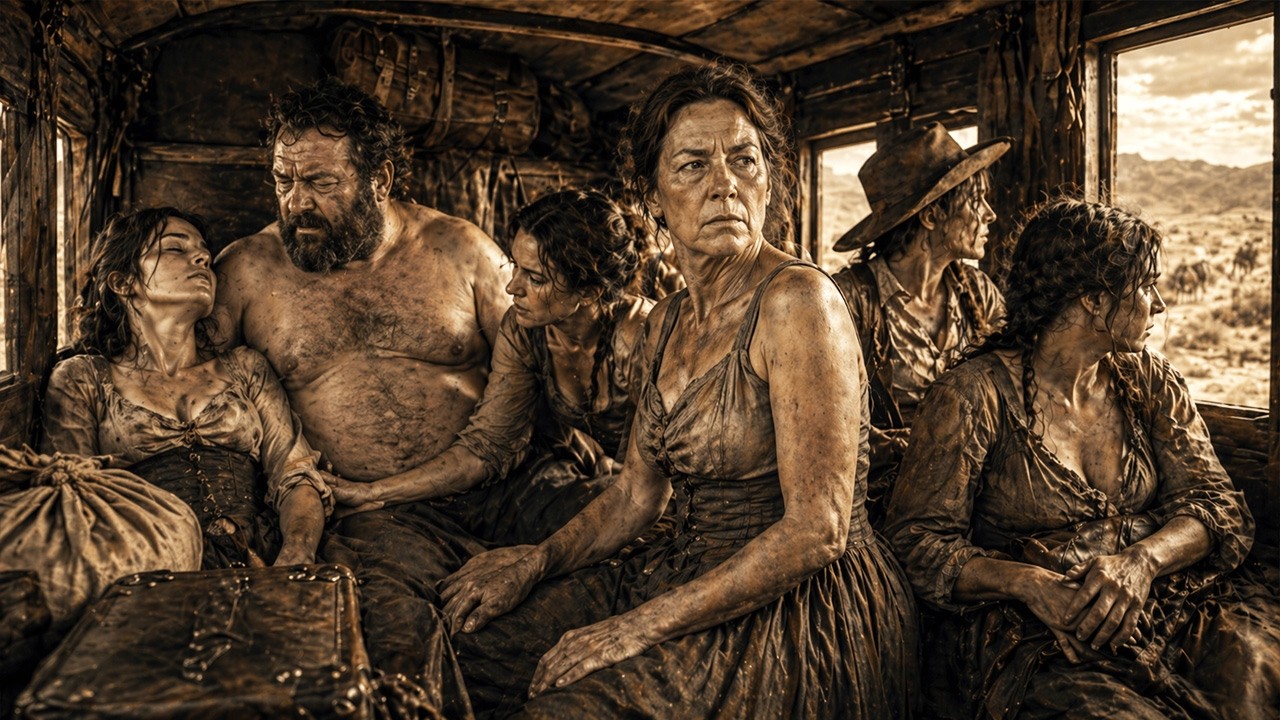
Two gunmen rode into the remote Bolivian mining town of San Vicente in early November 1908. By dawn, both lay dead after a standoff with local authorities, but their identities were never conclusively established. For more than a century, the question of whether those bodies belonged to Butch Cassidy and the Sundance Kid has remained one of the most disputed mysteries of the American outlaw era. San Vicente was a small settlement in the Bolivian Highlands, a remote outpost surrounded by tin and silver mines.
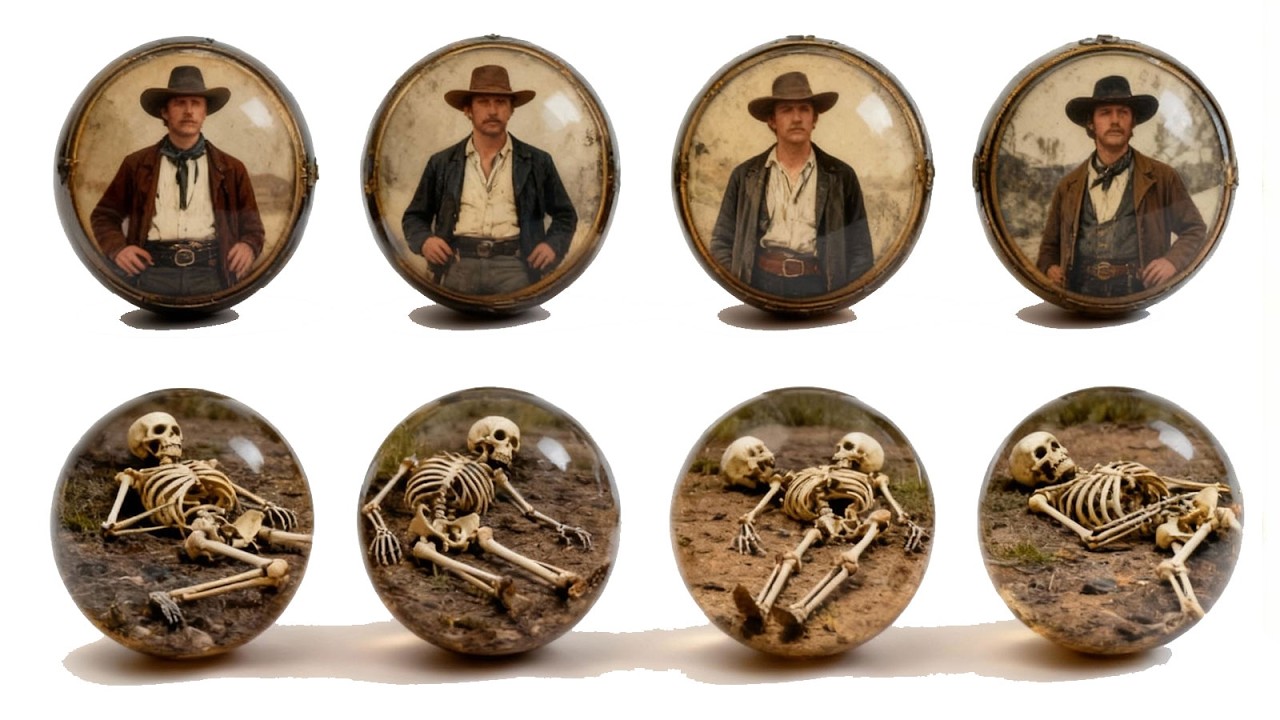
The town existed to serve mining companies, with a handful of stores, a cantina, and a small garrison of soldiers stationed nearby. By 1908, Bolivia was connected to global markets by railways and telegraph lines, but its mining camps still had the rough character of frontier outposts where foreigners stood out quickly. According to official accounts, the two men who arrived in San Vicente shortly before the incident were foreigners. They purchased supplies, paid with unfamiliar coins, and spoke poor Spanish.
Their saddles, bridles, and revolvers were of North American design, marking them immediately as outsiders. They were also cautious, avoiding social gatherings and showing unusual concern about local patrols. At the time, Bolivia was on alert. Days earlier, a payroll robbery near Tupisa had drawn attention, and word spread quickly through the region.
When locals noticed that the two foreigners’ mules bore brands linked to the robbery, suspicion hardened. A message was sent to authorities, and within hours a detachment of soldiers and police surrounded the house where the men were lodging. Accounts of the standoff agree on the basic sequence. Authorities demanded surrender.
The men inside responded with gunfire, killing at least one soldier and wounding another. The exchange continued into the night, with witnesses recalling long pauses between shots, suggesting the men were rationing ammunition. Around midnight, two final shots were heard in close succession. At dawn, soldiers entered the house and found two bodies one on the floor, dead from gunshot wounds, the other on the bed with a pistol nearby, evidence suggesting he had shot himself.
The possessions recovered included North American currency, a knife, spurs, and a map. The weapons and gear were consistent with experienced gunmen, but no official identification was made at the time. Bolivian authorities buried the bodies in unmarked graves with no photographs taken and no fingerprints or other verifiable evidence preserved. Later claims that the dead were Cassidy and Sundance rested entirely on circumstantial evidence and local testimony rather than forensic proof.
The lack of documentation left room for doubt from the very beginning. Bolivian newspapers accepted the authorities’ conclusion that the men were the famous North American bandits, presenting the matter as settled. American reporting, however, painted a less certain picture, with some papers repeating the Bolivian version while others questioned the lack of photographic evidence and the speed of the burial. Telegraph communication in 1908 was uneven, and reports passing through translation and multiple sources before publication often altered small details.
The Pinkerton Detective Agency, which had pursued Cassidy and Sundance for years, monitored the reports closely but could not verify them. The agency’s own files reflected the same uncertainty as the press, noting that the outlaws may have died in San Vicente or may have escaped. Bolivian authorities had a strong incentive to claim credit for eliminating the outlaws, as doing so emphasized the effectiveness of local law enforcement. American newspapers, which had long relied on outlaw stories to sell papers, also benefited from the dramatic narrative.
The result was two competing histories: certainty in Bolivia and ambiguity in the United States. The burial itself became one of the most problematic aspects of the story. Unlike in the American West, where lawmen often photographed outlaws to prove success, Bolivian authorities buried the men quickly in local ground without formal recordkeeping. The cemetery at San Vicente was small, and graves were often unmarked or temporary, a common practice in settlements where resources were limited.
Over the decades, attempts to locate the graves became increasingly complicated. The cemetery shifted locations more than once as mining expanded, and graves were moved or disturbed during construction. By the mid-20th century, local residents were no longer sure where the original 1908 cemetery had been. In 1991, a team of American and Bolivian researchers conducted an excavation in San Vicente in hopes of recovering the remains and confirming identity through modern forensic methods.
Skeletal remains believed to belong to one of the men were uncovered, but DNA testing compared against known relatives of Butch Cassidy’s family found no genetic match. The result deepened the debate rather than closing it. Some argued the wrong grave had been exhumed, while others claimed the test proved Cassidy and Sundance were not the dead men. The excavation also highlighted the reliance on local memory.
Nearly a century had passed since the shootout, and residents told conflicting stories about where the bodies had been placed. Historians also discovered inconsistencies in Bolivian archival material, with some reports claiming the men were buried together, others separately, and a few suggesting the graves had been disturbed by mining activity or treasure hunters. This lack of certainty fed directly into survival theories. If the graves could not be located, skeptics argued, perhaps the men killed at San Vicente were not Cassidy and Sundance at all.
The missing graves turned a straightforward shootout into a mystery that refuses to die. The story of Cassidy and Sundance cannot be told without mentioning Etta Place, one of the most mysterious women of the outlaw era. Her disappearance after 1908 became another strand in the web of uncertainty. She simply vanished from the record, and that absence gave rise to speculation that she might have known the truth about what really happened.
Documented records show Etta traveled with Sundance and Cassidy to South America in 1901, where they purchased a ranch near Cholila in Argentina, posing as respectable settlers. Photographs from the period show her with both men, and witnesses described her as strikingly attractive, well-dressed, and fluent in English and Spanish. Her trail becomes most visible in 1904 when she traveled with Sundance to New York and then back to Argentina. But within a few years, as authorities closed in on the outlaws following robberies in Argentina and Chile, her presence fades from the record.
By 1907 or 1908, she was no longer with them. Whether she left voluntarily, was sent away for her safety, or disappeared for other reasons has never been established. Several alleged sightings of Etta Place surfaced after 1908, including reports placing her in Denver, Texas, Chile, and even Paris. None were confirmed, but each kept her name alive.
The Pinkertons, who had monitored her closely during her years with the gang, admitted they lost track of her completely after 1907, an unusual outcome for an agency famous for its persistence. No verified death record has ever been found for Etta Place, and no confirmed grave has been identified. Her trail simply ends, and in its place, a century of speculation has grown about whether she carried the truth about Cassidy and Sundance with her. The Pinkerton Detective Agency played a central role in shaping the narrative of what happened at San Vicente.
By the early 20th century, the agency operated as a quasi-official law enforcement arm for banks, railroads, and corporations, and its reputation depended on results. Closing the file on Cassidy and Sundance with a confirmed death would have allowed the agency to declare victory to its clients and the public. After the San Vicente shootout, the Pinkertons never produced independent verification of the Bolivian claims. Some agents accepted the account at face value, while others privately admitted doubt remained.
Yet the agency allowed the narrative of the outlaws’ deaths to stand unchallenged before the public. Declaring the men dead reassured clients that the threat was over and reinforced the agency’s reputation for effectiveness. The Pinkertons were also adept at using newspapers to shape public perception, and their authority gave the Bolivian story credibility. By 1908, the presence of American outlaws threatening U.
S. business interests in Latin America was an embarrassment, and declaring Cassidy and Sundance dead conveniently removed that problem from the international stage. The implicit endorsement of the San Vicente story by the Pinkertons made it believable to American audiences. Yet the absence of proof left space for doubt, and in that space grew the survival theories that continue today.
Few episodes in the debate over Cassidy’s fate have stirred as much controversy as the claims of William T. Phillips, an otherwise obscure man from the American Northwest. In the 1920s, Phillips began circulating stories about the Wild Bunch and eventually wrote a manuscript in which he suggested, though never directly stated, that he himself had been Butch Cassidy. Phillips appeared in Spokane, Washington in the early 20th century, working in construction and occasionally writing fiction.
His knowledge of the Wild Bunch was detailed, and he claimed access to information not available in the press. In 1934, he self-published a manuscript titled “The Bandit Invincible: The Story of Butch Cassidy,” which read partly as biography and partly as personal memoir. He wrote as though he were Cassidy himself while never outright confessing it. Several possibilities explain the manuscript.
Phillips could have really been Cassidy living under an assumed name. He could have known Cassidy personally and written the book as a tribute or to profit from the legend. Or he could have gathered information from newspapers and local legends and presented it in a way that made him seem like Cassidy. Supporters of the Phillips theory point to his detailed knowledge of Wild Bunch history, much of which was not widely known in the 1920s and 1930s.
They argue only someone who had lived those events could have described them so convincingly. Critics respond that Phillips often made errors, confusing dates and presenting information that contradicted established facts, pointing to secondhand knowledge rather than firsthand experience. Photographs of Phillips have been compared to known images of Cassidy, with some observers noting a resemblance in facial features and others arguing the differences are too great. Handwriting analysis has been inconclusive.
After Phillips’s death in 1937, his wife reportedly admitted that he had been Cassidy, though critics questioned the reliability of such testimony, noting that personal motives may have shaped the claim. The Phillips puzzle cannot be resolved with certainty. The evidence is suggestive but not conclusive, compelling but inconsistent. What it demonstrates most clearly is how the absence of final proof in Bolivia allowed competing narratives to flourish in the decades that followed.
In modern times, investigators have turned to science in hopes of resolving the mystery. But each attempt to close the case has instead kept the debate alive. No photographs of the San Vicente bodies were ever taken, an absence that is one of the most glaring weaknesses in the official account. In the American West, dead outlaws were routinely photographed to prove identity, and the fact that no such images exist from Bolivia allowed speculation to flourish.
Facial recognition software has been applied to surviving photographs, but the quality of the images is too poor to yield a definitive answer. Medical details provide another line of inquiry, as Cassidy was known to have distinctive scars from past gunfights and accidents. However, the skeletal remains recovered in 1991 did not clearly match his known injuries. The most significant scientific attempt involved DNA testing.
In the 1991 excavation, researchers compared extracted DNA with living relatives of the Parker family and found no match. At first glance, this seemed to disprove the San Vicente story, but critics pointed out that the location of the original cemetery had shifted multiple times and the bones tested may not have been those of the outlaws at all. The DNA technology of the time was also less advanced, leaving room for error or contamination. No confirmed remains of Cassidy or Sundance have ever been recovered that can be definitively tied to San Vicente.
Without a proven sample, comparison with family DNA cannot yield certainty. The scientific approach has so far failed to close the question. What these attempts have shown is how difficult it is to apply modern forensic tools to century-old mysteries. Graves may have been disturbed, records may be incomplete, and witness testimony cannot be re-evaluated with certainty.
Even the most advanced technology cannot produce answers if the basic evidence remains missing. After more than a century, the evidence remains contradictory. Two men died in San Vicente in 1908, but their identities were never conclusively established. Bolivian reports claimed they were the famous outlaws.
American reports cast doubt. Graves were lost or disturbed. A woman central to their story vanished. The Pinkertons declared victory without proof.
A man in the Northwest wrote as though he were Cassidy himself. And modern science has failed to close the file. The result is a legend that endures precisely because it lacks a final chapter. Butch Cassidy and the Sundance Kid may have died in Bolivia, or they may have returned home under new names.
What is certain is that the mystery has outlived them and will likely continue to do so.