The most devastating intelligence failure in the history of the United States military was not a failure of collection, but a failure of belief. Six weeks before 200,000 German soldiers erupted from the Ardennes Forest in a desperate gambit to split the Allied armies, a single colonel in General George S. Patton’s Third Army had already pinpointed the exact location, the precise timing, and the strategic objectives of the assault.
His name was Oscar Koch, and his warnings were not merely ignored; they were systematically dismissed by a command culture so entrenched in its own assumptions of German weakness that it rendered itself blind to the most obvious threat on the Western Front.
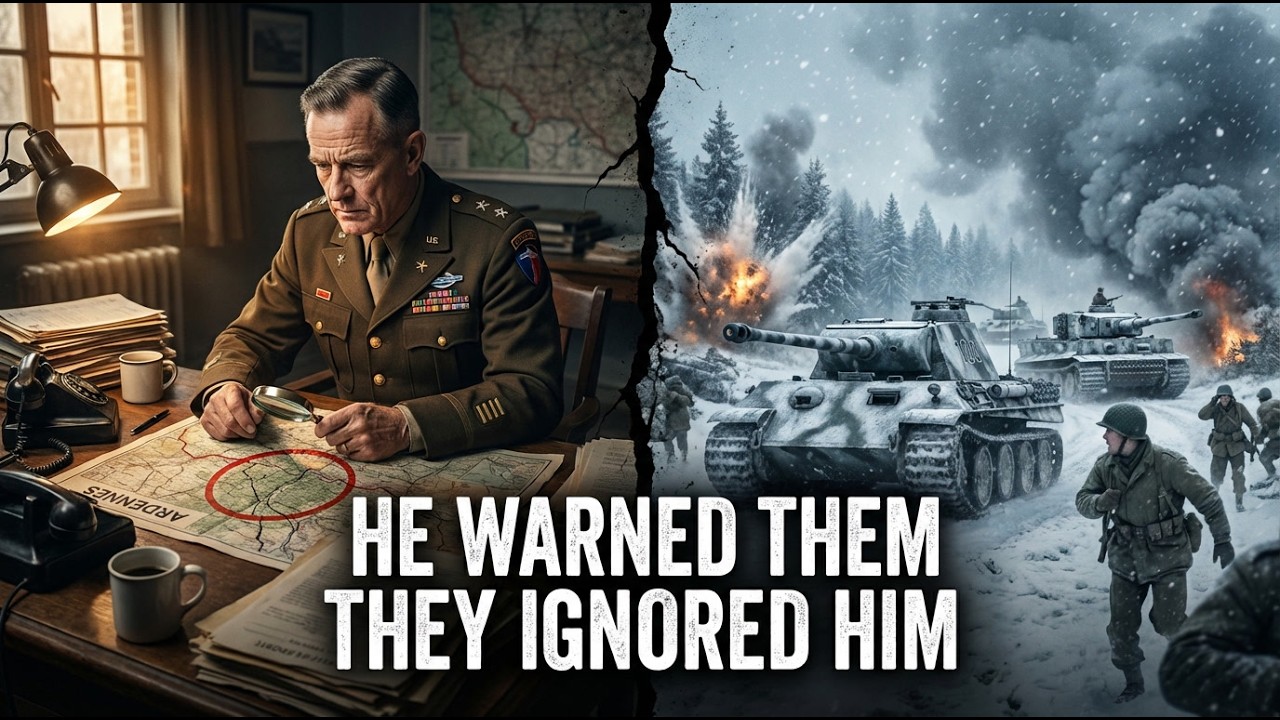 On November 7th, 1944, Koch sat in his intelligence office in Nancy, France, and compiled a report that would later be studied in military academies for generations. He had spent weeks cross-referencing intercepted radio traffic, prisoner interrogations, and aerial reconnaissance. The evidence was overwhelming.
German rail movements were surging toward the Ardennes, a heavily forested, rugged terrain that Allied commanders considered impassable for large-scale armored operations. Identified Panzer divisions had gone silent on the radio, a classic precursor to offensive repositioning. Captured prisoners were speaking openly about offensive preparations and the stockpiling of fuel and ammunition in patterns that defied defensive logic.
Koch’s conclusion was stark: Germany was massing at least eight Panzer divisions and twenty infantry divisions for a mid-December offensive aimed at Antwerp, designed to slice the Allied line in two and sever the supply lifeline that kept the armies advancing toward the Rhine.
Koch presented his assessment to Patton that same day. Patton, a commander who trusted his intelligence officer implicitly after years of accurate predictions, read the report with intense scrutiny. He asked pointed questions, probing the evidence.
Koch walked him through the data point by point. Patton was convinced. Without hesitation, he forwarded the assessment to General Omar Bradley at 12th Army Group headquarters, attaching a personal note that Third Army had been warning about this exact scenario for six weeks.
He recommended the immediate reinforcement of the Ardennes sector, which was being held by a dangerously thin line of four divisions across terrain that required at least eight.
The response from Bradley’s headquarters arrived the next day. It was polite, dismissive, and catastrophic. Bradley thanked Patton for his diligence but stated that 12th Army Group intelligence saw no evidence of imminent offensive action.
The Ardennes was deliberately held lightly, they argued, to free up forces for offensive operations elsewhere. There was no reason to alter dispositions based on speculation. That single decision, rooted in institutional arrogance and confirmation bias, would seal the fate of tens of thousands of American soldiers.
To understand how this happened, one must examine the strategic assumptions that dominated Supreme Headquarters Allied Expeditionary Force (SHAEF) in the autumn of 1944. Allied intelligence had concluded that the German Wehrmacht was a spent force. Fuel shortages, ammunition deficits, and catastrophic manpower losses had rendered the enemy incapable of sustained offensive operations.
Every assessment emanating from SHAEF emphasized German material weakness and Allied overwhelming superiority. These assessments were not wrong about the material conditions. Germany was indeed desperate.
But the analysis assumed that material weakness precluded offensive action. It failed to account for the irrationality of Adolf Hitler, who overrode the objections of his own generals to launch an operation that consumed Germany’s last operational reserves. Hitler believed a dramatic counteroffensive could fracture the Allied coalition or delay the invasion of Germany long enough to deploy wonder weapons.
Allied intelligence was analyzing a rational adversary. Hitler was not operating rationally. That disconnect meant every piece of evidence that contradicted the consensus was filtered through a lens that made German offensive action seem impossible.
At 12th Army Group, Bradley’s intelligence chief, Brigadier General Edwin Sibert, was drowning in information. His staff received hundreds of reports daily from multiple sources, most of them contradictory or ambiguous. Koch’s assessments stood out precisely because they were specific and persistent.
But standing out made them suspicious. In the intelligence community, a single source that contradicts the prevailing narrative is often viewed with skepticism. Sibert believed the evidence Koch cited was consistent with multiple interpretations.
German troop movements could indicate defensive preparations. Radio silence might mean divisions were refitting, not repositioning for attack. Prisoner statements about offensive training could be routine exercises.
Sibert’s analysis was not incompetent; it was conservative. He required extraordinary evidence to support extraordinary claims. A major German offensive was an extraordinary claim.
Koch’s evidence, while suggestive, was not conclusive enough to overcome that skepticism.
The command culture at SHAEF and 12th Army Group reinforced this conservatism. Eisenhower’s headquarters valued consensus and coordination. Intelligence assessments that deviated dramatically from the established narrative were treated with caution.
Officers who raised alarms too frequently risked losing credibility. Koch understood this dynamic. His November 7th assessment was carefully worded to avoid seeming alarmist.
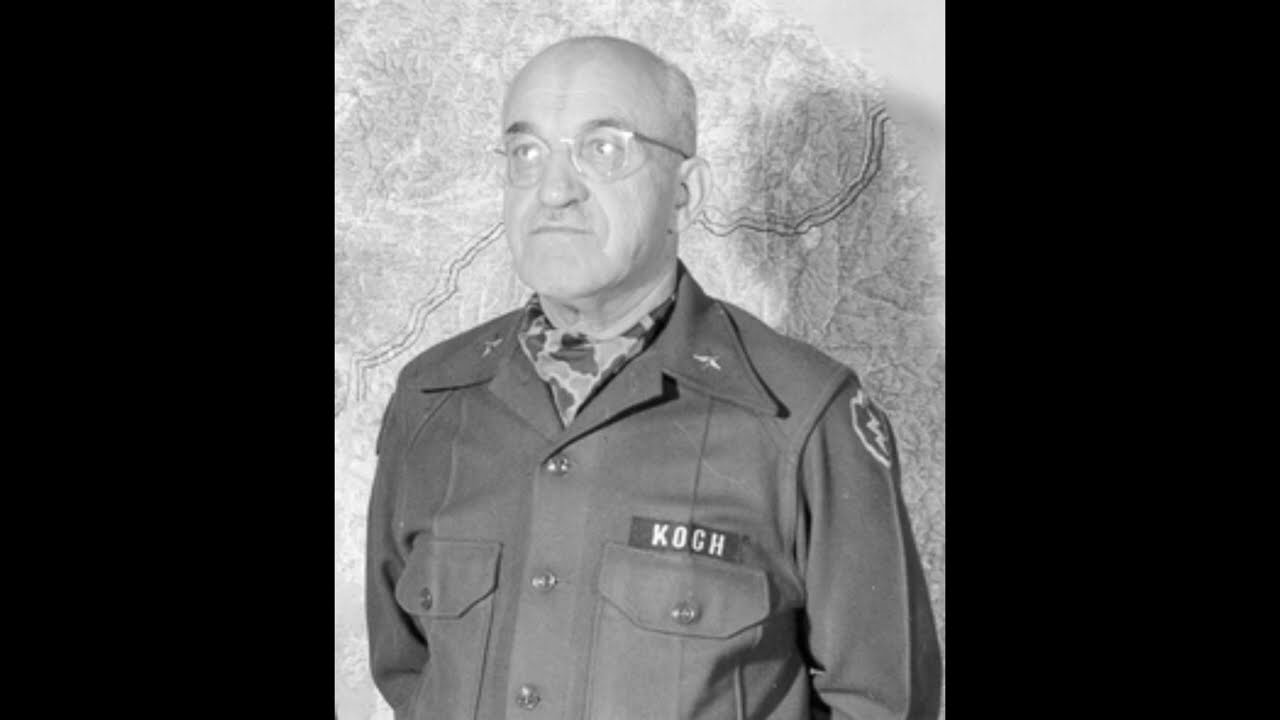 He presented evidence and analysis without demanding immediate action. When that approach failed, his subsequent assessments became more urgent. But by the time Koch was using language suggesting imminent crisis, Bradley’s staff had already categorized him as overly concerned.
There was also an element of professional rivalry. Third Army had a reputation for aggressive operations and bold claims. Patton’s headquarters was seen as prone to exaggeration when advocating for resources or operational authority.
Bradley’s staff filtered Third Army intelligence through that reputation. When Koch warned of German offensive preparations, some staff officers assumed it was Patton trying to redirect Allied focus toward his sector. This assumption was not only wrong; it was dangerously patronizing.
It dismissed the most accurate intelligence assessment of the European war as a bureaucratic power play.
The most damaging factor was confirmation bias. Allied intelligence had concluded Germany was incapable of major offensive action. Every subsequent piece of information was interpreted through that conclusion.
Evidence that supported the conclusion was accepted. Evidence that contradicted it was questioned or dismissed. Koch’s assessments contradicted the established narrative.
They suggested Allied intelligence had fundamentally misunderstood German capabilities and intentions. Accepting Koch’s analysis would have required admitting that months of Allied intelligence work had been wrong. That admission was psychologically difficult for intelligence professionals who had staked their reputations on the existing assessments.
By early December, Koch’s warnings had been dismissed so many times that even he was beginning to doubt his analysis. His December 9th assessment hedged slightly, acknowledging that the evidence could be interpreted multiple ways, but maintaining that German offensive action was the most likely explanation. Patton never doubted Koch.
He trusted his intelligence officer’s judgment based on three years of accurate assessments. But Patton could not act on Koch’s warnings without Bradley’s approval. And Bradley was following guidance from his own intelligence staff that German offensive action was impossible.
December 16th, 1944, 5:30 a. m. German artillery opened fire along an 80-mile front in the Ardennes.
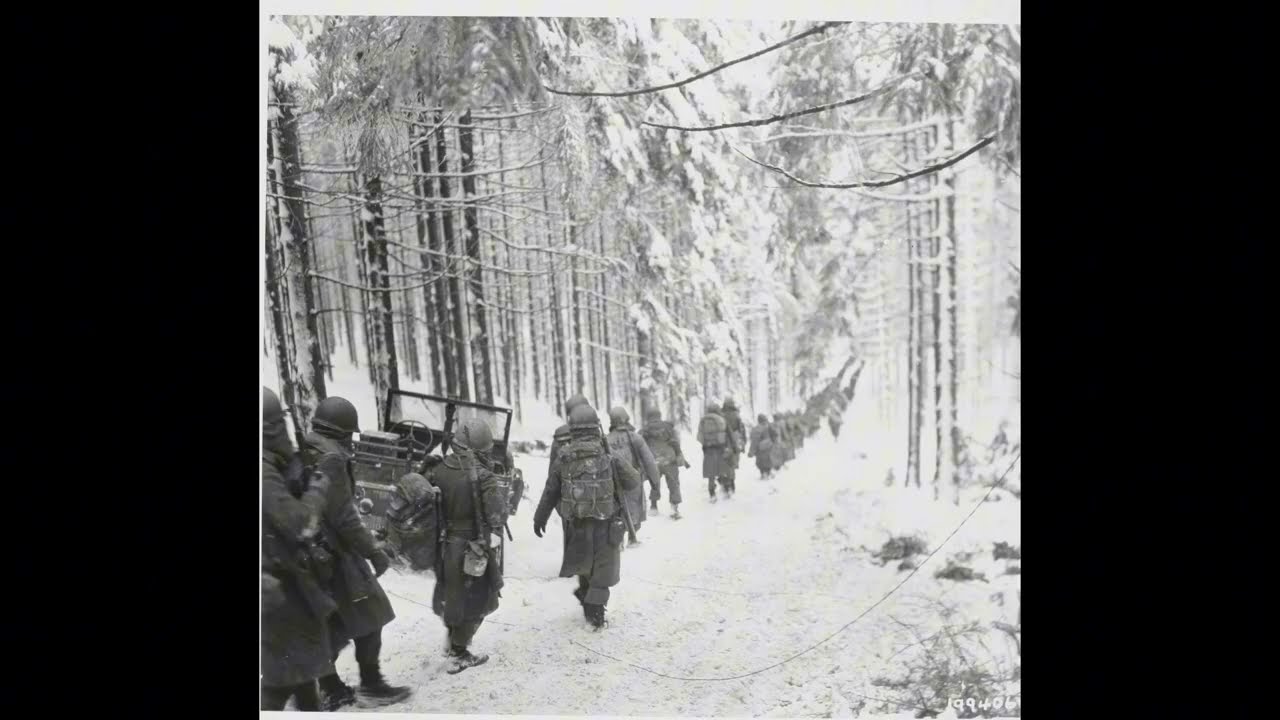
Within hours, over 200,000 German soldiers were attacking thinly held American positions. American units were caught completely by surprise. The VIII Corps defending the Ardennes sector had four divisions covering terrain that should have been held by at least eight.
Soldiers were in rest positions, not expecting combat. Forward observation posts reported massive German attacks, but headquarters initially thought they were seeing localized probes. By noon, it was clear this was a major offensive.
German Panzer divisions had achieved breakthrough in multiple locations. American units were retreating in confusion. Communications were breaking down.
The situation was chaotic and deteriorating rapidly.
At Third Army headquarters, Koch received the first reports and immediately recognized what was happening. This was the offensive he had been predicting for six weeks. He rushed to Patton’s office with a situation map showing German attacks exactly where his assessments had predicted they would come.
Patton’s response was immediate and decisive. He ordered his staff to prepare contingency plans for Third Army to pivot north and counterattack the German southern flank. He contacted Bradley and offered to have Third Army attack within 48 hours with three divisions.
Bradley was stunned by both the German offensive and Patton’s ready response. He asked how Patton could possibly attack so quickly. Patton told him Third Army had been preparing for this contingency for weeks based on Koch’s intelligence assessments.
At 12th Army Group headquarters, there was near panic. The German offensive had shattered Allied plans. Eisenhower’s headquarters was demanding answers.
 How had this happened? Why hadn’t intelligence predicted it? Sibert reviewed his files and found Koch’s assessments stretching back to November 7th.
Every warning Koch had sent, every piece of evidence he had cited, every prediction he had made, all of it sitting in 12th Army Group files, dismissed as unlikely or unsubstantiated. Sibert later wrote that reviewing those assessments while German forces were breaking through American lines was the worst moment of his professional life. Koch had been right about everything.
The location, the timing, the approximate German strength, the objectives. And Sibert had dismissed all of it.
Bradley faced the same realization. His intelligence staff had failed to predict the largest German offensive of the war on the Western Front. Worse, they had been warned by Third Army intelligence and had ignored the warnings for six weeks.
The immediate crisis required action, not recrimination. Eisenhower called an emergency meeting at Verdun on December 19th. Bradley attended.
Patton attended. Montgomery attended. The question was how to respond to the German offensive.
Patton repeated his offer. Third Army could attack the German southern flank within 48 hours. Other generals thought he was grandstanding.
You couldn’t turn an entire army 90 degrees and attack on a completely different axis in two days. Eisenhower asked Patton directly if he was serious. Patton said his intelligence officer had predicted this offensive six weeks ago.
Third Army had been quietly preparing contingency plans since early November. They were ready to execute immediately.
Patton didn’t say it was Bradley’s fault for ignoring Koch’s assessments. He didn’t need to. Everyone in the room understood that Third Army had seen this coming and prepared while the rest of Allied command had been caught by surprise.
Eisenhower authorized Patton’s counterattack. Third Army pivoted north and hit the German southern flank on December 22nd, exactly 48 hours after Patton promised they would. The speed of Third Army’s response helped stop the German offensive before it could achieve its objectives.
After the meeting, Bradley asked to see Koch personally. The meeting was private and brief. Bradley apologized for dismissing Koch’s assessments.
He asked Koch to prepare a detailed analysis of what intelligence indicators had predicted the offensive and why 12th Army Group had missed them. Koch prepared the analysis. It was damning.
Every indicator Koch had identified in November was validated by the December offensive. German divisions he had tracked moving to the Ardennes had attacked exactly where he predicted. Radio silence from Panzer units meant they were preparing for offensive operations, not defensive refitting.
Prisoner statements about offensive training had been literal preparations for the attack. The analysis documented a complete intelligence failure at every level above Third Army, not because information was unavailable, but because available information had been interpreted through assumptions that turned out to be wrong.
The Battle of the Bulge cost over 80,000 American casualties. The battle lasted from December 16th to January 25th. It was the deadliest battle American forces fought in the European theater.
Military historians have debated for decades whether the battle could have been prevented if Allied command had taken Koch’s warning seriously. The consensus is that the battle probably could not have been prevented entirely, but it could have been far less costly. If Bradley had reinforced the Ardennes sector in early December based on Koch’s warnings, American forces would have been better positioned to contain the German offensive.
The VIII Corps would have had twice as many divisions covering the same terrain. Forward positions would have been strengthened. Artillery would have been prepositioned to break up German attacks.
 The German offensive still would have achieved tactical surprise, but it would have run into stronger defenses immediately. The breakthrough that led to the bulge might never have occurred. German forces might have been stopped at the border with minimal penetration into Allied lines.
Conservative estimates suggest that proper defensive preparations based on Koch’s intelligence could have reduced American casualties by 30,000 to 40,000. The battle would have been shorter and less desperate. Allied counteroffensive operations would have begun sooner.
These are estimates, not certainties, but they’re grounded in reasonable military analysis. Stronger defensive positions significantly reduce attacker success. Koch’s assessments provided enough warning time to strengthen defenses substantially if his warnings had been heeded.
After the battle, the US Army conducted extensive reviews of intelligence failures. Koch was interviewed repeatedly about his November assessments. His analysis methods were studied.
His evidence sources were validated. The army wanted to understand how one colonel saw what entire intelligence staffs missed. The conclusion was that Koch had done everything right.
He had analyzed available intelligence correctly. He had reported his findings through proper channels. He had presented evidence professionally.
He had persisted even when his assessments were dismissed. The failure was at receiving headquarters. Bradley’s staff had operated under assumptions that prevented them from accepting contradictory evidence.
They had required extraordinary proof for claims that challenged consensus views. They had filtered Third Army intelligence through preconceptions about Patton’s headquarters being prone to exaggeration.
These failures were institutional, not personal. Sibert wasn’t incompetent. Bradley wasn’t negligent.
They were operating within a command culture that valued consensus over dissent and conservatism over risk-taking in intelligence assessment. But that command culture cost lives. Soldiers who died in the first days of the bulge died because Allied command was unprepared for an offensive that Koch had predicted accurately.
Koch was promoted to brigadier general in early 1945. The promotion was backdated to December 1st, 1944, explicitly recognizing his intelligence work before the bulge. Eisenhower personally commended Koch for his accurate assessments and professional persistence in reporting them despite institutional resistance.
Bradley wrote in his post-war memoirs that failing to heed Koch’s warnings was one of his greatest regrets. He stated that the intelligence failure before the bulge taught him to take dissenting intelligence assessments more seriously, even when they contradicted consensus views.
Patton never let anyone forget that his intelligence officer had predicted the bulge six weeks in advance. He mentioned it in interviews, in his diary, and in correspondence. Patton believed Koch deserved recognition not just for accurate intelligence work but for maintaining professional standards when everyone above him was dismissing his assessments.
The modern intelligence community studies the Ardennes intelligence failure as a classic example of confirmation bias and institutional resistance to dissenting analysis. Koch’s accurate predictions that were systematically ignored represent exactly the kind of intelligence failure that organizations try to prevent through structured analytical techniques and red team exercises.
The lesson is straightforward. Accurate intelligence is worthless if command structures prevent it from influencing decisions. Koch provided everything Allied command needed to prepare for the bulge.
His warnings were ignored not because they lacked evidence, but because they challenged assumptions that Allied commanders were unwilling to question. 80,000 American casualties paid for that institutional failure. Koch’s six weeks of warnings couldn’t prevent the battle because warnings that aren’t heeded don’t influence outcomes.
Intelligence only matters if commanders act on it. At the Ardennes in December 1944, Allied commanders chose not to act until it was too late. The general who warned Eisenhower about the Ardennes gap wasn’t a general when he issued his warnings.
He was a colonel whose accurate analysis was dismissed by generals who thought they knew better. History proved Koch right and his superiors wrong. But that vindication came too late for thousands of soldiers who died in battles that better intelligence preparation might have prevented.


