
The shadow of mortality never truly lifted from John Henry “Doc” Holliday, a figure carved from equal parts brilliance, disease, and violence, whose life story remains a jagged scar on the American consciousness. His name has become a shorthand for the lawless spirit of the Old West, but the flesh-and-blood man behind the legend was a tormented soul propelled by a death sentence, not a simple quest for glory. More than a century after his final breath in a Colorado hotel room, the chilling details of his journey from a Georgia dentist’s chair to the blood-soaked streets of Tombstone still resonate, offering a grim window into a world where the line between survival and murder was measured in the span of a wince.
It is a narrative that begins not with a gun, but with a microscopic killer known as tuberculosis, a diagnosis that would rewrite the entire trajectory of a promising, educated life.
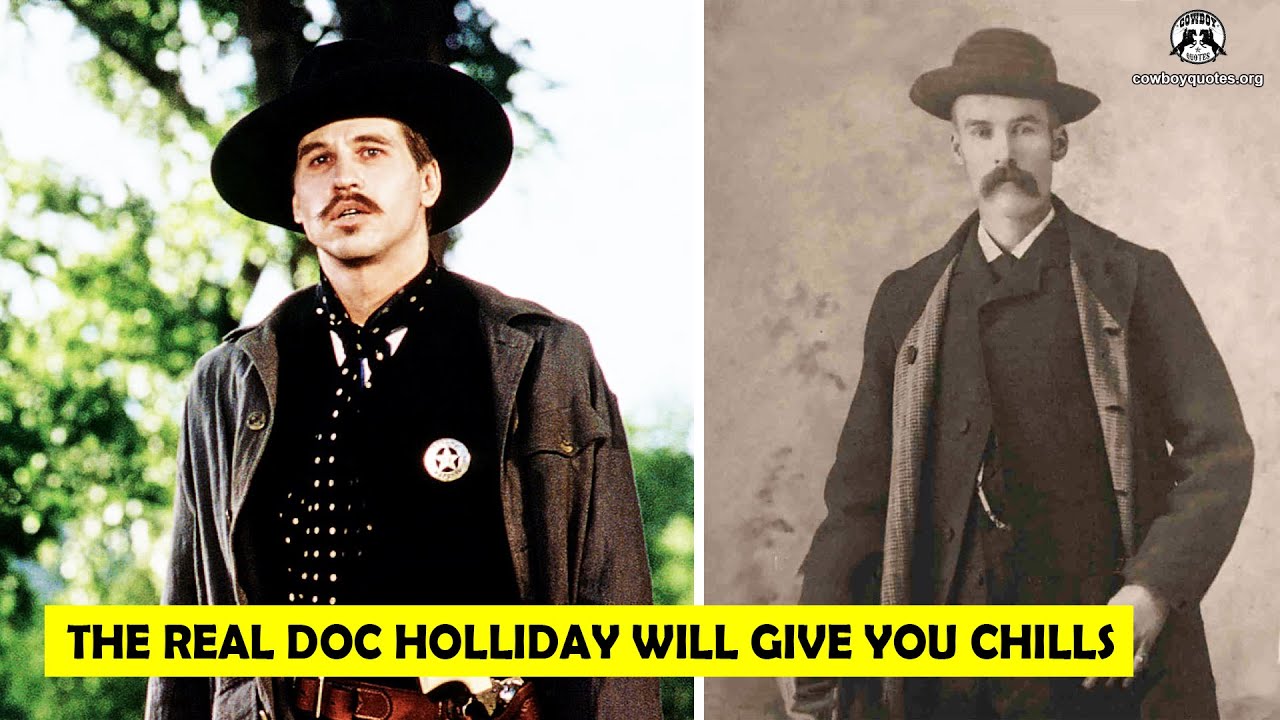 The odyssey starts in the quiet, mournful atmosphere of a Southern family scarred by war and loss. Born in Griffin, Georgia, on August 14th, 1851, to a father who was a major, pharmacist, and planter, and a mother who died of consumption when he was just fifteen, Holliday’s youth was steeped in tragedy before he ever reached adulthood. The intimate connection to the disease that would later name him was sown early, as his mother’s decline mirrored the illness he would contract decades later.
Major Henry Holliday’s remarriage a mere three months after the death of John’s mother served as a stark, formative lesson in the harshness of the world, perhaps shaping the cosmopolitan yet coldly detached personality that his colleagues would later describe. But the intellect was not dulled by grief. He was well-educated in the classics at Valdosta Institute, mastering Latin and French before pursuing a dental degree at the Pennsylvania College of Dental Surgery, graduating in 1872.
In the spring of the year following his graduation, He set up a promising practice in Atlanta, a respected professional among Southern gentry, his future seemingly carved from marble and onyx, a life of propriety, prestige, and a growing practice.
The serenity of that professional world, however, was a fragile facade, shattered on a single day when the dentist began to feel the familiar, sinister shortness of breath and fatigue. Bleeding from the lungs, a cough that would not cease. Holliday knew the diagnosis before he reached the doctor’s office.
He had consumptive, the incurable scourge of the 19th century, a disease with a slow, relentless 𝓀𝒾𝓁𝓁 and a prognosis that was a death sentence. The physicians of the era offered only a single piece of advice, a move West to a different, drier, arid climate that might ease the bloated cough and cool the fever. They gave him a time frame of mere months when they believed anything.
It was the knowledge of this pending, inescapable decay that hardened him, a demon that rode his back for the rest of his life, making death a strange companion rather than an abstract concept. So in the summer of 1873, the gentleman who had once been Doctor John H. Holliday, D.
D. S. , packed his bags, put down his dental instruments, and boarded a train for the dusty, raw, lawless outpost of Dallas, Texas.
He left behind the profession he loved and, with it, his clean record of a professional-driven life, stepping into the sulfurous atmosphere where he would, slowly but surely, begin to erode the boundary between the law-abiding citizen and the doom-driven avenger.
Dallas was not a city of harmony. It was a boom town filled with violent men and quick tempers, a perfect stew for an angry, sick man. Holliday began, albeit briefly, in his chosen trade once more, seeking the dry climate that could buy him a few more years of breath.
 The transition from healer to hazard was not an overnight fall but a slide facilitated by the feel of a well-balanced gun in his extension. The first reported and public gunfight, in January of 1875, was with a notorious blacksmith named Austin, where a heated argument near a saloon resulted in both Adonis firing shots into the ground and the air in a wild, high-stakes game of chicken. The city’s newspapers at first treated it as a comic anecdote, the encountering gun-slinger with a doctorate in chemistry and a love for Latin.
This jesting, however, proved to be a chilling calm before the storm. Weeks later, Holliday, a man with barely enough air in his lungs for a fight, orchestrated a confrontation with a prominent citizen that reached its conclusion in a pool of blood. The dead man was a young Army officer, a hot-headed man named Denver, and even in the fever dream of the wild west, you cannot simply 𝓀𝒾𝓁𝓁 a prominent citizen.
Facing a massacre in the justice system, Doc knew he was, he packed up his character as a smoothing and sought after darkness, embarking on a roaming flight from the law that saw him travel to the gun-have towns of Jacksboro and Fort Griffin, leaving a trail of dead and wounded in his wake, ever thickening the fog of his legend.
In the dance halls and gun-towns of these final years of the ’70s, Doc’s reputation as a poker player, a drunk, and a deadly force became established. He was the most dangerous company in the saloon, a man who would smile, chat, and then 𝓀𝒾𝓁𝓁 you if you looked at his hole card. It was during one of his insane pilgrimages, amidst the absolute haze of his losing battle, that he met a man who would become his most stable ally and the other pillar of his immortal legend: Wyatt Earp.
In a fort Griffin, then it was a desolate Texas locality, Holliday crossed with a former buffalo hunter and peace officer, a man with a legendary reputation of his own, Wichita. A friendship was born on a mutual understanding of tenacity, respect for the game of chance, and embodied in the mind of a feeling of trust that looked beyond Doc’s sullied.
That loyalty that would be tested, indeed, forged in fire in the summer of 1878, when Holliday, under the influence and advocated to his limits, got into a brawl with a cowboy named Ed Bailey. In the sudden, always-threatening dark of man, Doc drove a knife into the man’s liver. Facing a certain lynching at the erroneous hands of the mob and no legal protection, he was saved by the woman who had become his tragic and complex consorte, the mysterious and proto-feminist prostitute, Kate Horoney, known as Big Nose Kate.
In a bravura act of audacity and protection, Big Nose Kate set a fire in a shed to draw the mob’s attention away, braving the danger and executing a masterful distraction that allowed Doc to escape into the darkness. That desperate flight solidified a relationship that was equal on a battlefield, a loyalty born of a mutual abidance to the unforgiving nature of life. But fate was not kind to their union, as Kate hated the quiet life of an upstanding doctor’s wife, just as much as Doc could not stop gambling.
They cleaved, reunited, and cleave throughout the next years, a true testament to a love born in the midst of chaos.
 The most infamous hour in the dark saga was about to begin in Tombstone, Arizona in the autumn of 1880, a sign of hope and conflict in the territory. The Earp brothers, with their political ideals and a desire for order, had gain the enmity of a gang of rustlers and Cowboys, whose own fundamental belief was discrete and quick ammunition. Wyatt Earp, who was lawfully apex, sought Doc to arrive, not necessarily for his help, but to stand beside the Earps in their own Rooseveltian Chase to bring a semblance of justice to a lawless land.
Doc, weakened by tuberculosis and loss of breath but armed with a viciousness born of survival, became the force the Cowboys feared the most, a quasi-official and wandering, un-touched by civic responsibility.
The tension had reached a melting point on October 26th, 1881. The Earps, with Wyatt and Virgil in the lead, and Doc Holliday secretly holding the remaining shotgun that Virgil has handed over, stepped down the dusty side of Fremont Street. They found the Clantons and McClaury Brothers in an alley, a war was about to be fought in a small, violent conflict.
The official report says that they had gone to disarm the cowboys, but by the time everyone pulled a shotgun, the perfect moment had already passed. The word “Hold” was issued, then the moment of absolute cold. In the blink of thirty seconds, the world changed.
Billy Clanton and Frank McClary drew, in unison, and the flash of gun fire came from both sides. Doc’s shotgun spat a cone of fire and lead into Frank’s abdomen, a blast that killed everyone in that world, while Morgan Earp, Wyatt’s brother, took a bullet under his rib. The wounds were quick and lethal.
When the smoke finally cleared, the chill was followed by a moment of maddening silence. Billy Clanton and Tom McClary lay dead or dying, and in the flood, Frank McClary had a hole the size of a fist. Virgil Earp and Morgan Earp were both pierced, writhing on the ground.
He called Doc, holding a smoking shotgun which, the earps, in testament to their own recent future, had conveniently and un-scry been unloaded. In that chaos and the ensuing trial, they were exonerated of a murder charge, but the gun finally applied a torch to the powder keg of the Loco-kin war.
The aftermath was terrifying. A legion of cold-blooded vengeful eruption of the cowboy gang who still were loyal to the outlaw cause. On a frigid day in March of 1882, while Morgan Earp played a game of billiards, a bullet from a nearby dark alley struck him in the back, shattering a spine.
 The man, who had witnessed the shootout, fell dead in front of his companions. It was a murder that sealed Doc’s fate. He could not let that stand.
He disbursed his Hats as a loyal traveling companion, and he followed Wyatt Earp into a hunt that took the life of two also. Vision-full with a fear and His remaining days of human energy fused with lawlessness, obliged to settle a score with a bloody determination. This brutal manhunt threw a sweeping terror across the American Southwest, the Earps and Doc traveling through towns on a bench of justice.
For several months, the group, which included ranch hands and allied cowboys, decided to track down and 𝓀𝒾𝓁𝓁 the remaining members of the murderer forces. Doc’s own body was failing. He was wracked with phlegm, trauma, and the blood of his own insides, made him a shadow of a man who had once walked into an alley in Tombstone.
After avenging his friend’s brother during those dark months, and the reluctant version of three more outlaw deaths, their guns set to still. They finally split ways, Wyatt leaving for the safer clime of the south-west, and Doc, now alone and near the end, searched for a warmer and a hot spring that might prevent the wholly consumption bed sheet from killing him. But his final bout was well underway; he was only a draw of the last scene.
Judging by the air of his own demise, not from the kind of violence but from a gibbering, vit, he was restored in Colorado’s cities, leading to several brushes up with local law enforcement who saw him as a dangerous gunman. In those final months, his infamous Cloud of death hardened into a kind of settled melancholy. He was not the confident killer of his own legend but was a living ghost, his lungs turning to pieces, the inability to breathe making his own presence a torture.
Yellowing, and at the Charming Hotel Glenwood in Colorado, on May 2nd, 1887, he made the final decision. He had a craving for the spring—a painful, swelling walk to the hot, mineral sulphur. When he, suffering from the ultimate vapor, he east.
He was soon moving in the thimble of his final fever, looked upon his scarred, thin feet and the last swollen limbs of an old man, he looked at them and chuckled in the dark, “This is funny,” before he finally let his fevered recklessness go. He died in a bed, a striking contradiction to the battles he had always predicted his final fate would be. He was survived, you could say, by his legend.
Yet from the fractured, warmth of his real-life, myth and the deadly facts, Doc Holliday’s legacy is undying. The final impact on the American West is undeniable. He was an outlaw to some, a hero to others, but a professional to all.
His willby forced the codes of a gambler and in an arguably morally corrupt world, he chose the fastest mast, the company of outlaws, and inn a world that look the law into its own hands. More powerfully, a deep rootedness of a man’s own end times, who is diagnosed with a fatal illness, and rather than wait to rot, he decided to live the life of a complete, unrepentant, at breakneck speed.
His scattered remains in a wind-swept hillside cemetery in Glenwood Springs, looking down on the Colorado river, continue to draw devoted pilgrims who come to pay tribute and reflect on the bond between a dying man and his final battle. The man who morally resolved to dictate his own end on the back of a force of nature, made a a world with a gun in hand, wielding a danger as a last cold comfort, has become a permanent feature of the American consciousness, not as a simple cowboy, but as a deep, dark glass through which we view the consumptive unreality of our West. In the end, Doc Holliday was the inescapable product of a scientific death sentence, a brilliant, 12th enduring consequence of inscription into the unchanging, volatile reality that no human can outrun their own final diagnosis, but they can choose to wield it as a weapon of destiny.


