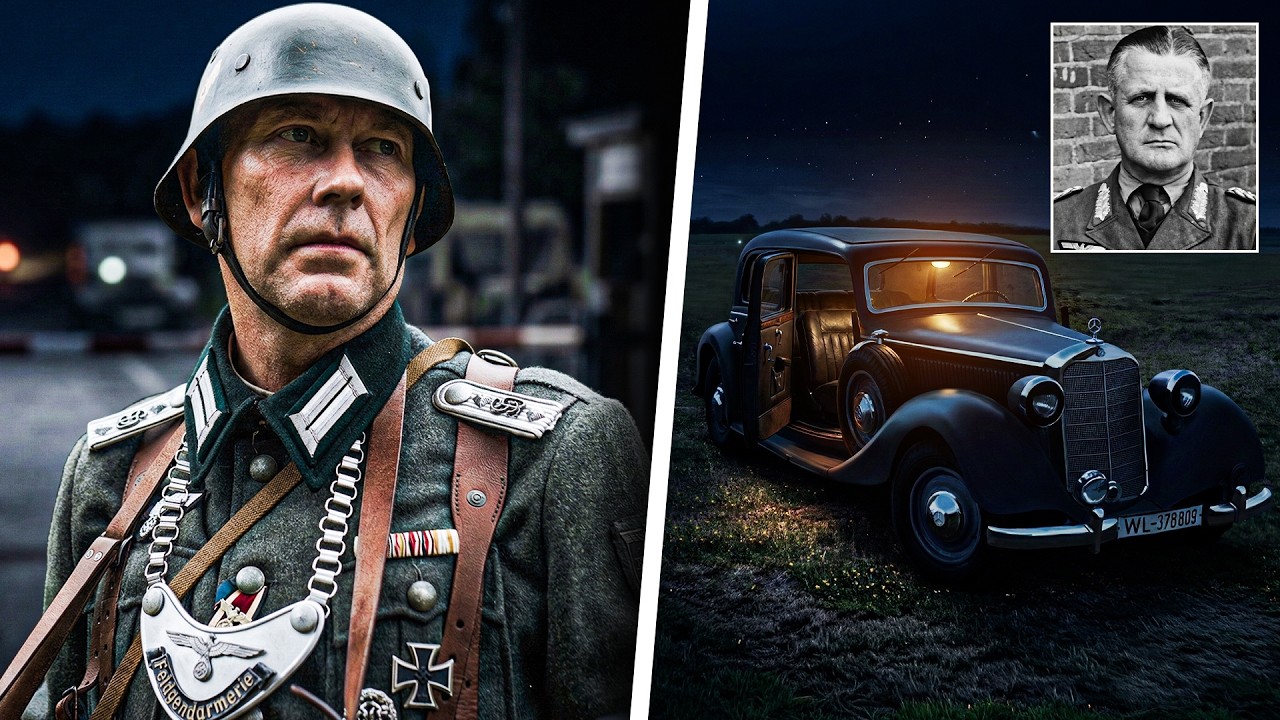
When the Allies captured Albert Göring in 1945, he told them a story that seemed impossible. He claimed that for years, he had been smuggling prisoners to freedom and saving Jewish lives. His interrogators dismissed it as an elaborate lie. After all, he was the brother of Hermann Göring, Hitler’s second-in-command.
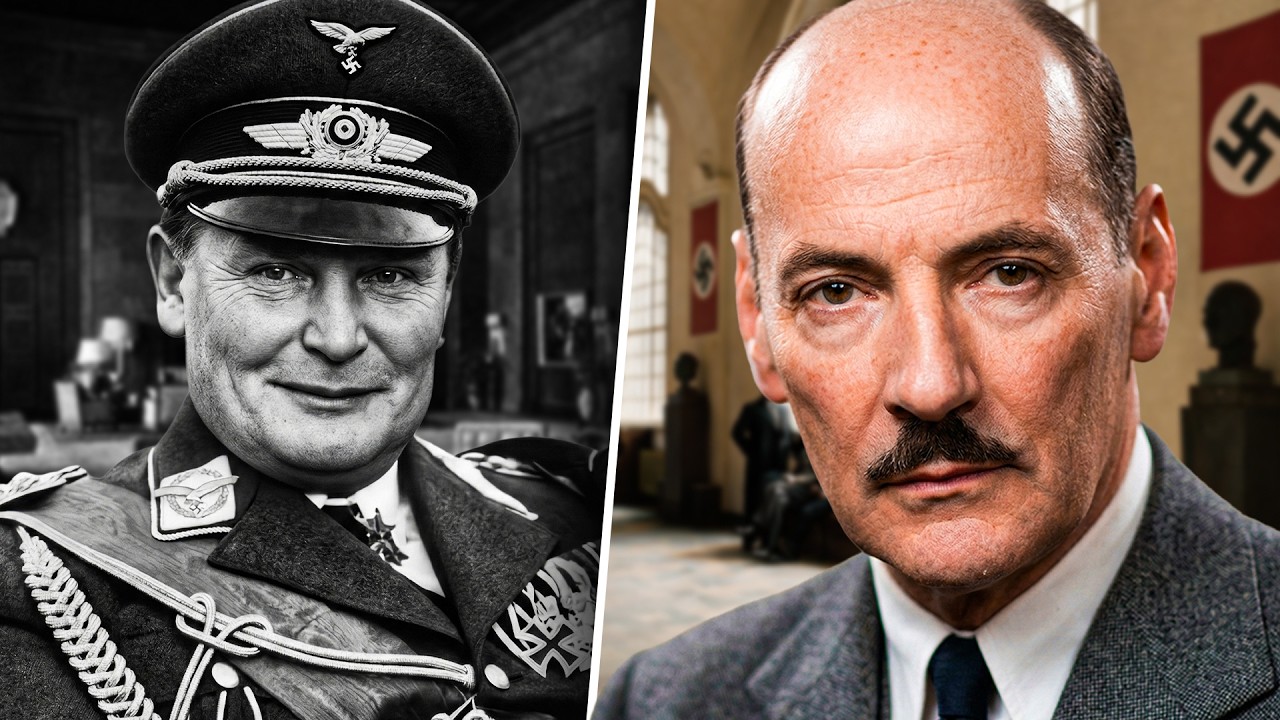
Albert Göring was born on March 9, 1895, in Friedenau, a suburb of Berlin. He was the fifth child of Heinrich Ernst Göring, a former imperial official, and Franziska Tiefenbrunn. His older brother Hermann was just two years older. The brothers were raised in the same castles by the same parents, but they could hardly have been more different.
The Göring children grew up under the influence of their godfather, Dr. Hermann von Epenstein, a wealthy Austrian physician of Jewish heritage who owned two castles. With their father often abroad, Epenstein acted as a surrogate parent. For decades, rumors persisted that Epenstein was Albert’s biological father, fueled by a striking physical resemblance between the two men.
The claim was never confirmed, but it followed Albert throughout his life. Hermann once described the contrast between them. “He was always the antithesis of myself. He was quiet, reclusive.
I like crowds and company. He was melancholic and pessimistic, and I’m an optimist. ” While Hermann craved attention and climbed mountains, Albert preferred the piano, books, and solitude. When the First World War broke out in 1914, both brothers enlisted.
Hermann became a celebrated fighter ace, earning the Pour le Mérite and commanding the legendary squadron once led by the Red Baron. Albert served as a communications engineer on the Western Front. He was wounded at the First Battle of Ypres in November 1914 and again in July 1918. He left the war as an Oberleutnant with the Iron Cross, but unlike his brother, he returned home with no appetite for glory.
After the war, Albert studied mechanical engineering in Munich, graduating in 1923. He worked briefly for IG Farben before moving to Vienna in 1927 as a sales representative for Junkers. He married twice during this period and settled into a comfortable life in the Austrian capital. When the Nazis seized power in Germany in January 1933, Albert made his position clear.
He despised the regime. On February 23, 1935, he applied for Austrian citizenship, a formal rejection of everything his brother represented. By 1936, he had become technical director of Tobis Sascha, Austria’s largest film studio. Professionally successful and determined to stay far from Nazi Germany, he was about to be dragged back into its orbit.
The first time Albert used his brother’s name to save a life, the request came from Hermann himself. In 1936, Hermann’s wife asked him to help Henny Porten, a famous German actress whose career had collapsed after she refused to divorce her Jewish husband. Hermann could not intervene publicly, so he telephoned Albert in Vienna. Albert arranged a film contract for Porten at Tobis Sascha, quietly moving her out of Nazi reach.
The rescue gave Albert an unexpected realization. His surname, which opened doors across the Reich, could be turned into a weapon against the regime. The chance to use it came quickly. On March 12, 1938, German troops crossed the Austrian border.
The Anschluss brought Nazi rule to Vienna overnight. Within days, Jewish citizens were forced into the streets, made to kneel on the pavement and scrub while crowds jeered. Albert witnessed one such scene and did something unthinkable. He removed his jacket, knelt beside the women, and began scrubbing alongside them.
When an SS officer demanded his identification, the name on the card stopped everything. Unwilling to risk humiliating the Reichsmarschall’s brother, the officer sent everyone home. Weeks later, Albert encountered an elderly Jewish woman on a Vienna street. SA storm troopers had hung a sign around her neck reading, “I am a Jewish sow.
” Albert tore off the sign and let her go. He was arrested on the spot, but a single telephone call to Berlin secured his release. These confrontations revealed a pattern Albert would exploit for the next seven years. He arranged exit visas for Jewish colleagues at Tobis Sascha.
He helped his former boss, Oskar Pilzer, flee Germany with his family. He provided travel documents, money, and letters of protection. One such letter, carried by a Jewish doctor named Medvey, warned that anyone who harmed him would answer to the Reichsmarschall personally. The letter worked.
Medvey reached London safely. Albert also intervened for prominent figures. Former Austrian Chancellor Kurt von Schuschnigg, imprisoned after the Anschluss, received his assistance. So did Archduke Josef Ferdinand of the Habsburg dynasty.
By 1939, Austria had been fully absorbed into the Reich, and Albert’s position at Tobis Sascha was no longer tenable. He briefly relocated to Rome, where he funneled most of his salary to a Jewish resistance worker named Ladislaus Kovac, who used the funds to help refugees escape via Lisbon. That spring, an offer arrived from occupied Czechoslovakia that would place Albert at the center of the Nazi war machine. On May 4, 1939, he accepted a position as export director at the Škoda Works in Pilsen.
Germany had annexed the country two months earlier, and Škoda, one of Europe’s largest armament manufacturers, had been absorbed into Hermann’s industrial empire, Reichswerke Hermann Göring. Czech executives hoped that placing the Reichsmarschall’s brother in a senior role might shield the company from the worst of Nazi control. They were right, though not in the way they expected. From his first day, Albert made his loyalties clear.
Škoda’s chairman later testified that Albert openly criticized Hitler in the presence of Czech directors. When Nazi officials visited the factory and raised their arms in salute, Albert simply extended his hand for a handshake. His secretary recalled that this small act of defiance was enough to warrant execution. Albert did it anyway.
His position gave him access to resources, documents, and official channels, and he used all of them. When five Škoda managers were arrested on suspicion of espionage, Albert appealed directly to Hermann. Within days, the men walked free. Employees engaged in quiet acts of sabotage, delaying orders, losing paperwork, filling bomb casings with sand instead of explosives.
Albert looked the other way. He shielded members of the Czech resistance and passed intelligence to agents, including warnings about the 1940 invasion of France. One resistance member later testified that Albert had provided the exact date of the attack three weeks in advance. Albert’s most audacious scheme exploited the regime’s own bureaucracy.
Škoda needed labor, and Albert had authorization to request workers from the camps. He sent trucks to collect prisoners, then ordered the drivers to stop in isolated areas and let them go. The method was simple and brutally effective. No one questioned a requisition signed by Hermann Göring’s brother.
He also forged Hermann’s signature on transit documents, allowing Jews and political prisoners to cross borders. On Göring family stationery, he wrote letters demanding that specific individuals be freed. One such letter pulled Dr. Josef Charvát, a Jewish physician, off a train bound for Dachau.
The commandant, unwilling to risk the Reichsmarschall’s anger, let two prisoners named Charvát go rather than chance making a mistake. By 1942, Albert had married Mila Klazarova, a former Czech beauty queen. Hermann did not attend the wedding. The Gestapo, meanwhile, was watching.
Reports on Albert’s activities accumulated in Prague. His conversations were noted. The file grew thicker with each month, documenting what the Gestapo called defeatism and anti-national socialism. Albert knew the protection was eroding, but he did not stop.
By the summer of 1944, Göring had become a marked man. Trapped in Bucharest as the Red Army advanced into Romania, he discovered that SS-Obergruppenführer Karl Hermann Frank had issued a warrant for his arrest. His travel privileges were frozen. A death order followed, demanding his execution on site.
Hermann, whose own standing with Hitler had collapsed after the Luftwaffe’s failures, could no longer guarantee protection. He advised Albert to flee to Salzburg and disappear. Albert survived the final months of the war in hiding. When Germany surrendered on May 8, 1945, he reported voluntarily to the American Counterintelligence Corps in Salzburg.
Five days later, he was formally arrested and transferred to the Seventh Army Interrogation Center in Augsburg. There, in a converted apartment block filled with captured Nazi officials, Albert found himself imprisoned alongside the men he had spent years opposing. Hermann occupied a cell nearby. The two met briefly in the exercise yard and embraced.
It was the last time they would see each other. Albert’s captors refused to believe him. Major Paul Kabala’s report dismissed his testimony as a “clever piece of rationalization and whitewash as the interrogation center has ever seen. ” No one investigated his claims.
Desperate to prove his case, Albert sat in his cell and drafted a handwritten document. He titled it “People Whose Lives I Saved at My Own Peril: Three Gestapo Arrest Warrants. ” Below, in alphabetical order, he wrote 34 names: politicians, industrialists, doctors, resistance fighters, along with their professions, addresses, and the assistance he had provided. Archduke Josef Ferdinand, Chancellor Kurt von Schuschnigg, dozens of others.
He handed the pages to his captors. They filed them away without following up. Then chance intervened. Major Victor Parker took over the case.
His birth name was Pachkis. His aunt, Sophie Pachkis, had married composer Franz Lehár, and her name appeared at number 15 on Albert’s pages. Parker had heard from her years earlier that Hermann Göring’s brother had helped Jewish families escape. Suddenly, the impossible story had a witness.
On March 14, 1947, after a trial in Prague where former Škoda employees and Czech resistance members testified in his defense, Albert was acquitted. He walked out of the courthouse in borrowed clothes, carrying a handful of sugar cubes instead of money. Hermann had been dead for five months. Albert’s war was finally over, but his punishment was just beginning.
He returned to Germany a free man, but his surname made him a pariah. No one would hire him. He lived on a small pension, sharing a modest Munich flat with his housekeeper. In December 1966, days before his death, he married her so she could inherit his pension.
One final act of quiet generosity. He died on December 20, 1966, forgotten. His grave is now unmarked. Decades later, researchers submitted his case to Yad Vashem for recognition as Righteous Among the Nations.
The request was denied. Officials acknowledged that Albert had a positive attitude to Jews and helped some people, but concluded there was insufficient primary source evidence. The brother of a war criminal, it seemed, could not also be a hero.