The man who commanded the machinery of Nazi terror—the Gestapo, the SD, and the entire apparatus of surveillance, arrest, and extermination—was hanged at Nuremberg in the early hours of October 16th, 1946, but the full scope of his crimes has remained obscured by the shadows of history.
Ernst Kaltenbrunner was not the most famous name of the Third Reich. He was not Himmler, not Heydrich, not Göring. But when the war ended and the prosecutors at Nuremberg began assembling their cases against the surviving leaders of Nazi Germany, one name stood out among all the rest as the man who had held in his hands the machinery of terror itself.
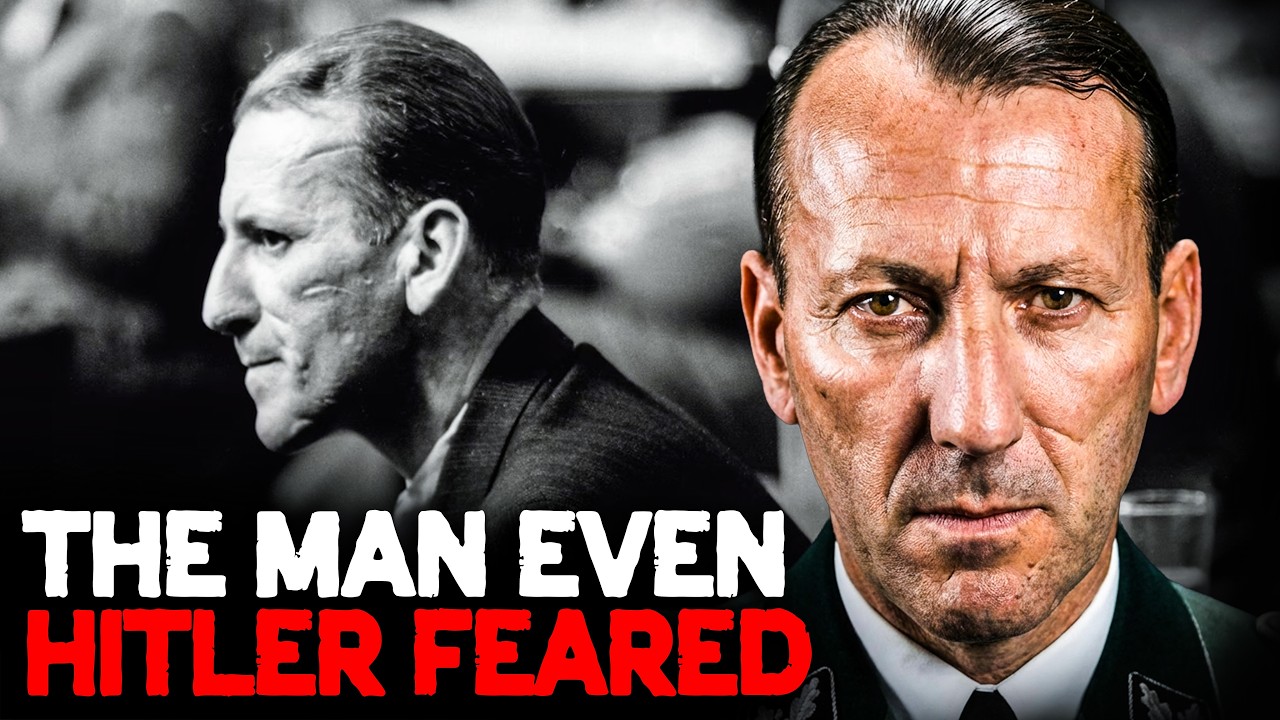 As the head of the Reich Security Main Office, the RSHA, Kaltenbrunner controlled the Gestapo, the SD, the Kripo, and the entire apparatus of Nazi surveillance, arrest, torture, and extermination. He was the man who, after the assassination of Reinhard Heydrich in 1942, stepped into the shoes of one of history’s most feared killers and ran that empire of darkness all the way to Germany’s collapse.
Born on October 4th, 1903, in the small town of Ried im Innkreis in Upper Austria, Kaltenbrunner was the son of a respected lawyer, Hugo Kaltenbrunner, and his mother Theresia, the daughter of an Austrian civil servant. The household was solidly middle-class, Catholic in its cultural sensibility, and keenly aware of status and respectability.
Young Ernst was a physically imposing boy from an early age, growing tall and broad-shouldered with a lean, angular face marked by high cheekbones and deep-set eyes. His most distinctive feature was a set of vivid dueling scars on both cheeks, acquired during his student years when fraternity dueling was still a common practice among Austrian university men.
These scars would remain with him for the rest of his life, giving him a menacing, almost theatrical appearance that was remarked upon by virtually everyone who encountered him. Allied interrogators after the war described him as physically intimidating, even in defeat, a large man whose scarred face and cold gaze projected an air of contained violence.
After completing his early schooling in Linz, where the family had moved when Ernst was a boy, he followed his father into the law, enrolling at the Graz University of Technology in 1921 to study law and chemistry. Linz is a name worth noting in the context of Austrian Nazi history, because it was also the city where Adolf Hitler had grown up.
By the time he reached university age, Kaltenbrunner was already developing political views that would draw him increasingly toward the most extreme expression of that nationalist tradition. At Graz, he became deeply involved in the German nationalist fraternities that dominated student life at Austrian universities in this period.
His formal entry into the Nazi movement came in 1930 when Kaltenbrunner joined the National Socialist German Workers’ Party, receiving party membership number 300,179. Austria in 1930 was a country in deep crisis, buffeted by the economic catastrophe of the Great Depression.
The following year, in 1931, Kaltenbrunner took the additional step of joining the SS, the Schutzstaffel, Heinrich Himmler’s elite paramilitary organization. His SS number was 13,039, a relatively low number that reflected his early entry into an organization that would eventually number in the hundreds of thousands.
The political situation in Austria through the early 1930s was one of mounting tension and episodic violence. The Austrian government, under Chancellor Engelbert Dollfuss, was growing increasingly authoritarian, and by 1933 and 1934, it was moving to suppress both the Social Democrats and the Nazis with equal determination.
In May 1934, Kaltenbrunner’s luck ran out, and he was arrested by Austrian authorities for plotting against the state, accused of organizing an effort to acquire explosives and overthrow the government. He was imprisoned for 6 months, spending a period of late 1934 and early 1935 behind bars before his release.
The Anschluss of March 1938, when German troops marched into Austria and incorporated it into the Reich in a bloodless coup that most Austrians received with apparent enthusiasm, transformed Ernst Kaltenbrunner’s life overnight. Within weeks, he was appointed higher SS and police leader for the Danube region.
In these dual capacities, Kaltenbrunner presided over the immediate post-Anschluss terror in Austria with a thoroughness that impressed even his superiors in Berlin. Political opponents of every stripe were arrested, and the jails of Vienna filled rapidly with the enemies of the Reich.
It was in Vienna that Adolf Eichmann first developed the bureaucratic techniques of forced emigration and dispossession that would later be applied to Jews across all of occupied Europe. The scenes that followed the Anschluss were horrific, with Jewish men and women seized from their homes and forced to scrub pavements with toothbrushes.
Under Kaltenbrunner’s authority, the Mauthausen concentration camp was established in August 1938, just months after the Anschluss. What made Mauthausen particularly terrible was its granite quarry, where prisoners were forced to carry enormous blocks of stone up the 186 steps, known as the stairs of death.
On January 30th, 1943, Heinrich Himmler summoned Kaltenbrunner to Berlin and informed him that he was to take over the Reich Security Main Office from the assassinated Reinhard Heydrich. The RSHA was the central nervous system of the Nazi state system of surveillance, terror, and mass murder.
The RSHA was divided into several major departments, each with a distinct but overlapping function. Amt 4 was the Gestapo, the secret state police, the organization whose name had become synonymous with terror across occupied Europe.
Under Heydrich, the RSHA had become one of the most powerful organizations in the entire Third Reich. He had organized the Wannese Conference of January 20th, 1942, at which the systematic murder of all European Jews had been formally coordinated across all the relevant agencies of the Nazi state.
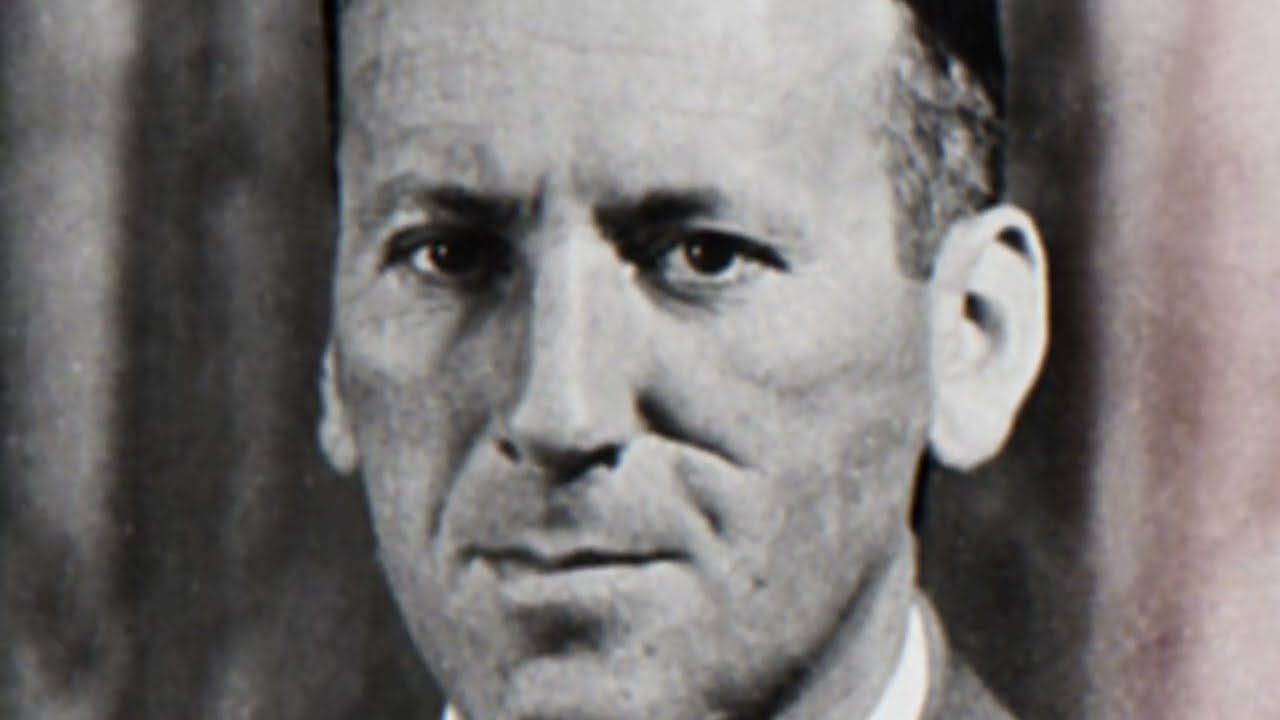 Kaltenbrunner was formally appointed as Chief of the Security Police and the SD on January 30th, 1943, exactly 10 years to the day after Hitler’s appointment as Chancellor of Germany. He was 39 years old, and he now commanded an organization of approximately 50,000 employees.
One of the first things that became clear when Kaltenbrunner took command of the RSHA was that he was operating the organization in a fundamentally different mode than Heydrich had. Heydrich had been an innovator and a builder, but Kaltenbrunner was more of a consolidator and an implementer.
Kaltenbrunner was a heavy drinker, a trait that his colleagues and subordinates noticed from early in his tenure. He consumed prodigious quantities of alcohol, particularly schnapps, and held his briefings with the characteristic bluntness of a man who had little patience for the niceties of bureaucratic procedure.
The Gestapo, Amt IV of the RSHA, was the centerpiece of Kaltenbrunner’s terror empire. Under its chief, Heinrich Müller, the Gestapo had grown into a vast surveillance organization with offices in every city and major town of the Reich and its occupied territories.
The Gestapo’s methods were brutal and systematic. Suspects were arrested in the middle of the night, transported to the nearest Gestapo headquarters, and subjected to what the organization euphemistically called enhanced interrogation, meaning torture.
Under Kaltenbrunner, the Gestapo’s operations against political enemies of the regime were intensified and broadened. The network of concentration camps received the Gestapo’s prisoners in their thousands, and the special courts handed down death sentences with a frequency that increased through 1943 and 1944.
But it was in the implementation of the final solution that Kaltenbrunner’s authority was most catastrophically exercised. At the center of the bureaucratic management of the final solution within the RSHA was Amt IV B4, the section of the Gestapo specifically dedicated to the so-called Jewish question headed by Adolf Eichmann.
Documents produced at the Nuremberg trials demonstrated beyond any reasonable doubt that Kaltenbrunner was fully informed of the activities of Eichmann’s section and that he personally authorized and approved the deportations that were organized from 1943 onwards.
The question of how many people died as a direct result of operations that Kaltenbrunner personally authorized is impossible to answer with precision, but the numbers involved in the deportation programs that operated under his authority run into the millions.
The year 1944 was the year of Hungary, and it was the Hungarian deportations that would provide some of the most damning documentary evidence against Kaltenbrunner at Nuremberg. Hungary’s approximately 700,000 Jews had not been subjected to the systematic deportation and murder that had killed millions of Jews in Poland and the Soviet Union.
Then, in March 1944, Germany occupied Hungary directly, deposing the government of Admiral Miklós Horthy. The deportations began on May 15th, 1944, and proceeded with a thoroughness that was 𝓈𝒽𝓸𝒸𝓀𝒾𝓃𝑔 even by the standards of the already appalling final solution.
In less than 8 weeks, approximately 437,000 Hungarian Jews were deported to Auschwitz-Birkenau. The trains ran four times a day at peak operation, each carrying thousands of people in cattle cars without adequate food, water, or sanitation.
Kaltenbrunner’s direct role in the Hungarian deportations was documented at Nuremberg through a combination of his own correspondence, the testimony of Eichmann’s subordinates, and the records of meetings between Kaltenbrunner and Hungarian officials during the spring and summer of 1944.
The operations of the Einsatzgruppen, those mobile killing units of the RSHA that had operated in the occupied Soviet territories, also fell under Kaltenbrunner’s authority as RSHA Chief. The Einsatzgruppen reports, meticulous tabulations of the number of people killed, were compiled and distributed by the RSHA.
The medical experiments conducted in the concentration camps also deserve particular mention in any account of the crimes that occurred under the broader SS authority that Kaltenbrunner represented. At Auschwitz, the SS physician Josef Mengele conducted experiments on prisoners with a complete disregard for the suffering of his subjects.
Throughout all of this, what was the internal life of Ernst Kaltenbrunner? The historical record gives us a partial answer. He was not a man given to philosophical reflection or moral anguish.
 He treated mass murder with the same matter-of-fact professionalism that any bureaucrat might bring to any large administrative task.
He also had a private life that coexisted with his professional horror in the way that was characteristic of so many senior Nazis. During the war years, he developed a long-term relationship with a mistress, Gisela von Westarp, with whom he fathered twin boys in 1945.
As the Allied armies closed in on Germany from east and west through 1944 and into 1945, the role of the RSHA and its chief underwent a significant transformation. The terror apparatus now took on an additional function, maintaining the will to fight among a German population that was increasingly aware that the war was lost.
In the spring of 1945, as the American army advanced from the West, the SS authorities at Mauthausen faced decisions about what to do with the tens of thousands of prisoners who remained alive. On April 28th, 1945, the last major mass execution at Mauthausen took place when 33 Dutch Secret Service agents were executed.
On May 7th, 1945, Germany’s unconditional surrender was formally signed. The war in Europe was over. And somewhere in the Austrian Alps, Ernst Kaltenbrunner was trying to become someone else.
He took on the false identity of a Dr. Ernst Unterhuber, a physician, and retreated to a remote mountain hut in the Alps near Altaussee. He grew a beard and stayed away from populated areas.
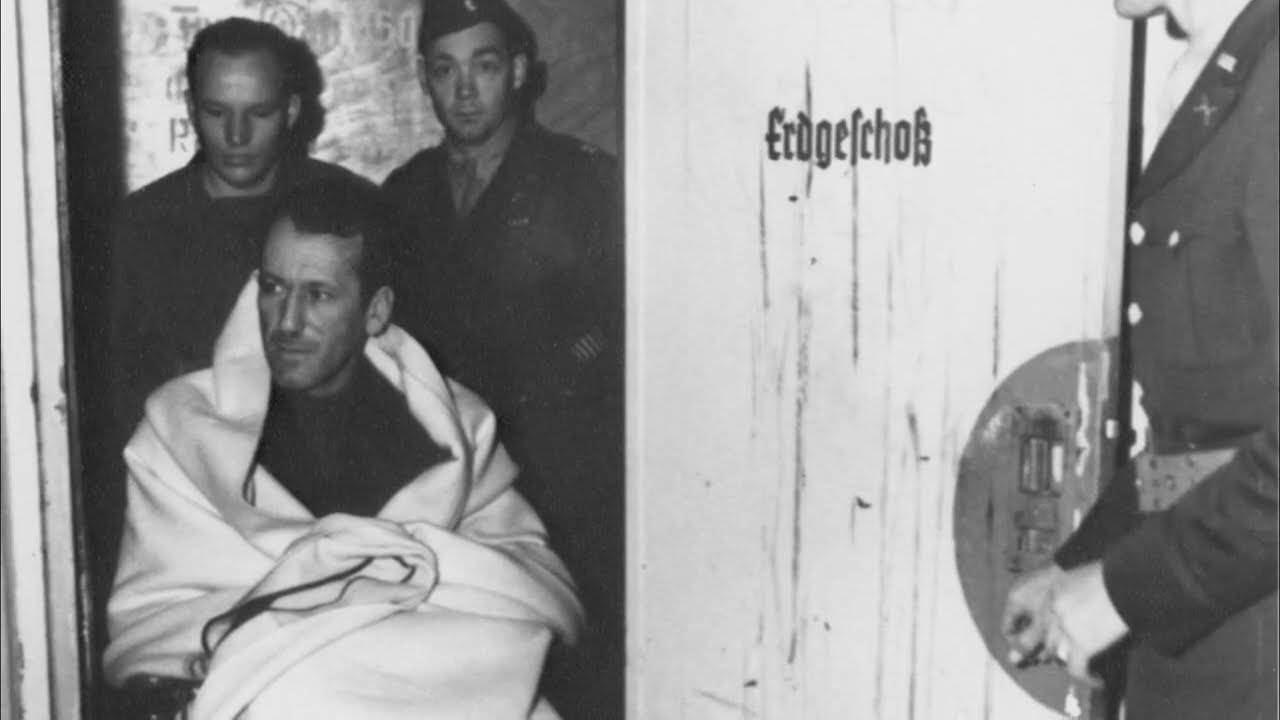
On May 12th, 1945, just 5 days after Germany’s surrender, American CIC agents tracked down the mountain hut where Kaltenbrunner was hiding. He initially attempted to maintain his false identity, but the identification was quickly broken.
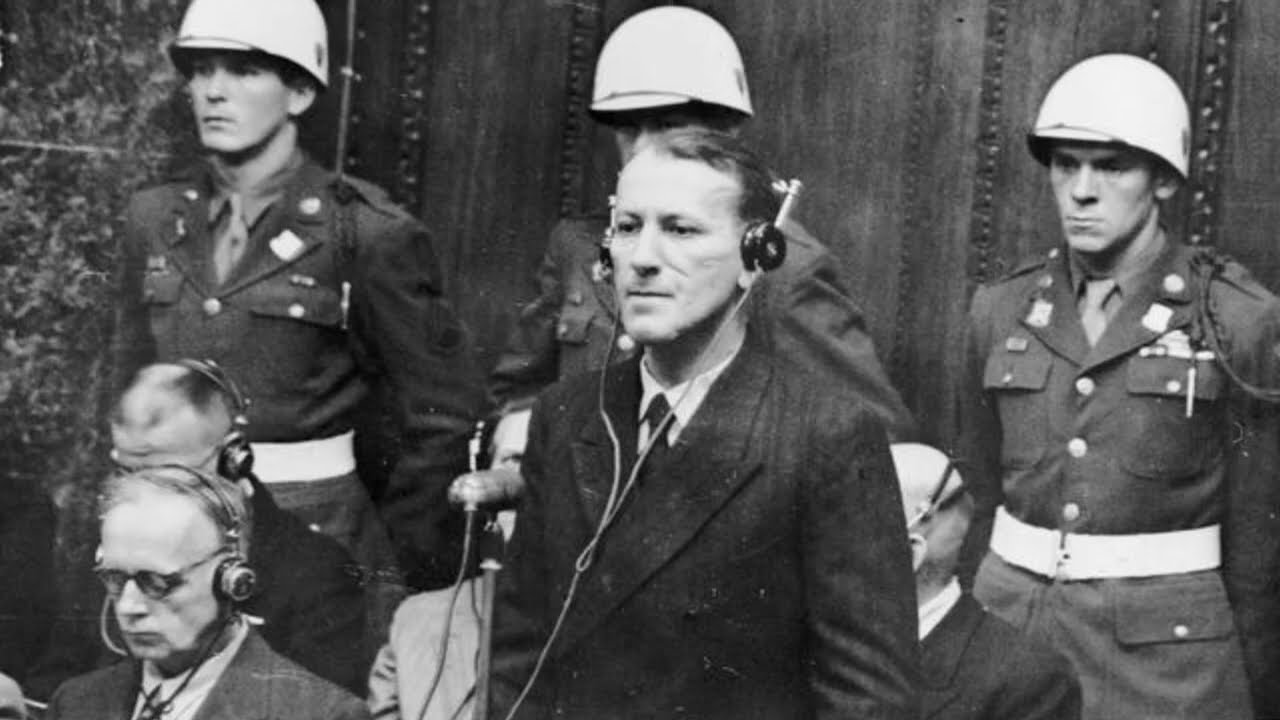
The trial at Nuremberg, which began on November 20th, 1945, presented the major Nazi war criminals with a choice. Kaltenbrunner chose to contest the factual basis of the charges themselves, denying his own knowledge and involvement as thoroughly as possible.
The core of Kaltenbrunner’s defense was a systematic denial of knowledge and responsibility. He claimed that he had been essentially an intelligence gatherer rather than an operational commander.
The prosecution proceeded to demolish this defense with methodical precision. Document after document bearing Kaltenbrunner’s signature was introduced into evidence, each one relating to some aspect of the mass murder or persecution over which the RSHA had presided.
Perhaps the most dramatic moment in Kaltenbrunner’s trial came with the testimony of Rudolf Höss, the former commandant of Auschwitz, who provided extraordinarily detailed testimony about the operations of the death camp.
The cross-examination of Kaltenbrunner by the American prosecutor, John Harlan Amen, was one of the most relentless and effective passages in the entire trial. Amen confronted Kaltenbrunner document by document, forcing him to either acknowledge his signature or claim that documents were forgeries.
On September 30th and October 1st, 1946, the judges read out their verdicts. Kaltenbrunner was found guilty on counts three and four, war crimes and crimes against humanity.
The tribunal’s judgment on him was unambiguous. Kaltenbrunner was RSHA chief from January 1943 until the end of the war. He was directly responsible for an enormous number of murders, tortures, and other crimes.
The sentences were pronounced on October 1st, 1946. Twelve of the defendants were sentenced to death by hanging, including Ernst Kaltenbrunner.
The hangings began in the early hours of October 16th, 1946 in the gymnasium of the Nuremberg prison. Kaltenbrunner walked to the gallows with a steadiness that observers described as remarkable.
 When asked if he had any final words, he made a brief statement that was characteristically defiant and self-serving. He claimed that he had served the German people and had done his duty as a German officer. He expressed no remorse.
He was hanged at 2:45 in the morning on October 16th, 1946. He was 42 years old.
The question of Kaltenbrunner’s place in the broader history of the Nazi regime has been debated by historians ever since. He was among the most powerful and directly culpable of all the Nazi criminals, yet he has never achieved the infamy in popular historical memory that attaches to names like Himmler, Heydrich, or Eichmann.
The RSHA, under Kaltenbrunner’s direction, was the organizational heart of the Holocaust and the Nazi terror more broadly. It was Kaltenbrunner who held this apparatus together through the final period of the war.
He did not shut it down. He kept it running until the very end, and thousands of people died in the final weeks and days of the war under the authority of a man who had already been effectively defeated in the field.
The story of Ernst Kaltenbrunner also raises profound questions about the nature of personal responsibility within bureaucratic systems of mass murder. He was not a monster in the cartoonish sense that popular culture sometimes depicts Nazi criminals.
He was a lawyer, a husband, a father, a man who went to university and studied law, and worked his way up through professional hierarchies with the same kind of ambition and calculation that drives careers in many fields.
He made choices throughout his career freely and repeatedly that moved him in the direction of greater complicity in greater crimes. Each of these was a choice and each took him deeper into the machinery of murder.
The legacy of the Nuremberg trial itself, including the trial of Kaltenbrunner and his co-defendants, has been the subject of extensive debate among international lawyers and historians.
The response of the prosecutors, that the crimes committed by the Nazi regime were so fundamental a violation of the universal principles of human dignity and justice that no positive law was required to justify their prosecution, established the foundation for what became the international legal framework of crimes against humanity.
The physical evidence of the crimes for which Kaltenbrunner was executed has never been entirely erased. Mauthausen, the concentration camp that was established under his authority, now functions as a memorial and museum.
The broader question of what the Kaltenbrunner story tells us about the capacity for evil within ordinary social and political institutions is perhaps the most disturbing dimension of his legacy.
He was not a madman, not in any clinically meaningful sense. He was an ideologically committed, organizationally capable, personally brutal man who rose through a criminal system to its apex and used the power he achieved there to implement policies of extermination with cold efficiency.
He had started as a provincial lawyer’s son with political convictions and professional ambitions. He had ended as one of the worst criminals in recorded history, hanging on a gallows in an occupied German city in the small hours of an autumn morning.
His story is a warning and an education, and it is one that the world continues at its peril to need.


