The North Atlantic was a graveyard in the spring of 1943, and the men sailing through it knew the odds were stacked against them. For three brutal years, the German U-boat fleet had operated with near impunity, stalking Allied supply convoys and sending thousands of tons of vital shipping to the ocean floor. The lifeline between North America and Britain was fraying, and the Admiralty in London was running out of ideas.
Yet, in the span of a single month, the entire calculus of the war at sea was rewritten. The U-boat arm, once the terror of the deep, suffered a catastrophic blow from which it would never recover, losing 41 submarines in just 30 days. The official histories often cite improved radar and code-breaking as the turning point, but the true catalyst for this dramatic shift was far more unassuming, a cold, chalk-dusted basement in Liverpool and the unconventional thinking of a 19-year-old woman named Janet Okell.
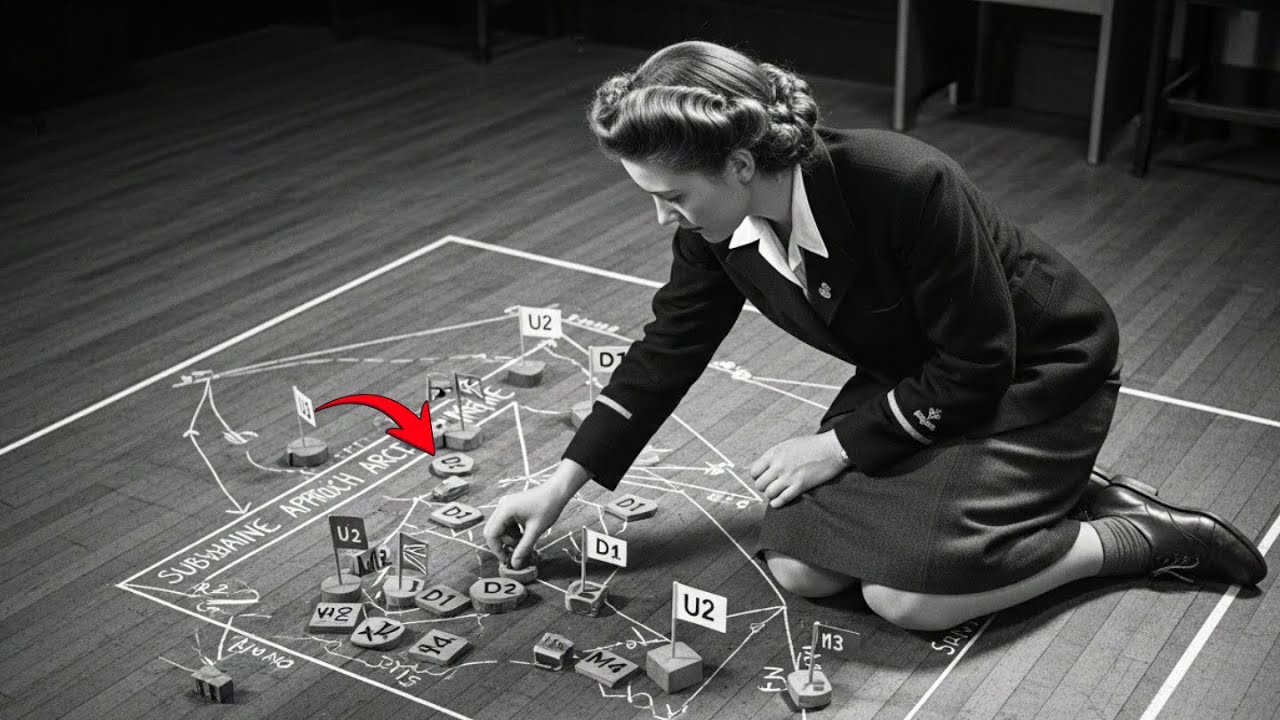 The story begins not on the bridge of a destroyer, but in the Western Approaches Tactical Unit, a secret training facility buried beneath Derby House. To the casual observer, the room looked like a child’s playroom, a large floor painted a deep Atlantic blue, crisscrossed with white chalk lines representing shipping lanes and grid coordinates. Wooden models of destroyers, corvettes, and merchant ships sat scattered across the surface, looking like pieces from an oversized board game.
Senior naval officers who first visited the facility dismissed it as a harmless training exercise, a way to pass the time for the young women of the Women’s Royal Naval Service who operated the models. They saw a game, but what they failed to recognize was a revolution in tactical thinking that would save thousands of lives and alter the course of the conflict.
The simulations run in that basement were anything but child’s play. Every inch of that painted floor represented real distances at sea, and every movement was governed by strict rules derived from actual combat reports. The young WRNS personnel timed every maneuver with stopwatches, tracking course changes and signaling delays with a precision that mirrored the chaos of a real convoy battle.
When officers came in from sea duty, they stood on a raised platform, issuing orders as if they were on the bridge of their own ship. Their commands were translated into the movements of the wooden pieces below, creating a feedback loop that was brutally honest. If an escort made a mistake, the model U-boats slipped through the gaps.
The floor did not lie, and it did not care about rank or reputation.
It was within this environment that Janet Okell, a mathematics prodigy fresh out of school, began to see patterns that the seasoned veterans had missed. She was assigned the role of the enemy, controlling the wooden U-boats in the simulations. Instead of simply moving pieces randomly, she devoured captured German signals and tactical reports.
She studied the patience of the wolfpacks, their reliance on shadowing a convoy for hours, and their preference for striking at night when visibility was poor. She realized that the German captains were not fighting for speed; they were fighting for angles. They looked for the smallest imbalance in the escort screen, a single destroyer drifting too far from its station, a moment of confusion that opened a corridor through the defensive ring.
The core problem, Janet discovered, was the instinct of the escort commanders themselves. When a U-boat was spotted, the natural reaction was to charge after it, to hunt it down and destroy it. But this aggressive pursuit had a fatal flaw.
 Every time an escort rushed away from the convoy to chase a contact, it stretched the protective screen thin. The gap created by that chase was precisely the opening the other U-boats in the wolfpack were waiting for. Once a submarine slipped through that gap and reached the center of the formation, the merchant ships were doomed.
The floor of the WATU basement showed this failure repeatedly, but it also showed the alternative, a disciplined, tight formation that refused to be baited into a chase.
The lesson was simple, yet it contradicted years of naval doctrine. The key to survival was not aggressive hunting, but defensive restraint. The escort screen had to hold its shape, deny the enemy angles, and force the submarines to come to them.
This was the insight that Janet Okell brought to the table, and it was an insight that would soon be put to the ultimate test. The turning point came in March 1943, when Admiral Max Horton, the new Commander-in-Chief of Western Approaches, paid a surprise visit to the basement. He watched the simulations with a quiet intensity, and then he asked to see the young woman who was controlling the enemy submarines.
He wanted to test the theory for himself.
Horton took the platform and commanded a simulated convoy using the old, aggressive tactics. He spread his escorts wide and ordered them to chase every contact. On the floor, Janet Okell calmly moved her wooden U-boats, exploiting every gap his formation created.
In a matter of minutes, she had sunk 17 simulated merchant ships without losing a single submarine. The room fell silent. Horton reset the map and ran the scenario again, this time using the new, tighter defensive screen that Janet and the WATU team had developed.
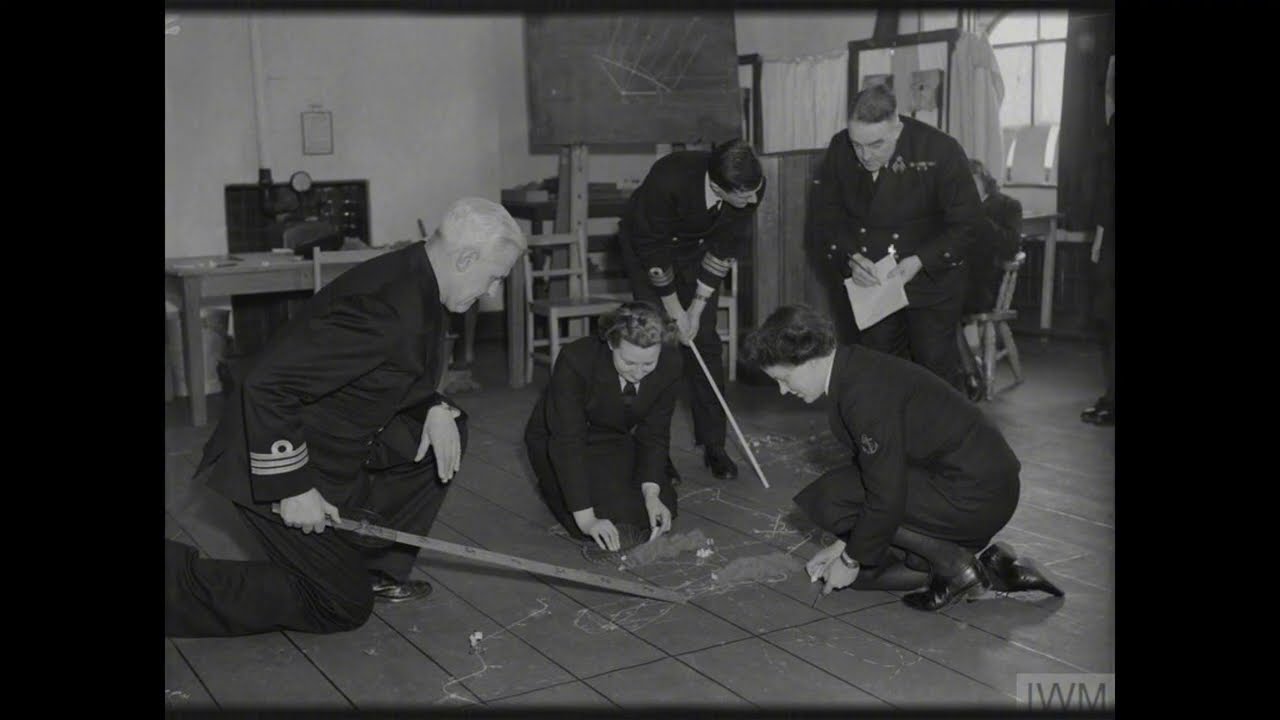 He tried every trick he knew to break through, but the formation held. The convoy survived. The demonstration was over, and Horton had seen enough.
He issued a single, decisive order: “This is the doctrine. Teach it to everyone.”
The impact was immediate and profound. Escort commanders from across the Atlantic were summoned to Liverpool to undergo the WATU training. They stood on that platform, faced the simulations, and learned the hard lessons of the painted floor.
They learned to resist the urge to chase, to trust the integrity of the screen, and to understand that the safety of the convoy was paramount. The training was humbling for many, as they were repeatedly outmaneuvered by a teenager with a tray of wooden models, but it was also necessary. By the end of April, the new doctrine was being implemented across the Atlantic convoys, and the results were staggering.
When May 1943 began, Admiral Karl Dönitz committed his U-boat fleet to a massive offensive, expecting to crush the convoys once and for all. Instead, his submarines were met with a wall of discipline they had never encountered before. The convoys were tighter, the escorts more coordinated, and the gaps they relied upon were simply not there.
The U-boats were forced to attack from poor positions, often at long range, and they were easily driven off by the combined efforts of the escorts and air patrols. The hunters had become the hunted. As the month wore on, the losses mounted.
Submarine after submarine failed to return to base, their hulls crushed by depth charges or their crews lost to the cold Atlantic.
 By the end of May, the number of lost U-boats had reached 41, a catastrophic rate of attrition that the German Navy could not sustain. Dönitz was forced to make a historic decision: he ordered a full withdrawal of his forces from the North Atlantic. It was the first major retreat of the campaign, and it marked the definitive end of the U-boat threat to the Allied lifeline.
The battle had been won, not by a new wonder weapon, but by a change in tactics that had been born in a basement and championed by a young woman whose contribution would remain a secret for decades. The 41 U-boats lost in that 30-day period were a direct testament to the power of Janet Okell’s “silly” model trick.
The war continued for two more years, but the Atlantic was never the same. The new escort doctrine saved countless lives and ensured that the supplies needed to win the war would continue to flow. The WATU team continued their work, training thousands of officers in the principles of the defensive screen.
Janet Okell remained in the basement until 1945, running simulations and refining the tactics that had turned the tide. When the war ended, the work of the WATU was classified under the Official Secrets Act. The young women who had helped win the Battle of the Atlantic returned to their civilian lives, bound by oath not to speak of what they had done.
Their contributions faded into the background, a footnote in the history of a war filled with dramatic battles and heroic deeds.
For decades, the story of the basement at Derby House remained hidden. It was only through the slow declassification of files and the diligent work of historians that the full scope of their achievement came to light. The numbers are now clear: thousands of commanders trained, merchant shipping losses cut by more than 70% in the months following the implementation of the new doctrine, and the destruction of 41 U-boats in a single month.
The legacy of Janet Okell lives on in the naval tactics still taught today. The principles of the defensive screen, the importance of holding formation, and the danger of aggressive pursuit are all rooted in the lessons she demonstrated with chalk and wooden ships on a painted floor.
Janet Okell passed away in 2009, her obituary a brief paragraph that made no mention of her wartime service. But her legacy is etched into the history of the Second World War. She was a woman who saw a problem that others had learned to ignore, and she had the intelligence and the courage to solve it.
She proved that the turning point of a global conflict does not always come from a battleship or a general’s strategy. Sometimes, it comes from a quiet room, a piece of chalk, and a young woman who was willing to see what others could not. The 41 U-boats that vanished in May 1943 are a permanent reminder of her contribution, a silent tribute to the power of a simple, brilliant idea.