9 September 2026
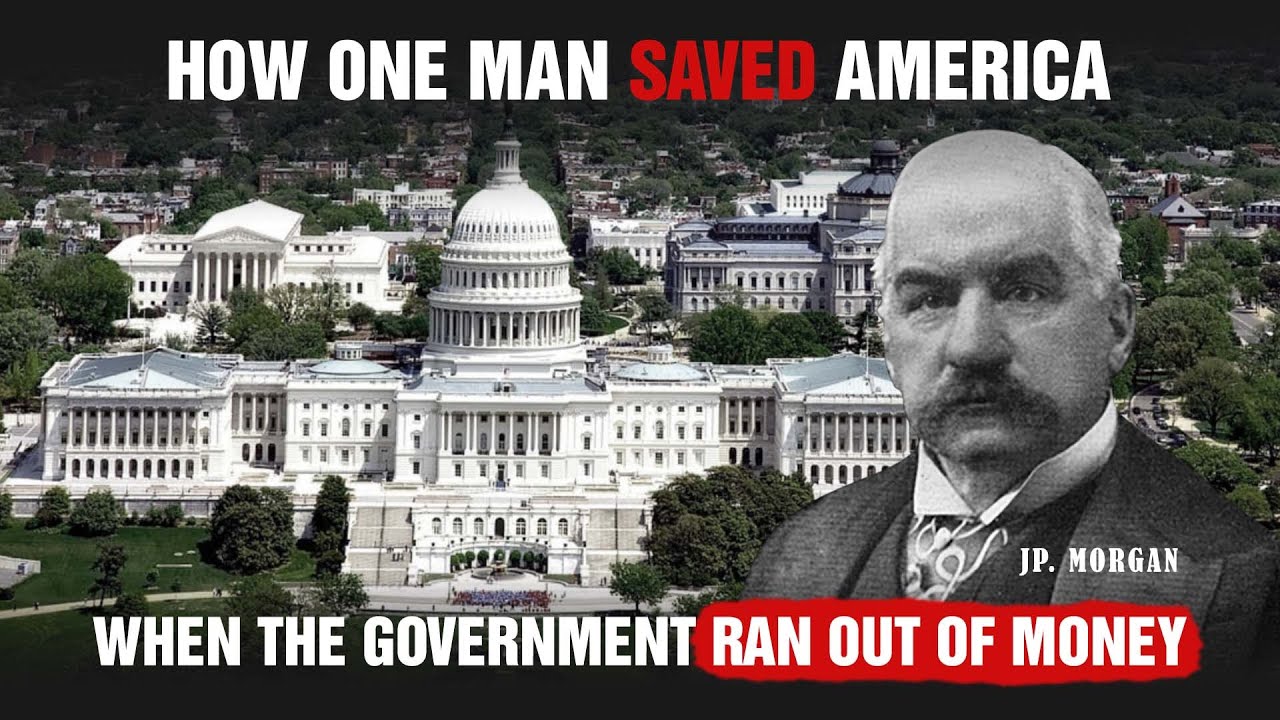
ROME, ITALY – The private god of Wall Street died quietly in his sleep, and the American financial system barely flinched. John Pierpont Morgan, the 75-year-old colossus who had single-handedly rescued the U. S. Treasury from collapse, dictated the fate of railroads, and welded a steel empire together with sheer force of will, was pronounced dead at 9:17 a. m. local time in suite 402 of the Grand Hotel. He had been suffering from acute nervous exhaustion and complications from a lifetime spent bending markets to his will. When telegraphs carried the news across the Atlantic and hit the floor of the New York Stock Exchange the following morning, traders braced for carnage. It never came. Stocks opened soft, dipped a fraction, then held. By the closing bell, the Dow Jones Industrial Average had shed barely a point. There was no panic. No runs on banks. No emergency meetings of executives fighting for their corporate lives. That stillness in the markets at the moment of his death tells the real story of what killed the Gilded Age and the men who built it. Morgan, the legendary investor who had become a living monument to concentrated American power, died thinking he was essential to the system he controlled. In truth, the system had already moved past him. The institutions were being forged before he drew his final breath that would replace him. The funeral trains are being prepared to carry his body from the Grand Hotel to his private yacht, the Corsair, which will carry him home to New York. But the thrones he occupied across the financial boardrooms of America were already being dismantled in his name. For four decades, Morgan built and operated his empire, a network of corporations and fortunes unrivaled in human history. His critics called it monopoly. Morgan and his allies called it efficiency. The reality, however, was far more untouchable. His reach was so vast at its peak that he controlled over 40 percent of the nation's railroads, steel production was dominated by U. S. Steel, which he created in 1901 for the first time as a "billion-dollar" corporation. His financial empire stretched through scores of banks and he personally sat on the boards of dozens of companies. Morgan’s corporate empire was so extensive that officials in Washington believed he controlled nearly one quarter of all American wealth. More than many foreign governments could boast, his assets were so vast that even the U. S. federal government, with its annual budget under $500 million, had to bow to his scale. Yet for all his command over the economy, Morgan could not control the forces already gathering at the gates of his tightly-held empire before his death, and the world he had helped create was already pulling away from him. The first force that shattered his gold-plated era was labor unrest. Men like Morgan’s friend Andrew Carnegie, who he bought out in the largest business transaction to that date, could deal with a union by deploying a private army of 300 guards -- Pinkerton detectives -- on barges at dawn, as he did in Homestead, Pennsylvania in 1892 against steelworkers. A 12-hour battle erupted that day, leaving 10 dead and 17 wounded. Federal troops had to be called in to crush the unrest. But the days when you could simply crush the working man were numbered. By the time the great coal strike arrived ten years later, in 1902, President Theodore Roosevelt, the man who proudly used the office as a "bully pulpit," made the unprecedented choice of calling both sides to the White House, treating labor as equals to manipulate capital. Morgan watched the ground swallow his old assumptions in real time. The second force came from political change. During 1904, the Supreme Court declared Morgan’s railroad trust, Northern Securities, illegal under the Sherman Act. Roosevelt, a man from Morgan’s own social class, said he wouldn't "fix things up," as Morgan had snobbily asserted private men should. Instead, Washington began to sue the other monopolies, shattering Standard Oil and American Tobacco in the years after. A "trust-busting" fever gripped the country. Yet it was the third force, the institutional replacement, that ultimately drove the knife into the man’s world before he lay down to rest. It grew from a financial catastrophe of his own doing: the Panic of 1907. The crisis that October brought with it the brutal realization that the federal government had no central bank to stop the bleeding. They had no mechanism to combat a financial run, the kind of destabilization that destroyed investor certainty with chilling speed. In desperation, the president called on the strongest instrument he could find to stabilize the economy: J. P. Morgan.…