DODGE CITY, Kan. — The crack of a pistol shot rings out across Front Street, a sound that once signaled death but now draws tourists to a replica of a saloon. This is the town that gave the English language its most enduring threat: “Get the hell out of Dodge.”
The phrase, a staple of American vernacular, implies a town so lawless, so dangerous, that escape was the only sane option. Those airborne bullets, wrapped in the smell of buffalo hide and cheap whiskey, have cemented Dodge City’s place in the American imagination as the wickedest city of the Wild West. Yet, a deep dive into the dusty archives and historical records reveals a far more nuanced and startling truth about the Queen of the Cowtowns.
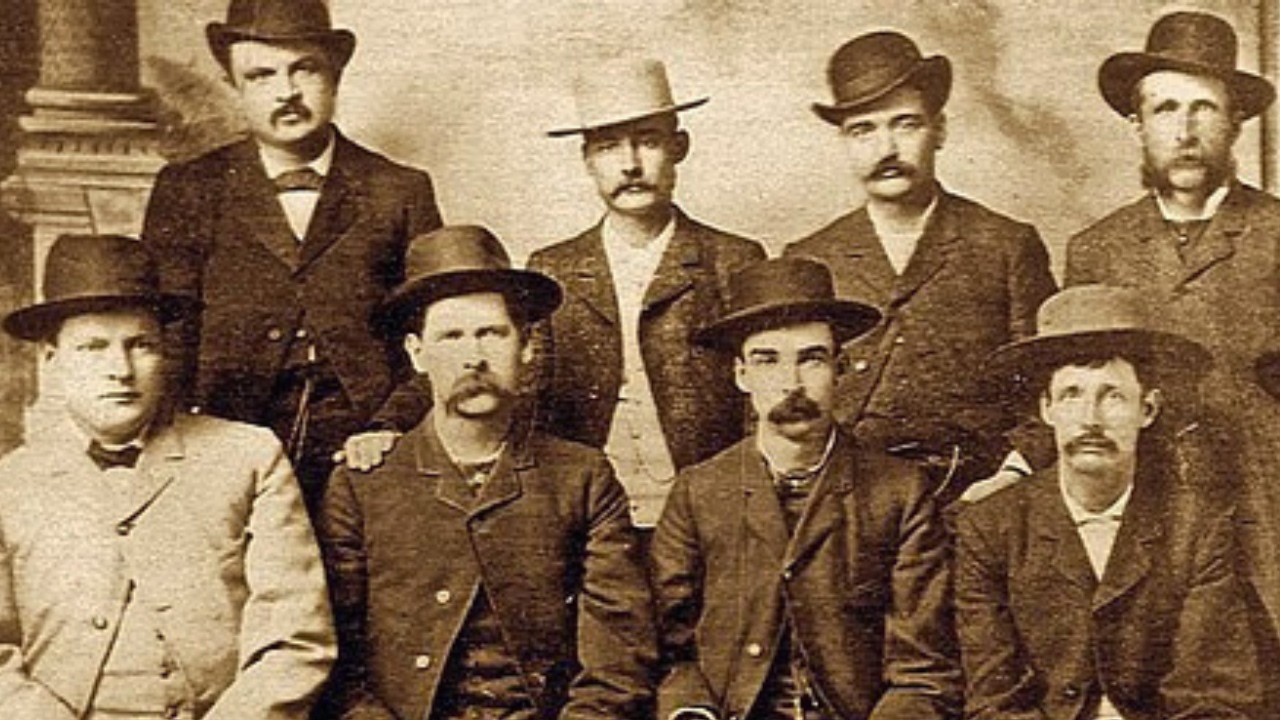 The gap between the myth and the reality is a chasm wide enough to swallow a herd of longhorns.
The legend was not born on a cattle trail or in a gambler’s den, but much earlier, out of the dust of the frontier itself. Long before a single whiskey tent stood, the land was marked by the Santa Fe Trail. First opened in 1821, the trail was the nation’s great artery, stretching from Missouri to the heart of New Mexico, and thousands of wagons rumbled through the territory that would later become Dodge City.
The history of the area, however, stretches back far deeper than the 19th century. Explorer Francisco Vázquez de Coronado passed through just 1541, nearly three centuries before the trail even existed. The people he encountered were ancestors of the Wichita nation.
Later came the Plains Apaches, and eventually the fearsome Kiowas and Comanches. The historical record indicates that the ground was a crossroads for a millennium. A stone spear point was dug out of a creek bank about 100 miles north of Dodge, found sitting under the shoulder blade of an extinct species of bison, bones dated over 10,000 years old.
The area was a battleground and a home long before a single white settler staked a claim.
The first white settlement in the area was a struggling outpost called Fort Mann, built by civilians in 1847 to protect travelers along the Santa Fe Trail. It was a dismal failure, surviving only a year due to poor conditions and attacks. The army attempted to establish a post of their own in 1850, building Fort Atkinson, but abandoned it by 1853, largely due to the fact that the entire fort was built of sod.
The soldiers, suffering, called it “Fort Sod” and then “Fort Sodom.” The true precursor to the city was Fort Dodge, established in 1865, about two miles east of the old sod fort. The name wasn’t a tribute to bravery, but a complaint.
General Grenville Dodge, who had sent the first force of men into the area to dig holes in the bluffs for shelter in harsh winter, allegedly claimed the name was an expression of their own misery. Colonel Henry Dodge is also a candidate, having led an expedition up the Arkansas River in the 1830s, but the connection lacks hard evidence. Officially, the name stuck.
For the first few years, the only permanent residents were soldiers out of Fort Dodge, along with a constant parade of wagon trains. Millions of buffalo darkened the plain. The first true settler arrived in 1871, a rancher named Henry Sitler who built a sod house about five miles west of the fort.
He intended to create a headquarters for a cattle operation, but it quickly became a popular stopping point for travelers, as his home was located right along the Santa Fe Trail. According to Sitler, if you stood on the hill above his place, you could see traffic stretching along the trail almost 24 hours a day, 7 days a week. And then came the whiskey.
In June of 1872, a new commander took over at Fort Dodge, a man named Richard Irving Dodge. One of his first supposed acts was to ban the sale of alcohol on the base. It was a decision that inadvertently created Dodge City.
The Army had set a buffer of land around the fort, and within that boundary, the post commander was king. Beyond it, he had no say over commercial dealings. To sell whiskey, all you had to do was set up right exactly 5 miles and one step west of the fort.
A 24-year-old Canadian named George Hoover took that gamble. On June 17th, 1872, just two weeks after Dodge took command, Hoover arrived with a wagon full of whiskey, placing it exactly on the boundary line. It was the very first business in what would become Dodge City.
Hoover would go on to become its first mayor.
The town company, a group of investors from the forts, laid claim to the land that summer and named it Buffalo City, but Kansas already had one of those. The name was changed to Dodge City after the fort. The planning was deliberate, as these investors knew exactly where the railroad was headed.
The Atchison, Topeka & Santa Fe came rolling in that September, changing everything instantly. There was a massive demand for buffalo hides back east, and Dodge City became the hide capital of the world in short order. The numbers are staggering.
One count says over 850,000 buffalo hides were shipped out of Dodge in just the first three years. That number reached a million and a half by the time the slaughter ended. When the hides were gone, they sold the bones.
Farmers gathered off the prairie and sold a ton for $68 to be used in everything from fertilizer to the finest China. Robert Wright, one of Dodge’s founders, a man quoted earlier, said the boom was unlike anything he had ever seen in a mining camp.
It was a lawless boomtown. There was no official law enforcement for the first year or so. No sheriffs, judges, or marshals.
Business owners handled things themselves or hired private muscle who were given the title of marshal without any official authority. The first jailhouse was a single hole in the ground where they kept drunks until they sobeered up. The violence came on the heels of the whiskey.
The first known killing occurred a few days later, on September 5th, 1872, when a man named Jack Reynolds was shot dead by a track layer for the railroad after an argument. The rumors spread like wildfire. A gambler known simply as “Denver” killed a man in the street for no reason other than to watch him kick.
Another gambler, Matt Sullivan, killed two of his assailants when accused of 𝒸𝒽𝑒𝒶𝓉𝒾𝓃𝑔 at cards though he was later assassinated by his own friend.
The homicide rate in that first year was astronomical. On paper, the town’s permanent population was around 300 people. When 18 verified homicides occur in a tiny settlement, the numbers are skewed.
 Dodge City experienced a homicide rate between 3,600 and 6,000 per 100,000 people. To put that in perspective, St. Louis, one of the deadliest American cities today, sits around 45.
While the comparison is imperfect, it shows the sheer level of violence the town was ostracized for. The residents did not accept the chaos. In February of 1873, they formed a vigilance committee to restore order.
But the vigilantes soon became as bad as the lawbreakers, using their power to settle personal scores. The breaking point came in early June of 1873, when a drunken mob murdered a black man named William Taylor. Taylor had the misfortune of being a personal servant to Richard Dodge.
The commander sent a patrol of soldiers to arrest the vigilantes, and the entire power structure was appointed.
On June 5th, 1873, the first election in Ford County was held. The man chosen as sheriff was a saloon owner named Charlie Bassett. The same ballot gave Ford County a probate judge and a prosecutor, which was a game-changer.
Of a sudden, there was an actual process— an arrest, a charge, a trial. It wasn’t perfect, but it worked. The mayhem slacked off.
The violence began to decline drastically, marking the end of the absolute lawless period.
But the buffalo was the engine that built the city, and by 1874, the engine was stumbling into a crisis. Hunters had shot out the herds in western Kansas and were forced to push south into the Texas panhandle, a violation of the Medicine Lodge Treaty. That spring, a party of hunters left Dodge for an old trading post known as Adobe Walls.
This was no small gamble. It was a Dodge City outpost, 150 miles deep into the Comanche people’s territory. The Comanches took notice and attacked on the morning of June 27th, 1874.
A small group of 28 men and one woman, most of them associates of the Dodge City, held off several hundred warriors. Guy named Billy Dixon made an amazing long shot that turned the tide. The bloody 𝒹𝓇𝒶𝓂𝒶 that was the Red River War ignited.
The Comanches were ultimately broken and sent to reservations. A few years later, the southern buffalo herd was nearly extinct. The entire economy of Dodge City had been based on this trade.
The time had come for a new way to save the town.
The solution was a disaster, in disguise. Texas ranchers had been driving longhorn cattle north to Kansas railheads ever since the Civil War, but the disease was the problem. Texas longhorns carried a tick, Boophilus annulatus, that spread “Texas fever.”
It was a death sentence to the competing northern stock. Farmers, who were becoming more common in central Kansas, saw their cattle dying. They petitioned the state legislature to draw a quarantine line, banning Texas longhorns to the east.
The line crept ever westward. By 1876, every established cow town was off-limits. Dodge City was on the wrong side of that line, but it was the only one that was still open.
By process of elimination, the city crowned itself the Queen of the Cowtowns. The Great Western Trail delivered millions of cattle to the stockyards of Dodge.
The cattle drives brought in the cowboys. They were often little more than dust-soaked kids, fresh off a two-month trail drive. They were thirsty.
They were looking for a bath, a drink, and a woman, “not necessarily in that order.” The conflict with law enforcement was less lethal than the period suggests. The major issue was drunken, disorderly conduct.
Instead of forcing them out, the city drew a line, actually the railroad tracks. North of the tracks, no guns and no nonsense. South of the tracks, there were the saloons, which were booming.
A measure of order was needed, and they brought in the most famous lawmen of the age.
Over the next few years, Dodge City played host to an all-star lineup western law enforcement: Wyatt Earp, Bat Masterson, and Bill Tilghman. These men swapped badges more often than tourists swap dollars at a casino. Charlie Bassett was county sheriff, hired Bat Masterson as his undersheriff.
Bat then beat him for the sheriff’s election, and Bassett took over the undersheriff role. Bat’s older brother, Ed, was city marshal, and Bassett was his assistant. When Ed died in the line of duty, someone had to fill her.
 Wyatt Earp became assistant marshal. It’s a tangle that never ceases to amaze. But legend is a magnifying glass for violence that wasn’t always there.
They more often cracked the drunks over the head with a pistol than dueled in the street. It was less paperwork and less messy for the local undertaker.
Still, the death came. On April 9th, 1878, Ed Masterson, tried to disarm a drunk named Jack Wagner. They started wrestling, Wagner shot the lawman at point blank.
Masterson staggered 200 feet to dirty dust at Hoover’s. Saloon fell over, dead. The most heartbreaking incident came later that year with the death of Dora Hand, a beloved entertainer.
She was left in her bed, furious at the dirty into a bedroom. The bullets weren’t meant for her. They were meant for the mayor, James Kelley.
He had beaten a spoiled Texas rancher that was known as Spike Kennedy. Instead of taking the dose of justice, Kennedy rode up to his home in the middle of the night, aimed his pistol and fired. What he didn’t know is that Kelly was out of town, and Dora Hand was sleeping in his bed.
She was shot to deathinnocently. The posse that went after Kennedy included the very best, made from the era: Masterson, Earp, Bassett, and Tilghman. It was a who’s who of the West.
One of the most famous gunfights of the era occurred just six months later. On the night of April 5th, 1879, in the Long Branch Saloon, two gamblers, Levi Richardson and a man known as Cock-Eyed Frank Loving, took seats across from each other. It was about a woman.
Richardson had reportedly made advances on Loving’s wife. Richardson initiated the altercation, saying “You damn son of a bitch.” Loving replied, “Try me and see.”
When they jumped up, both fired. Richardson was dead, and Loving walked out with a graze. His luck ran out three years later in Colorado, the name of the classic “gambler” John Allen.
It was a blunt period of validation for the town.
There were still legends on the very streets of Dodge. Doc Holliday was there in the summer of 1878, pulling teeth by day and gambling by night. The same year, Wyatt Earp allegedly had a confrontation with the notorious Clay Allison.
The gunfight at O. K. Corral was three years off, but.
By the early 1880s, these men scattered to the wind. They returned only in 1883 to support their friend after spring, a full-blown crisis.
Luke Short, ower of the Long Branch explored a direct competition with the Alamo, owned by a political rival. After a heated city election, the City Council passed an ordinance aimed at shutting down the prostitutes. But law enforcement was selective.
Three of Short’s female employees were arrested, while those who worked at the rival businesses were ignored. It was a use of law to push out competition. Rather than slink away, Short summoned the calvary.
He reached out to the scattered deadliest men he knew. From Tombstone, Wyatt Earp wrote back. Bat Masters also came.
Even Doc Holliday. The city saw the pressure of so many dangerous men converging and caved. The so-called “Dodge City War” ended without a single shot fired.
The city still had aftershocks. In July 1884, Mysterious Dave Mather gun down his rival, Thomas Nixon. The twos both ran saloons and had a personal lodas.
Nixon ran attempted a ambush, firing and missing Mather. Three nights later, Mather walked up and shot him dead in front of witnesses, an execution style murder. Mather’s mystique exceeded his law enforcement value, and he later vanished.
The town began to change.
The party was ending. The farmers that had been pushed out by the quarantine line kept pushing. In 1885, the Kansas legislature, seeing the shift in political power, extended the quarantine full on entire state.
 There would be no more contract dogtexas cattle, that’s it. The winter of 1885 and 86 was a devastating one, a blizzard that wreaked havoc and killed thousands of cattle. The Texas fever ranch had been filled in.
It was a tangled knot of economic collapse. The Santa Fe Trail was polit, the buffalo were gone, the buffalo were gone. The Fort Dodge was decommissioned in 1882.
The railroad, which had propelled times, no longer needed the cowboys.
In just over a decade, everything that had underpinned Dodge City’s economy, the soldiers,trail, and buffalo and the cowboys disappeared. As an economic engine, the city would be just another sleepy Great Plains town. But as a legend, it was immortal.
Yet, if the legend tries to claim the entire decade as one of bloodshed, it fails. The city’s statistics tell a different story than its myth. The photo-rich period of 1876 to 1885 saw only 15 total homicides, an average of about one and a half per year.
That’s including the famous shootouts in the Long Branch, the death of Ed Edson, and the killer of Dora Hand. The city’s deep wickedness was confined to its first year as a rough frontier camp, from 1872 to 1873. It was a violent, lawless free-for-all.
The violence didn’t go away, but it wasn’t the melt of a high-caliber bullet. It was the cheap knock of a pistol whip.
The citizens knew the city had to survive. The liveliest part of it was gone. The legend of old Dodge City was the product of the modern world.
A few decades after the collapse, the mythmakers came. First came the dime novels. Then the movies.
Then came the radio, and then there was the huge history.
Gunsmoke was born with a pale features of October, the TV western. The voice of a New Yorker named William Conrad, asking “Who is that? A small man with a harmless look, the kind or not.
Quiet, and poor. With dry wall.”
The show was spun, a hit of Dodge City, Kansas, and the very name of “the Marshal” was unmistakable. Moody another version was dropped, the actor’s father was an assistant town now. When CBS brought the cowboy to the small screen, they changed nothing.
Matt was a stoic man of few, not to be crossed. The fictional Dodge City ensure that actual Dodge City would be tied to the legend.
The real Dodge City, of course, leaned into the fantasy. History was perched directly in the center of the legend. They built a replica of the old Front Street, complete with boardwalks and hitching posts.
In the summer, they strip down and stage mock gunfights, right over that. A good few blocks from the original structure of the Long Branch, they built a replica there.
The tourists, they throw cash at the dusty remains, hoping to catch a fragment of that wildness. They are not looking for the man Dodge City of 1873, with its 18 homicides. They are looking for the romanticized, TV, fictionalized, omnipresent world of Wyatt Earp and Bat Masterson, of the Long Branch Saloon, and of Matt Dillon.
They look for the fictional Dodge, the one we now have in our heads and in our language.
The actual, historical reality is elevated and nearly absurd. It is a fabrication built on a tiny, brief spasm of violence that happened before most of the famous names even settled. The legacy of how Dodge became a legend isn’t a gunfight, or a lawmen, or a particular cowboy.
It is a cultural engine of pure mythology. The story used to be told backward. In the end the body count was fucking.
The fiction was wilder than the reality.
The saloons are gone, turned into souvenir shops. The cattle are nowhere to be seen. The white buffalo of the old east is replaced by a steam locomotive.
As the the sounds of the melting today, the tourists of the legend and the ghost of the reality. Its true story, recounting the fact that the violence was a lucid, small window, that was in the history of the Last West. The myth is famous, but the real town– the one that was built on fear of dust, worry about livestock, and careful business officer, it is a story worth telling every time.