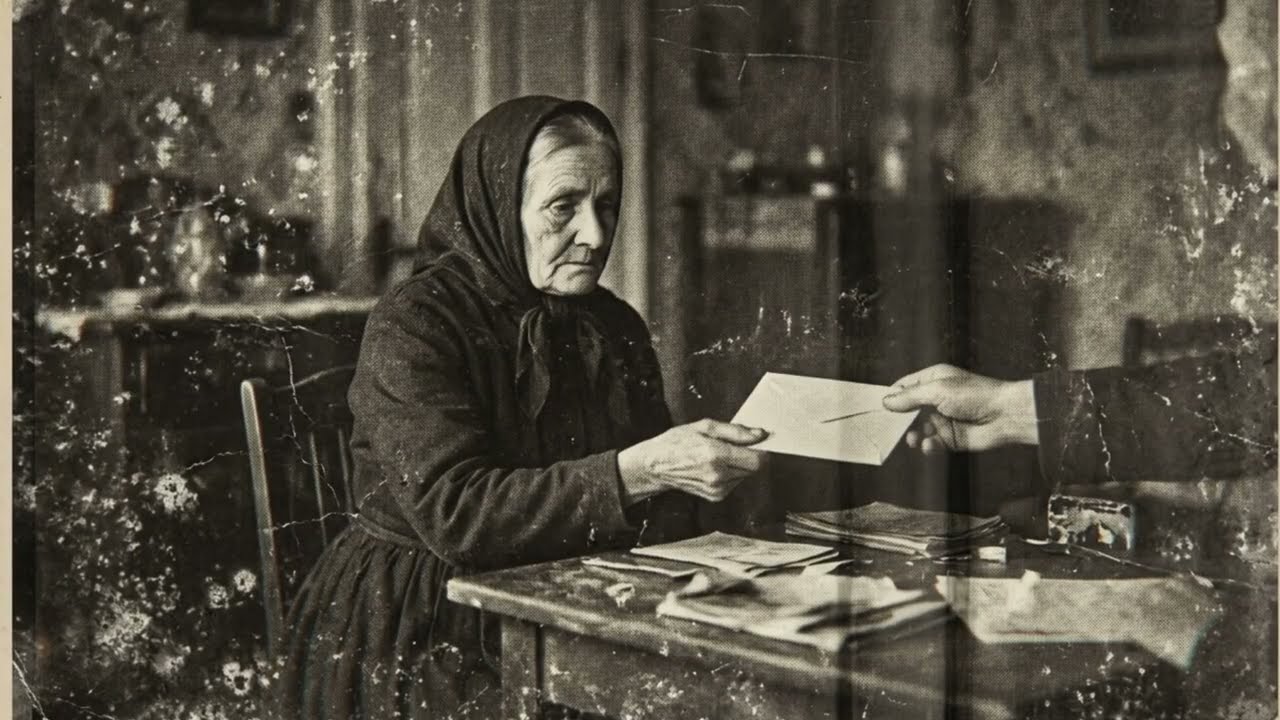
The letter arrived when Margaret Hess was sixty-seven years old.
She opened it alone.
Her husband had been dead for three years.
For forty years, she had paid dues into the Ladies of the Maccabees.
Eighty cents every month.
In return, the organization promised something simple:
If she became sick—
four dollars a week.
When she died—
five hundred dollars for her family.
It wasn’t charity.
She had paid for it.
Month after month.
Year after year.
Then came the letter.
The fund had been suspended.
Investment losses.
Benefits stopped.
The promise was gone.
Margaret had one thing that saved her.
A son.
He refused to let her enter the poorhouse.
Then she said something in a later interview that should stop you cold.
She knew women who had no son.
She did not say what happened to them.
And the interviewer never asked.
That was America before Social Security.
Not a country with no safety net.
A country with a safety net that had been built locally—
through lodges—
unions—
ethnic societies—
families—
churches—
and mutual-aid organizations.
Then, in the space of a few years, large parts of that system began collapsing.
Banks failed.
Benefit reserves vanished.
Workers moved away from the communities that had supported them.
Membership lapsed.
Poorhouses overflowed.
And by 1935, Washington stepped into a vacuum that had become impossible to ignore.
But here is the part most people never hear.
Social Security did not arrive in a world where nobody had ever figured out how to care for the old.
Americans had already built dozens of systems for doing it.
Some were surprisingly sophisticated.
Some covered hundreds of thousands of people.
Some paid disability benefits.
Some paid death benefits.
Some maintained retirement homes.
Some functioned like insurance companies without being commercial insurance companies.
So the real question is not simply—
Why did Franklin Roosevelt create Social Security?
The more interesting question is:
What existed before it—
and why did so much of it fail at almost the same moment?
To understand that, you have to enter a building in Indianapolis.
Red brick.
Carved limestone.
A meeting hall large enough for three hundred people.
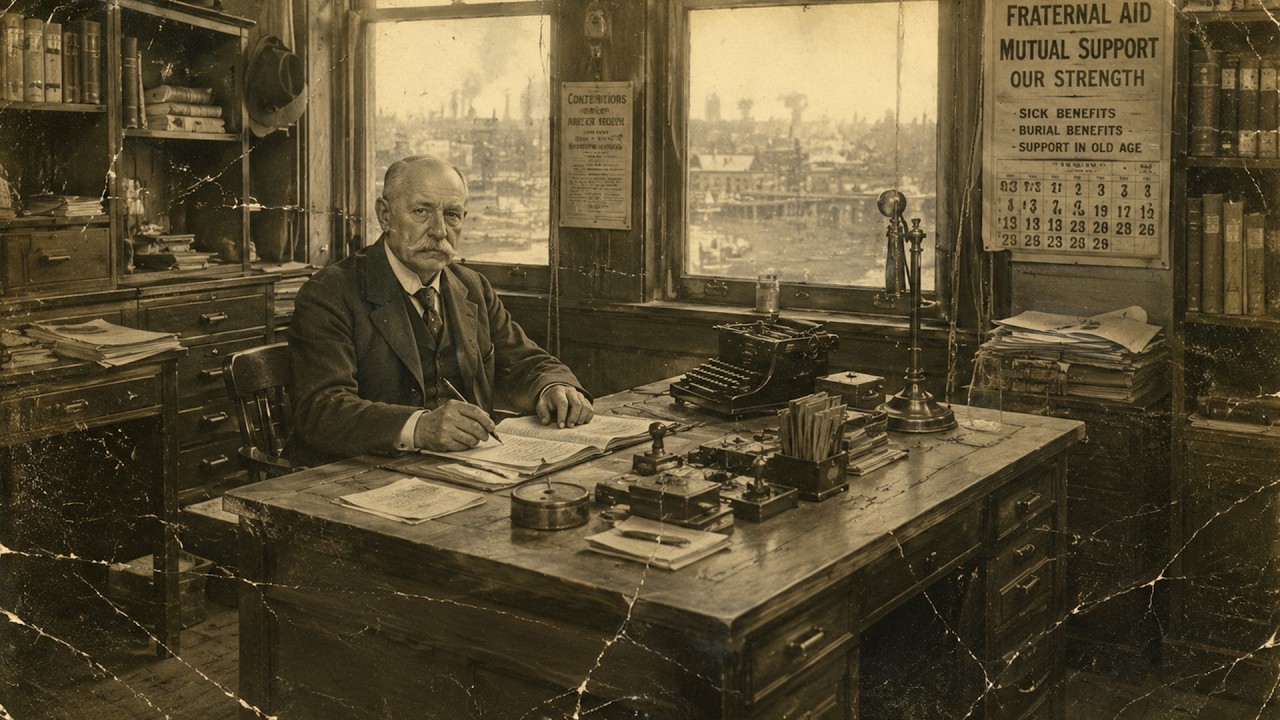
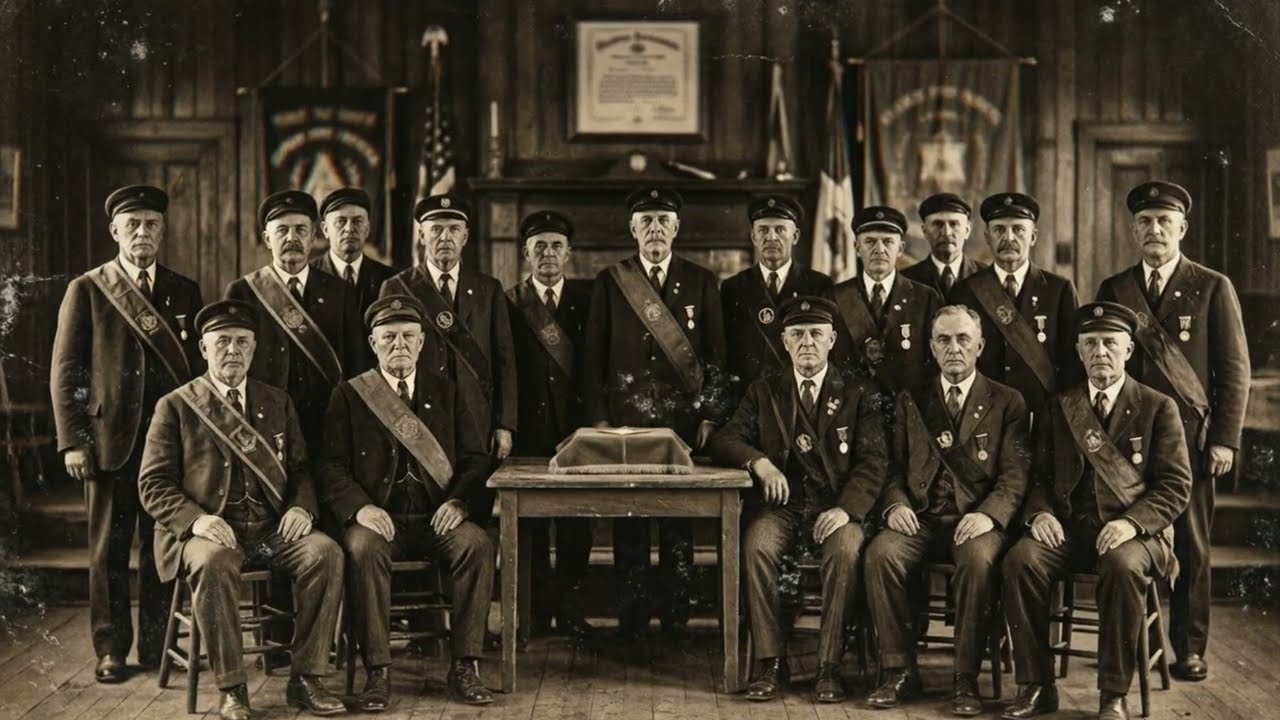
The Ancient Order of United Workmen Lodge Hall.
It cost roughly twenty-two thousand dollars to build.
And according to the source material behind this story, the money came from member dues.
Machinists.
Postal clerks.
Laborers.
Working men.
No federal grant.
No Social Security Administration.
No national welfare bureaucracy.
The members financed the building themselves.
And the building was only the visible part.
The real system was financial.
When a member became old or unable to work—
the lodge could provide weekly assistance.
When a member died—
his widow could receive a death benefit.
In the Ancient Order of United Workmen, the standard death benefit became famous:
Two thousand dollars.
In the late nineteenth century, that could represent years of ordinary wages.
Think about what that meant to a working family.
The husband dies.
The wage disappears.
But the family does not necessarily become destitute overnight.
Because hundreds—or thousands—of other members had been contributing to a common fund.
One family suffers.
The group absorbs the shock.
That is insurance.
But the insurer is not a distant corporation.
It is the lodge.
And these lodges were everywhere.
The Independent Order of Odd Fellows.
The Ancient Order of United Workmen.
The Knights of Pythias.
Woodmen organizations.
Railroad brotherhoods.
Ethnic mutual-aid societies.
Trade unions.
By the late nineteenth and early twentieth centuries, fraternal organizations had millions of members.
The Odd Fellows alone grew to enormous scale.
The Ancient Order of United Workmen spread across the country.
The Knights of Pythias developed benefit programs.
The Brotherhood of Locomotive Engineers built insurance structures for members.
These organizations were not simply men sitting in decorated rooms wearing ceremonial regalia.
Some did that.
But many also operated serious financial systems.
Treasurers.
Benefit funds.
Constitutions.
Rules.
Assessments.
Claims.
Audits.
Eligibility requirements.
A member became sick and could not work.
The lodge paid.
A member died.
The family received money.
A worker became disabled.
A benefit could continue.
Some organizations maintained homes for aging members.
The International Typographical Union, for example, operated a home in Colorado Springs for elderly and disabled printers.
Members paid small assessments while working.
The institution supported them later.
Again—
not charity from strangers.
A reciprocal obligation.
I pay while I can.
You help me when I cannot.
Then someone else pays.
The system continues.
And immigrant communities built their own versions.
A Polish family arrives in an American industrial city.
Maybe they speak little English.
They have no wealthy relatives.
No established bank relationships.
No employer pension.
No government old-age insurance.
What do they have?
Each other.
Ethnic mutual-aid societies became financial bridges into American life.
Polish organizations.
Italian societies.
Jewish aid groups.
Slovak associations.
German societies.
Irish organizations.
Each adapted to the needs of its own community.
Burial funds.
Sick pay.
Widow support.
Emergency loans.
Help finding work.
Help with immigration.
Help when a member died.
An Italian laborer in New Orleans could pay small monthly dues into a society that provided daily sick benefits and funeral support.
A Polish alliance could collect assessments from members when someone died.
The principle was beautifully simple.
One death would financially destroy one family.
Spread that cost across thousands—
and each member contributed a small amount.
No giant investment portfolio required.
No Wall Street fund manager.
No national tax system.
Just a network.
And because the people often lived close together—
social pressure helped enforce participation.
Stop paying dues—
people knew.
Fake an illness—
people knew.
Disappear after receiving help—
people knew.
The same closeness that made the system restrictive also made it efficient.
Trust reduced administrative cost.
But this world had serious limits.
And those limits matter.
The poorest workers sometimes could not afford dues.
Domestic workers often lacked access.
Migratory laborers moved too frequently.
People outside strong ethnic, religious or occupational networks could be excluded.
Women sometimes had fewer options.
Black Americans operated their own mutual-aid traditions under the enormous constraints of segregation and discrimination.
Coverage was fragmented.
There was no universal guarantee.
If you belonged—
you might be protected.
If you did not—
you could be exposed.
Still, the system was far larger than a simple story of “nothing existed before Social Security” suggests.
And outside the lodges, another safety net was even older.
Family.
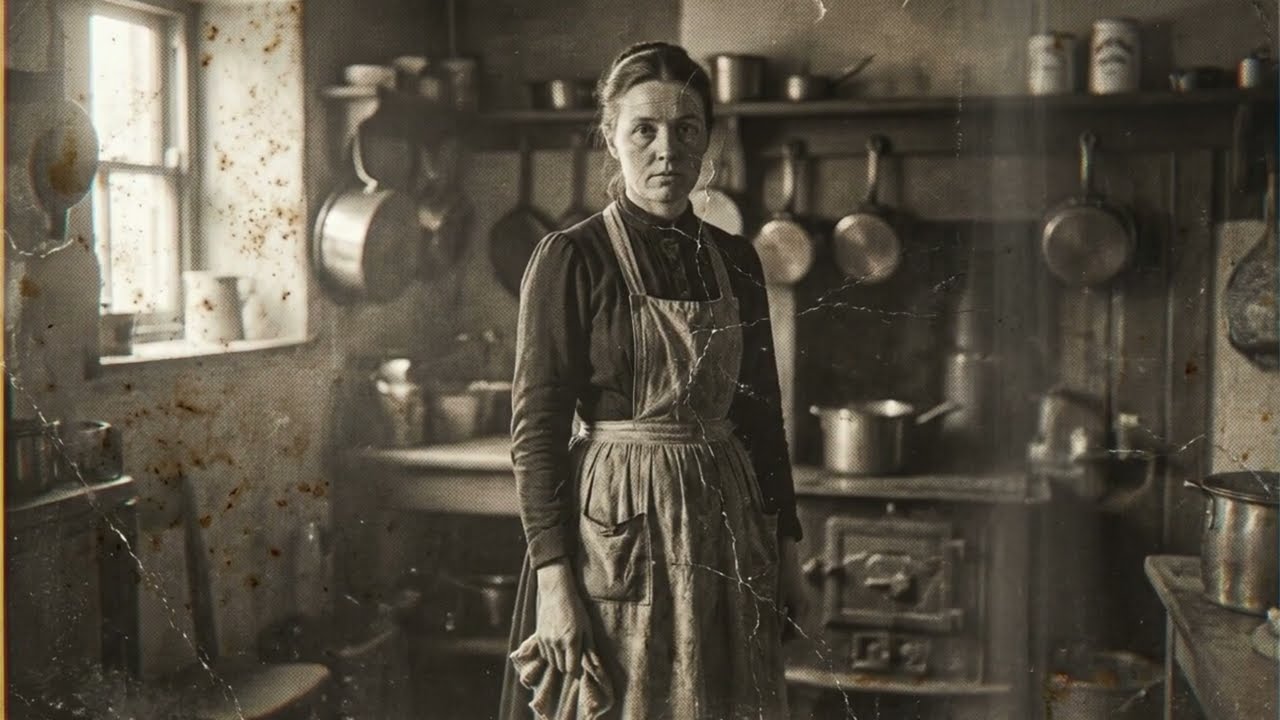
In 1900, a huge share of elderly Americans lived with adult children or other relatives.
Today, that can sound like dependency.
In an agricultural household—
it often wasn’t.
The elderly father might no longer be able to plow the field.
But he knew the land.
The livestock.
The boundaries.
The planting cycle.
The neighbors.
He could repair equipment.
Supervise younger workers.
Care for children.
Manage accounts.
The elderly mother might continue cooking, sewing, preserving food, caring for grandchildren, and running parts of the household.
Old age did not automatically mean economic uselessness.
The farm absorbed people at different stages of life.
Child.
Worker.
Parent.
Elder.
Everyone contributed differently.
The land tied the generations together.
Then America urbanized.
And that relationship began breaking.
A son who stayed on the farm inherited more than land.
He inherited obligation.
His parents aged beside him.
But what if he left?
Detroit.
Pittsburgh.
Gary.
Chicago.
A factory offered wages.
The son moved.
Maybe the daughter moved too.
Now the elderly parents remained on land that produced less income.
Or the farm was sold.
The family safety net stretched across hundreds of miles.
Money could be sent home.
Until it couldn’t.
This demographic change was already reshaping the country before the Depression.
By 1920, for the first time, more Americans lived in urban areas than rural ones.
That statistic is usually presented as evidence of modernization.
It was.
But it also meant millions of people were leaving the institutions that had supported older generations.
Family proximity.
Local lodges.
Stable communities.
The very mobility that created industrial opportunity—
could weaken the systems designed around permanence.
And fraternal organizations felt it.
A lodge model works best when people stay.
You join.
Pay dues.
Know the officers.
Build seniority.
Maintain eligibility.
But industrial workers moved.
Youngstown to Akron.
Pennsylvania to Michigan.
Farm to city.
City to another city.
Jobs changed.
Addresses changed.
Membership paperwork did not always follow cleanly.
Dues lapsed.
And every lapsed member caused two problems.
First—
that person might lose eligibility for benefits.
Second—
the fund lost a contributor.
A mutual-aid system depends on balance.
Enough healthy working members must pay in to support members who are sick, disabled, widowed or old.
If too many people leave—
the ratio changes.
The system weakens.
This was already happening through the 1910s and 1920s.
Then the economy appeared to explode upward.
Factories expanded.
Stock prices climbed.
Cities grew.
Americans moved faster than ever.
And beneath the prosperity—
the old support networks became more fragile.
Then October 1929 arrived.
And fragility became collapse.
At first, the stock market crash looked like Wall Street’s problem.
Then banks began closing.
One.
Then another.
Then another.
Thousands.
From 1929 through the banking crisis of the early 1930s, more than twelve thousand American banks suspended operations according to the figures used in the source.
And when the bank doors closed—
people did not simply lose personal savings.
Organizations lost money too.
Lodges.
Mutual-aid societies.
Benefit funds.
Local associations.
Imagine you belong to a society that has collected dues for decades.
The treasurer has done what seems responsible.
The reserve sits in a local bank.
Then the bank closes.
The vault still exists.
The ledger still shows the balance.
But the money cannot be withdrawn.
Now one member gets sick.
Then another.
A widow files a claim.
An elderly member needs assistance.
The organization opens the account—
and discovers that the institution holding its safety net has disappeared beneath it.
That is when local mutual insurance became vulnerable to national financial collapse.
The source describes fraternal organizations losing substantial reserves during the banking crisis.
Benefits were reduced.
Suspended.
Death payments cut.
Sick pay stopped.
The failure moved downward.
Bank collapses.
Lodge loses reserves.
Lodge stops benefits.
Member loses income.
Family cannot support the member.
County welfare becomes the last option.
And waiting at the end of that chain was one of the most feared institutions in American life.
The poorhouse.
The poorhouse was not invented by the Great Depression.
It was ancient by American standards.
Almshouses and poor farms existed for centuries.
They were the public system of last resort.
The elderly poor.
People with disabilities.
The mentally ill.
Orphans.
People with no family.
People with no money.
People society did not know where else to place.
In many places, entering meant losing autonomy.
Property could be surrendered.
Work could be assigned.
Leaving could require permission.
You became less like a tenant—
and more like an inmate.
That word appears repeatedly in old institutional records.
Inmate.
Imagine spending sixty years believing you were independent—
then becoming an inmate because you survived longer than your savings.
Conditions varied.
Some institutions were relatively humane.
Others were appalling.
Overcrowding.
Shared dormitories.
Poor ventilation.
Minimal food budgets.
Elderly people housed alongside residents suffering severe mental illness.
By the early 1930s, Depression conditions pushed some institutions far beyond capacity.
The source describes county facilities holding far more people than they were designed for.
More people needed help—
at the exact moment local governments had less money.
Tax revenue had collapsed.
Banks had failed.
Businesses had closed.
Counties were broke.
The old relief system was being asked to absorb a crisis larger than anything it had been designed to handle.
This is where the story becomes human again.
Because statistics hide what institutional collapse actually meant.
Go back to Margaret.
Born in the nineteenth century.
Widowed before the Depression reached its worst point.
A member of a mutual-benefit organization for decades.
She had done what the system asked.
Paid dues.
Stayed in good standing.
Expected the benefit to exist if she needed it.
Then the fund suspended payments.
She was sixty-seven.
No modern Social Security check.
No Medicare.
No 401(k).
No guaranteed pension.
Her husband was gone.
The organization that had represented her security had failed.
And she survived because her son refused to let her enter the poorhouse.
Then came the line.
She knew women who had no son.
Think about how much is contained in that sentence.
No son.
No lodge benefit.
No husband.
No savings.
No government old-age insurance.
Then what?
The source says she did not elaborate.
The interviewer did not ask.
But by the early 1930s, the answer for many people was becoming obvious.
Local charity.
County relief.
Family.
Or institution.
If all failed—
destitution.
This was the vacuum into which Social Security entered.
And that distinction matters.
Because Social Security did not simply replace “nothing.”
It replaced a patchwork.
A patchwork that could be strong—
until the entire economy broke at once.
By 1934, the political question was becoming impossible to avoid.
Should old-age security depend on whether you happened to belong to the right lodge?
Whether your son still lived nearby?
Whether your union had enough reserves?
Whether the local bank survived?
Whether your ethnic society remained solvent?
Whether your county poorhouse had space?
Franklin Roosevelt’s administration wanted a system that did not depend entirely on those accidents.
A national system.
Payroll contributions.
Broad participation.
Benefits that could move with a worker across state lines.
The government would not disappear if a steel mill closed.
It would not lose membership because a worker moved from Ohio to Michigan.
It would not depend on one county bank.
That scale solved the problem that had become fatal to the old networks.
Portability.
Continuity.
National risk pooling.
But scale came with a trade.
The old system was personal.
The new system would be administrative.
The lodge secretary knew your name.
The federal system knew your number.
The lodge operated through direct reciprocal relationships.
The government operated through law.
The lodge could exclude you.
The national system could compel participation.
The old system depended on community stability.
The new one was built for a mobile industrial society.
That is the structural reason Social Security became so powerful.
It fit the America that was emerging—
not the America that was disappearing.
And in 1935—
the change became law.
August 14.
Roosevelt signed the Social Security Act.
The legislation created a national old-age insurance system funded through payroll taxation.
The first version was limited.
Many workers were excluded.
Benefits were modest.
Coverage expanded later.
But the architecture was completely different from fraternal mutual aid.
You did not need to join a lodge.
You did not need to share ethnicity with other members.
You did not need to remain in one town.
You did not need a son living nearby.
Employment and payroll contributions connected you to a national program.
Move from Pittsburgh to Detroit—
your record moves with you.
Your local lodge may disappear.
The federal government remains.
In a country becoming more urban—
more mobile—
more industrial—
that mattered enormously.
So did Social Security “destroy” the old mutual-aid system?
The source material sometimes pushes toward that implication.
The chronology is more complicated.
Many fraternal organizations had already been weakened by demographic change, changing labor patterns, commercial insurance competition, actuarial problems and the Depression before Social Security arrived.
The federal program did not simply walk into a healthy 1890 system and switch it off.
It emerged after that system’s limitations had been exposed on a massive scale.
But once a national system existed—
the old organizations no longer occupied the same role.
Why maintain a separate lodge primarily for old-age security if payroll taxes already purchase a national benefit?
Why depend entirely on local risk pooling when large-scale insurance systems exist?
Some organizations survived as social groups.
Others changed benefits.
Others disappeared.
The function migrated.
Community institution—
to national institution.
And when functions migrate, memory often disappears with them.
A generation later, young Americans saw Social Security as the normal system.
The lodge insurance world began looking obscure.
Old-fashioned.
Ceremonial.
Then eventually—
almost invisible.
Which raises the question at the heart of this story.
Did America lose something when it gained something better suited to scale?
The answer is probably yes.
And no.
The old system created strong reciprocal obligation.
If a member became sick—
people knew.
If his widow needed help—
people knew her.
Assistance could carry something national bureaucracy struggles to reproduce.
Relationship.
But that closeness could become exclusion.
If you were outside the group—
the system might not care about you at all.
A national system could spread risk across tens of millions.
But the individual became anonymous.
The old model could be flexible.
The new one could be standardized.
The old model could collapse if the community scattered.
The new model could survive mobility.
The old system had low administrative distance.
The new system had far greater financial scale.
One did not prove the other morally superior in every dimension.
They were solving different versions of the same ancient problem.
What happens when a human being becomes too old or too sick to earn enough money to survive?
Every society must answer that question.
Family?
Church?
Guild?
Lodge?
Union?
Insurance company?
Government?
Savings?
There is no system without cost.
The cost simply moves.
And that may be what the forgotten fraternal world really teaches us.
Before Social Security, Americans were not sitting passively waiting for Washington to invent mutual protection.
They had already built it.
Imperfectly.
Unevenly.
Locally.
Often brilliantly.
But the structure assumed a world where people remained connected to place—
community—
occupation—
and family.
The twentieth century broke those assumptions.
Industrial mobility pulled families apart.
Urbanization weakened agricultural households.
Membership became harder to maintain.
Then the Depression hit every layer at once.
The local bank.
The employer.
The lodge.
The family.
The county.
All under pressure simultaneously.
A decentralized system has one major strength:
One failure does not necessarily destroy everything.
But a nationwide economic collapse can hit every node at once.
And that is what happened.
Now return to Indianapolis.
The lodge hall.
Red brick.
Stone lintels.
Three hundred seats.
Imagine the room filled.
Men arriving after work.
Machinists.
Postal clerks.
Laborers.
They pay dues.
Elect officers.
Vote.
Argue.
Audit the books.
A widow’s husband died last month.
The benefit is approved.
A member is sick.
Weekly payment authorized.
Another man is aging.
He can no longer work.
The lodge helps.
Nobody in Washington signs the check.
Nobody in Washington even knows the man’s name.
For decades—
this worked.
Then the economy changed.
The people moved.
The reserves entered banks.
The banks failed.
Membership fell.
The needs increased.
The structure cracked.
By the time Roosevelt signed Social Security—
the question wasn’t whether Americans understood mutual aid.
They understood it extremely well.
The question was whether a local model could survive a national industrial economy and a national financial catastrophe.
In many places—
it couldn’t.
That’s why the history of Social Security should not begin in 1935.
It should begin decades earlier—
inside lodge halls—
union offices—
farm kitchens—
ethnic societies—
and family homes.
Because once you see what existed before—
the New Deal looks different.
Not as the moment America invented old-age security from nothing.
But as the moment Washington nationalized a problem Americans had been solving locally for generations—
because the systems that had carried that burden were collapsing under forces larger than any one community could absorb.
And maybe Margaret Hess understood that transition better than any statistic ever could.
She paid for security for forty years.
Then one letter told her the security was gone.
She had a son.
So she survived outside the poorhouse.
Other women did not.
She knew them.
And almost ninety years later—
we still don’t know exactly what happened to all of them.
Because the interviewer never asked.