They can take your house even after you’ve paid it off.
No mortgage.
No bank loan.
No missed payment to a lender.
You can spend thirty years paying for the property—
hold the deed in your hand—
own it “free and clear”—
and still lose it.
Not because you sold it.
Not because you borrowed against it.
Because you stopped paying the government.
Three years of unpaid property tax can be enough in many places to put your land on the path toward a tax sale.
Think about that.
You bought the house.
You paid the bank.
You repaired the roof.
You replaced the furnace.
You planted the trees.
You raised your children there.
Then one day, a county notice arrives and says:
Pay us—
or we can take the property.
So what exactly did you buy?
That question bothered me enough to start digging backward.
And what I found was not a simple history of taxation.
It was a fight over the meaning of ownership itself.
Because the American founding ideal was supposed to be the opposite of this.
No landlord above you.
No feudal lord.
No king collecting perpetual rent from land you already possessed.
Own the land—
and it was yours.
Then, within generations, annual property taxation became one of the main ways American states and local governments raised money.
The deed still said “owner.”
But the obligation never ended.
And once I placed those two facts beside each other—
I could not stop asking the same question:
When did ownership stop meaning ownership?
Not legally.
Not rhetorically.
In practice.
When did owning land become something you had to keep paying for forever?
And why did that change spread so quickly across the states?
That is where the story gets uncomfortable.
Because property tax did not emerge in some distant twentieth-century bureaucracy.
It was already spreading in the early republic.
New York moved toward a statewide general property-tax system in the 1790s.
Other states followed.
Value-based taxation spread.
New state constitutions embedded language about uniform taxation and assessment according to value.
And once that model took hold, the logic was permanent.
You do not simply pay when you buy.
You pay because you continue to own.
Every year.
Again.
Again.
Again.
The rate may stay the same.
The assessment may rise.
Your income may fall.
You may be retired.
You may have paid off the mortgage twenty years earlier.
The obligation survives all of it.
That is what makes land different from almost everything else you own.
Buy a chair.
No annual bill.
Buy a book.
No annual bill.
Buy tools.
No annual bill.
Buy a house and land—
the payment to the lender can end.
The payment tied to ownership itself does not.
And that is the contradiction at the center of this entire story.
The modern legal answer is simple:
Property ownership comes with public obligations.
Roads.
Schools.
Police.
Fire protection.
Courts.
Infrastructure.
The community protects the value of the property, so the property helps fund the community.
That explanation makes sense.
But it does not erase the deeper question.
If failure to pay can eventually end your ownership—
how absolute was that ownership in the first place?
That question becomes even more interesting when you go back to the language surrounding land in the early republic.
Land was supposed to create independence.
A man with land did not need a landlord.
He could work the soil.
Build.
Pass it to his children.
The political meaning was enormous.
Thomas Jefferson repeatedly tied broad access to land with republican independence.
The idea was not simply wealth.
It was freedom from dependence.
But the source material behind this story frames that ideal even more sharply through the concept of allodial ownership—
land held without feudal obligation to a private superior.
No lord above you.
No rent flowing upward.
No hereditary chain of claims.
That was the opposite of the feudal image Americans associated with Europe.
And yet, as state and local governments expanded, land became one of the easiest things to tax.
It could not run away.
It could not be hidden in a drawer.
Its location was known.
Its value could be assessed.
Its owner could be identified.
And the property itself could secure the tax debt.
From the government’s point of view, it was perfect.
From the owner’s point of view, it created a permanent condition.
Pay—
or eventually lose.
And that is where the analogy with rent becomes emotionally powerful.
Not because a county government is literally a medieval lord.
It is not.
But because the practical experience contains one familiar element:
Possession continues only while the recurring obligation is met.
Then the nineteenth century adds another layer.
Homestead.
Banking.
Development.
Debt.
Taxation.
In 1862, the Homestead Act opened a path to 160 acres for settlers who met its requirements.
The filing cost was small.
The real cost of making the land usable was not.
Tools.
Seed.
Livestock.
A house.
A well.
Fencing.
Food.
Transport.
A family might receive access to land—
and still need significant capital just to survive on it.
Then, during the Civil War, the federal government reorganized national banking around a system that also helped create demand for federal bonds.
Again, that does not prove a single hidden plan linking homesteads, banks and property taxes.
But it does show that nineteenth-century America was changing several foundational relationships at once:
Who owned land.
Who financed development.
Who issued currency.
Who collected recurring revenue.
And who had first claim when obligations were not met.
That is the real pattern.
Not one secret law.
A transformation in the architecture of ownership.
Then came Henry George.
And he attacked the problem from a completely different direction.
He did not argue:
Abolish every public claim on land.
He asked:
If society needs revenue, why tax the house?
Why tax the building?
Why tax the labor someone used to improve the land?
Why not tax only the land value itself?
His argument was simple.
Build a house—
you created value.
Why punish that?
Leave a valuable lot empty while the city grows around it—
you created nothing.
Yet the land rises in value because everyone else built roads, businesses, schools and neighborhoods nearby.
George wanted society to capture that unearned increase.
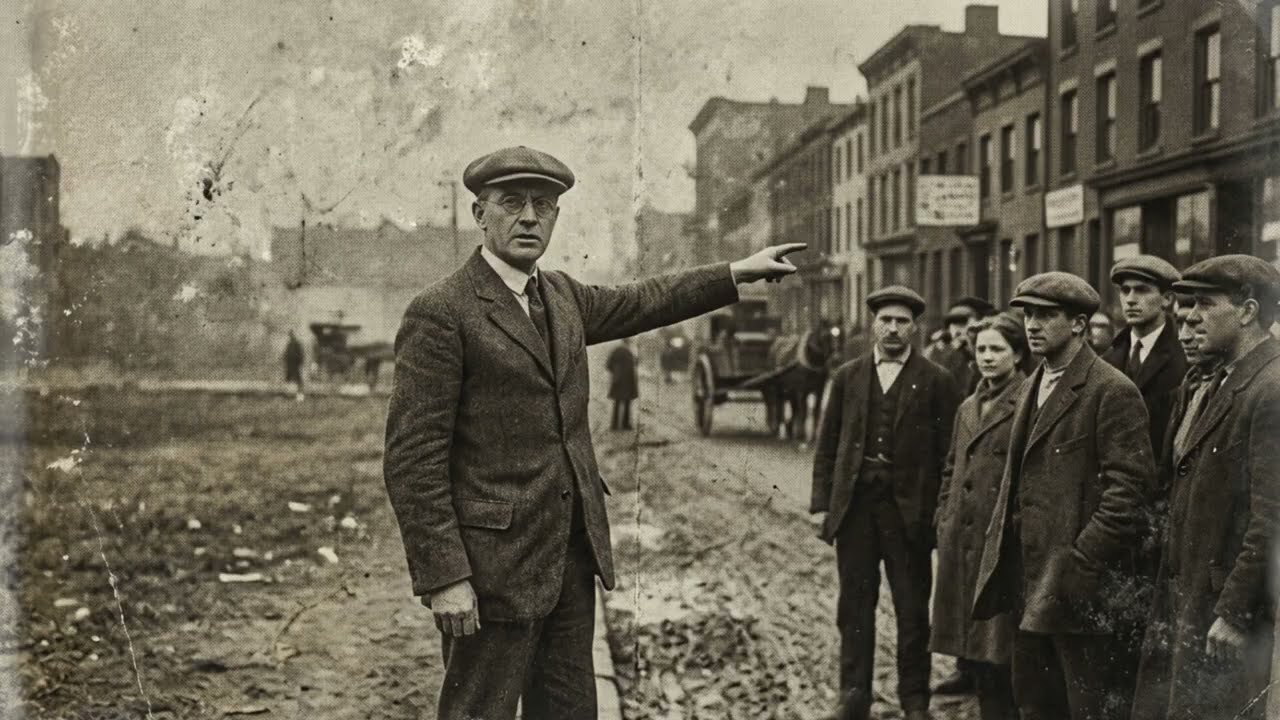
Tax the location.
Not the improvement.
His book Progress and Poverty made him internationally famous.
His mayoral campaign in New York showed that the idea had real political force.
And his supporters believed land-value taxation could reduce speculation and stop productive investment from being punished.
That debate never disappeared completely.
But it moved far from the center of American political life.
Which leaves us with the modern contradiction.
A homeowner can say:
“I own this property.”
And legally, that statement carries enormous rights.
Sell it.
Lease it.
Improve it.
Exclude others.
Mortgage it.
Pass it to heirs.
But the right is not unlimited.
Zoning.
Easements.
Eminent domain.
Building codes.
Environmental law.
Property tax.
Ownership in modern America is powerful—
but conditional.
That is the part the phrase “free and clear” hides.
Free and clear usually means:
No mortgage lien.
It does not mean:
No superior public claim.
So imagine the final mortgage payment.
Thirty years.
The homeowner walks into the kitchen.
Opens the statement.
Balance:
$0.
The bank is finally gone.
He smiles.
Maybe he says:
“This house is finally mine.”
Then, two weeks later—
another envelope arrives.
PROPERTY TAX DUE.
That envelope may be the most honest document in the entire system.
Because it reminds you that one kind of obligation ended.
Another did not.
And that is the question I think matters more than whether property tax is “good” or “bad.”
What do we mean when we say own?
Do we mean exclusive possession?
Control?
Inheritance?
Freedom from private creditors?
Or do we mean something stronger—
a right that cannot be lost simply because a recurring payment stops?
If it is the stronger definition—
then very few modern homeowners truly own land absolutely.
They hold an extraordinarily strong legal claim—
inside a system that still reserves powers above them.
That does not make them tenants in the ordinary sense.
But it does make the word ownership far less absolute than it sounds.
And once you see that—
the phrase “paid off” starts sounding different too.
Because the mortgage can end.
The deed can remain.
The house can stay in your family for generations.
But the bill attached to the land can keep arriving—
forever.