The baby was dead.
And Catherine of Aragon knew what that meant.
She had just lost what may have been her final chance to give Henry VIII the one thing he desperately wanted—
a surviving son.
Years of pregnancies had brought heartbreak after heartbreak.
Only their daughter Mary survived.
Now Catherine lay inside the darkened confinement chamber while somewhere beyond those walls, the future of her marriage—
and eventually the religious future of England—
was beginning to collapse.
Then another woman appeared.
Young.
Ambitious.
Unwilling to become merely another royal mistress.
Anne Boleyn.
Henry wanted her.
But Anne wanted a crown.
Catherine stood in the way.
What followed would destroy a twenty-three-year marriage, separate Catherine permanently from her daughter, help tear England away from papal authority—
and eventually send Anne herself to the executioner’s block.
But centuries later, some believe a strange echo of that royal disaster survived in one of the most ridiculous children’s rhymes ever written:
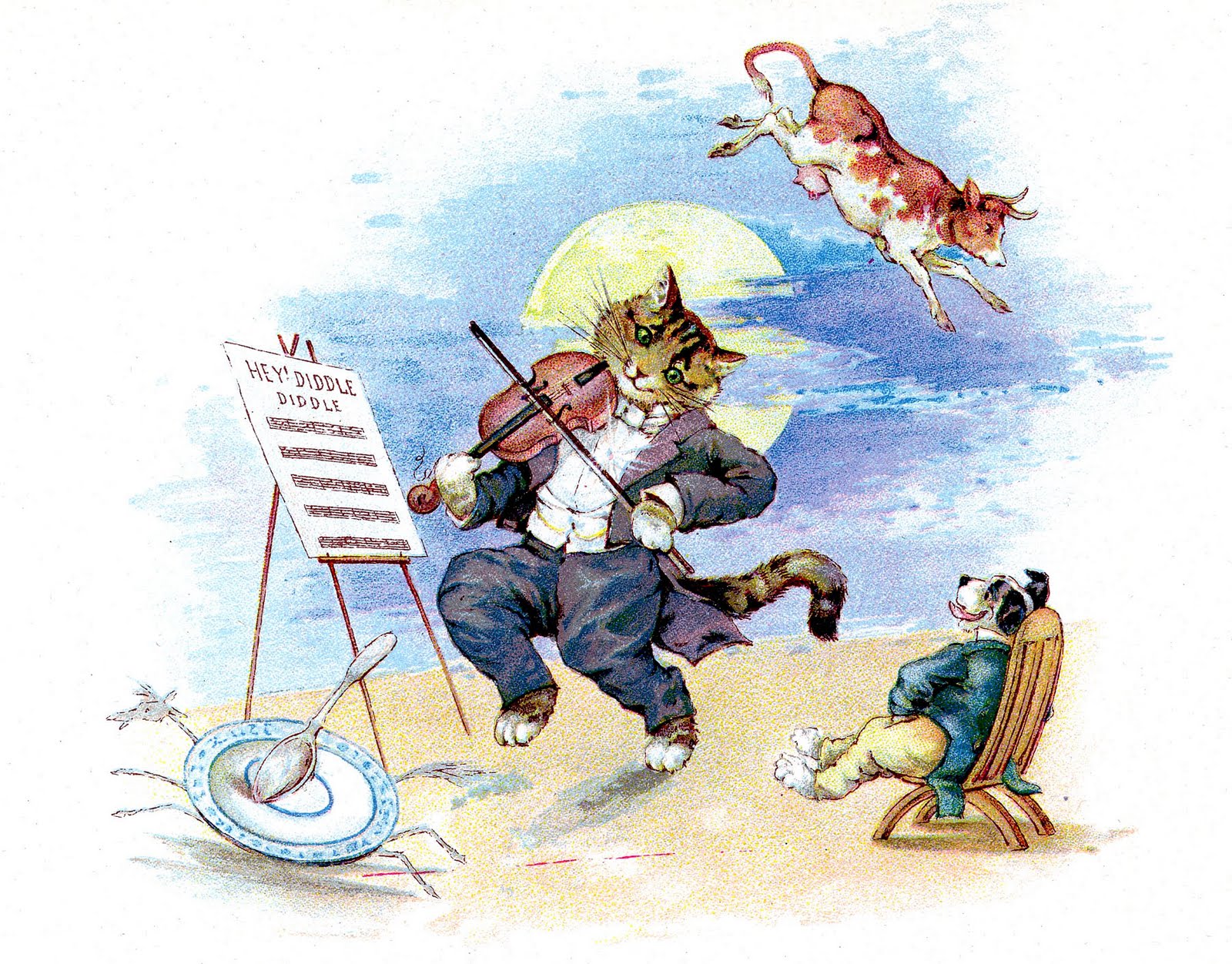
“Hey diddle diddle,
The cat and the fiddle,
The cow jumped over the moon.
The little dog laughed to see such sport,
And the dish ran away with the spoon.”
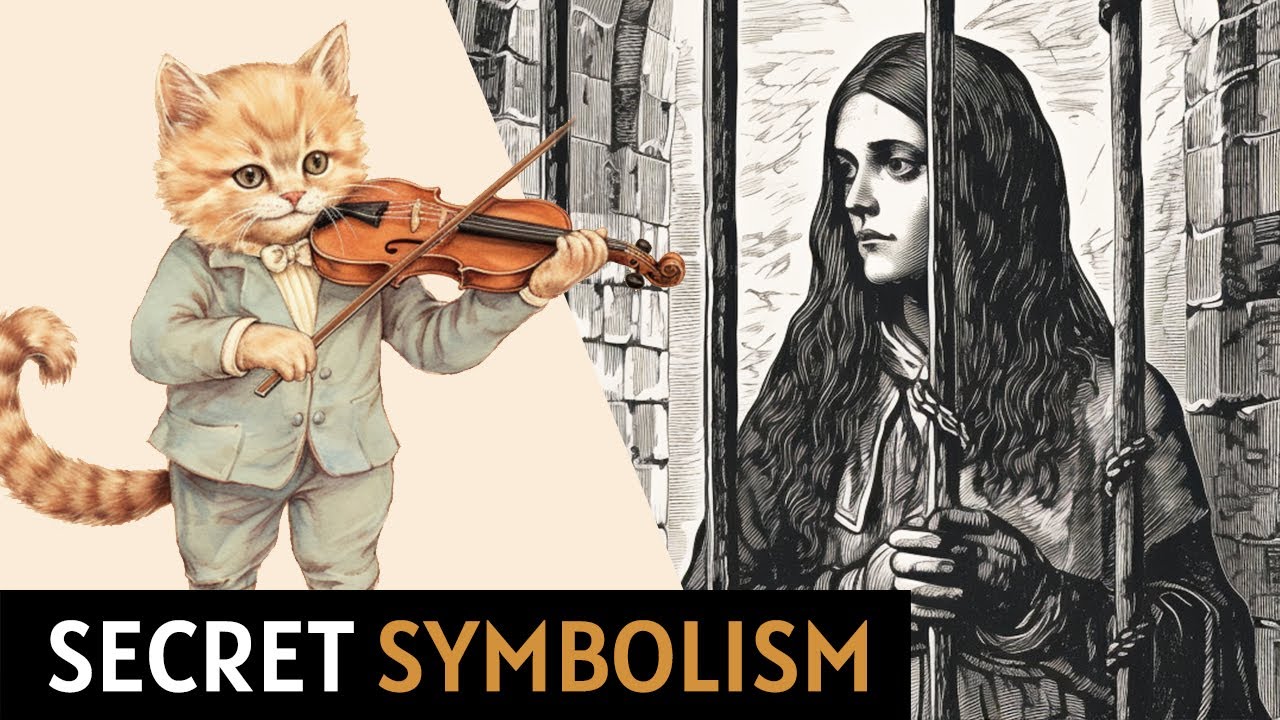
A cat playing a violin.
A flying cow.
A laughing dog.
A plate escaping with cutlery.
Pure nonsense.
Or perhaps—
a joke whose original victims have been dead for five hundred years.
Because according to one theory, the “cat” may point toward Catherine.
The word “diddle” can mean deception or cheating.
And the dish running away with the spoon?
Some have interpreted that as another woman running away with Catherine’s husband—
and her crown.
If that interpretation is correct, generations of children may have unknowingly sung about one of the most explosive marital scandals in English history.
But that’s only one possibility.
Another theory claims the rhyme isn’t political at all.
It may be something much stranger:
A map of the night sky disguised as a children’s song.
Another connects it with an old pub game.
Another leads directly into Queen Elizabeth I’s court—
and a secret marriage that ended with two lovers imprisoned in the Tower of London.
And the oldest evidence may suggest something far simpler.
A dance.
So what exactly is hiding inside Hey Diddle Diddle?
To answer that, we first have to return to Catherine—
and the moment Henry VIII decided his marriage had become a problem.
Catherine of Aragon had not originally been intended for Henry.
She came to England to marry his older brother—
Arthur.
Both were teenagers.
The marriage was supposed to strengthen the alliance between England and Spain.
Then Arthur died only months later.
Catherine was left a young widow in a foreign country.
Years passed.
Eventually she married Arthur’s younger brother.
Henry VIII.
For a long time, the marriage appears to have been genuinely successful.
Catherine was intelligent.
Politically experienced.
Deeply religious.
And popular.
But royal marriage had a purpose extending far beyond affection.
It needed to produce succession.
More specifically—
Henry wanted a legitimate male heir.
Catherine became pregnant repeatedly.
Children were lost through miscarriage, stillbirth or early death.
One daughter survived.
Mary.
But no surviving son.
As Catherine grew older, Henry’s anxiety increased.
The Tudor dynasty was still relatively young.
Henry believed a male succession offered stability.
And eventually he began interpreting Catherine’s reproductive history through religion.
Had he sinned by marrying his brother’s widow?
Was God punishing him?
Catherine rejected that argument completely.
She maintained that her marriage to Arthur had never been consummated and therefore her marriage to Henry was lawful.
Henry increasingly believed otherwise.
Or increasingly needed to believe otherwise.
Because by then—
Anne Boleyn had entered his life.
Anne refused to remain simply his mistress.
If Henry wanted her—
he would have to marry her.
And that meant Catherine had to disappear from the throne.
What followed became known as the King’s Great Matter.
Henry sought an annulment.
Catherine resisted.
The Pope would not simply give Henry what he wanted.
The dispute expanded.
Marriage became politics.
Politics became religion.
Religion became revolution.
Eventually England’s relationship with Rome was shattered.
Henry married Anne.
Catherine lost her title as queen.
She was separated from Mary.
And mother and daughter would never see each other again.
Yet Catherine refused to surrender psychologically.
To the end, she considered herself Henry’s lawful wife and England’s rightful queen.
She continued signing herself Catherine the Queen.
And shortly before her death, she reportedly addressed Henry with extraordinary affection.
After humiliation—
separation—
and years of rejection—
she still regarded him as her husband.
That loyalty helped create Catherine’s enduring image as “the faithful.”
And this is where supporters of the Tudor interpretation begin playing with the words.
Catherine.
Cat.
Faithful.
Fiddle.
“Cat and fiddle.”
Then—
“diddle.”
To cheat.
To swindle.
Catherine had been deprived of her position.
Anne had taken her place.
So perhaps—
the dish ran away with the spoon.
It sounds wonderfully clever.
Maybe too clever.
Because there is no definitive evidence proving that Hey Diddle Diddle was created as coded Tudor propaganda.
And that’s the first rule of this mystery:
A good interpretation is not automatically a true interpretation.
Still—
the Catherine theory becomes more intriguing when we look at the world in which such coded jokes could circulate.
Taverns.
Songs.
Games.
Oral culture.
Most people did not consume political scandals through television or newspapers.
They heard things.
Repeated things.
Sang things.
Turned powerful people into jokes.
A catchy rhyme could survive long after the political context that created it had disappeared.
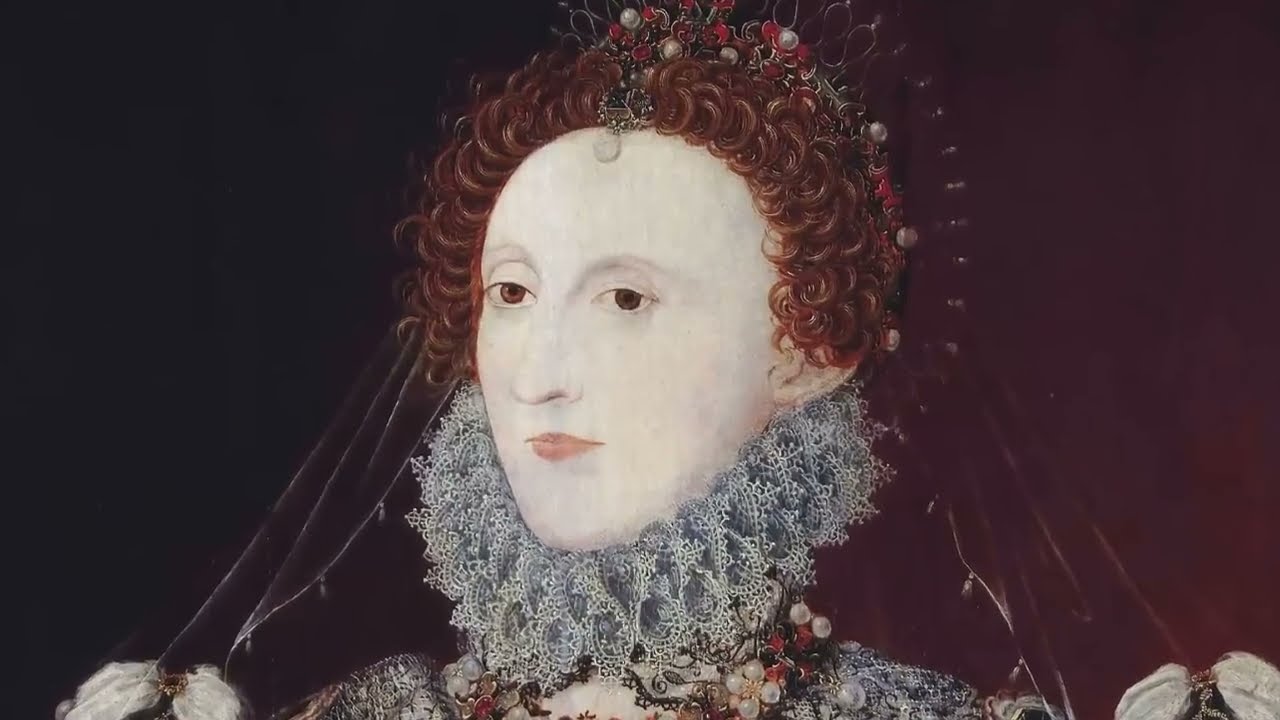
And there is another curious connection.
The Cat and Fiddle became a recognizable tavern name.
Some later writers have wondered whether such names could have contained echoes of sympathy for Catherine or Catholic identity.
Again—
the evidence is circumstantial.
But taverns point us toward another explanation of the rhyme that requires no royal scandal at all.
A game.
Imagine a seventeenth-century English pub.
Beer.
Smoke.
Noise.
Someone playing a fiddle.
Men gathered outside or in an open space.
Then somebody places a short piece of wood on the ground.
This object is called the “cat.”
The player strikes it with a longer stick.
The small piece jumps into the air.
Then he hits it again—
sending it flying.
The game was known as tip-cat.
Different versions involved distance, scoring and running.
And games of this broad family have sometimes been discussed as distant relatives of later bat-and-ball sports.
Now listen to the rhyme again.
The cat.
The fiddle.
The little dog laughing “to see such sport.”
Sport.
Suddenly the verse sounds different.
Perhaps “diddle” has nothing to do with Henry cheating Catherine.
Perhaps it evokes idle amusement, play or musical nonsense.
Perhaps the fiddle is literally a fiddle—
providing music in a tavern.
Perhaps the little dog watches people playing.
The cow jumping over the moon could preserve some image connected with leaping or circular play.
The dish and spoon could simply be comic nonsense—
or perhaps a joke about players becoming so engrossed that their meal disappears.
This interpretation doesn’t require queens.
It doesn’t require secret political codes.
It places the rhyme inside the ordinary recreational culture from which many songs and verses developed.
But there is another theory that removes the rhyme from the tavern—
and launches it into the sky.
Literally.
What if the cat is not a cat?
What if it’s Leo?
What if the cow is Taurus?
What if the little dog is Canis Minor?
The fiddle—
Lyra?
The dish—
a celestial vessel?
The spoon—
the Big Dipper?
Under one modern interpretation, Hey Diddle Diddle may preserve astronomical information.
The rhyme becomes a mnemonic.
A memory device.
Picture a farmer centuries ago.
His survival depends on timing.
Plant too early—
frost destroys the crop.
Plant too late—
the harvest suffers.
He has no weather app.
No digital calendar.
Perhaps limited access to written material.
But he does have the sky.
Generation after generation learns to recognize celestial patterns.

Now encode those patterns in rhyme.
Cat.
Fiddle.
Cow.
Dog.
Dish.
Spoon.
Easy words.
Strong images.
A rhythm a child can remember.
If particular constellations appear in meaningful positions during a seasonal period, the rhyme could theoretically help preserve agricultural knowledge.
It is an elegant idea.
Humans have used songs, poems and oral formulas to remember important information for thousands of years.
But once again—
the evidence is not conclusive.
The star-chart interpretation is intriguing precisely because the images can be mapped onto celestial objects.
But correspondence does not prove origin.
The danger is obvious.
If you begin with enough symbols—
you can often find something in the sky that resembles them.
Which brings us to another royal theory.
And this one begins with Elizabeth I.
Elizabeth’s court was magnificent.
It was also dangerous.
A smile from the queen could make a career.
Her anger could destroy one.
Marriage was particularly sensitive for people close to the succession.
And one young woman discovered exactly how dangerous love could become.
Lady Katherine Grey.
Katherine had royal blood.
That made her marriage politically significant.
She fell in love with Edward Seymour, Earl of Hertford.
But they had a problem.
They did not have Queen Elizabeth’s permission to marry.
And because Katherine possessed a potential claim in the succession—
a secret marriage could become a matter of state security.
They married anyway.
Quietly.
Secretly.
A witness was present.
For a while—
they hid it.
Then Katherine became pregnant.
Now the secret was physically impossible to conceal.
Elizabeth was furious.
Katherine was imprisoned in the Tower of London.
Hertford was recalled and imprisoned too.
The queen ordered them separated.
But the Tower produced one of the strangest episodes in this royal love story.
Their imprisonment did not entirely keep them apart.
With help from sympathetic keepers, they managed to meet.
And Katherine became pregnant again.
A second son.
When Elizabeth discovered that her prisoners had somehow produced another child—
her anger intensified.
The couple was separated more decisively.
They would never truly resume their married life.
Katherine died young.
Hertford survived her for decades.
It is a tragic story.
Two lovers.
A secret marriage.
A furious queen.
The Tower.
Children born under royal disapproval.
Permanent separation.
And later interpreters have wondered whether the “dish” and “spoon” running away together could preserve some echo of a forbidden court romance.
Other versions of the Elizabethan theory assign different characters to the rhyme.
Elizabeth herself has been connected with the “cat.”
Robert Dudley, her longtime favorite and possible marriage prospect, has been linked with the “little dog.”
Court offices have even been proposed for the dish and spoon.
But once again—
we are standing on speculative ground.
There is no surviving Tudor document that tells us:
“The dish is Katherine Grey.”
Or:
“The spoon is Hertford.”
The theory survives because the imagery fits a story people already find compelling.
And Hey Diddle Diddle is vague enough to accept almost anything.
Which raises the possibility that everyone searching for a secret political message—
may be solving a puzzle that never existed.
Because the oldest clues point toward something much simpler.
Music.
And dancing.
A sixteenth-century play by Thomas Preston contains language referring to a new dance called something like “Hey Diddle Diddle.”
Later literary references also bring similar phrases into association with fiddling, dancing or jumping above the moon.
Those references matter because they suggest “hey diddle diddle” may originally have functioned less like a coded political sentence—
and more like rhythmic musical language.
Something you sing.
Something you dance to.
Something whose sound matters more than literal meaning.
Think of modern songs containing nonsense syllables.
They don’t need translation.
Their purpose is rhythm.
Energy.
Memory.
Participation.
Perhaps Hey Diddle Diddle evolved the same way.
A musical phrase survives.
New lines attach themselves.
Images change.
Children repeat them.
Adults modify them.
Eventually the form familiar today emerges.
And the cow jumping over the moon may never have represented Henry VIII—
or agriculture—
or astronomy—
or anything.
Maybe the cow jumps over the moon because that’s funny.
Maybe the dish runs away with the spoon because impossible things make children laugh.
Maybe the little dog laughs because we are supposed to laugh too.
There is even a wonderfully mundane interpretation in which the rhyme functions almost like an inventory of ordinary household life.
Cat.
For vermin.
Dog.
For protection.
Cow.
For milk.
Dish.
Spoon.
Fiddle.
Music.
The basic objects surrounding ordinary people transformed into impossible characters.
A familiar world turned upside down.
And perhaps that is enough.
But then—
why do we want the darker explanations so badly?
Why do we keep trying to put Henry VIII behind the cat?
Why turn the spoon into a lover?
Why transform a cow into Taurus?
Because nonsense bothers us.
Humans are pattern-seeking creatures.
When a rhyme survives for hundreds of years, we assume it must have survived for a reason.
Surely somebody was trying to tell us something.
Surely the absurdity is camouflage.
Surely beneath the child’s voice—
there is a secret.
Sometimes there is.
Political satire absolutely existed.
Songs carried coded meaning.
Oral traditions preserved historical events.
But sometimes—
a cow is just a cow.
And that may be the most frustrating answer to the mystery of Hey Diddle Diddle.
We have theories.
We have tantalizing parallels.
We have old textual fragments.
But we do not possess the final key.
So return to the beginning.
Catherine of Aragon.
A darkened chamber.
A dead child.
A king desperate for a son.
Then Anne Boleyn.
A marriage destroyed.
A queen displaced.
A religious revolution.
It is tempting to hear that story inside:
“Hey diddle diddle,
The cat and the fiddle…”
Maybe Catherine really is the cat.
Maybe she was “diddled” out of her crown.
Maybe Anne really is the dish running away with Henry.
It’s an irresistible story.
But history demands one final sentence:
We cannot prove it.
And that is why this rhyme has survived not only as a children’s song—
but as a historical riddle.
It might preserve Tudor scandal.
It might preserve an old game.
It might encode the stars.
It might descend from a dance.
Or it might be exactly what generations of children thought it was:
Glorious nonsense.
But somewhere between Catherine losing her crown—
Katherine Grey losing her freedom—
farmers watching the stars—
men playing games beside a tavern—
and musicians playing a forgotten dance—
five impossible characters survived.
A cat with a fiddle.
A cow above the moon.
A laughing dog.
A running dish.
And a spoon disappearing beside it.
Five hundred years later—
we still know every word.
We just don’t know why.