Hugh Glass opened his eyes—
and realized the men who were supposed to bury him had robbed him instead.
His rifle was gone.
His ammunition was gone.
His supplies were gone.
And so were the two men ordered to stay beside him until he died.
Glass tried to move.
One arm responded.
One leg responded.
Almost everything else had been ripped apart.
His back was shredded.
His body was covered in deep wounds.
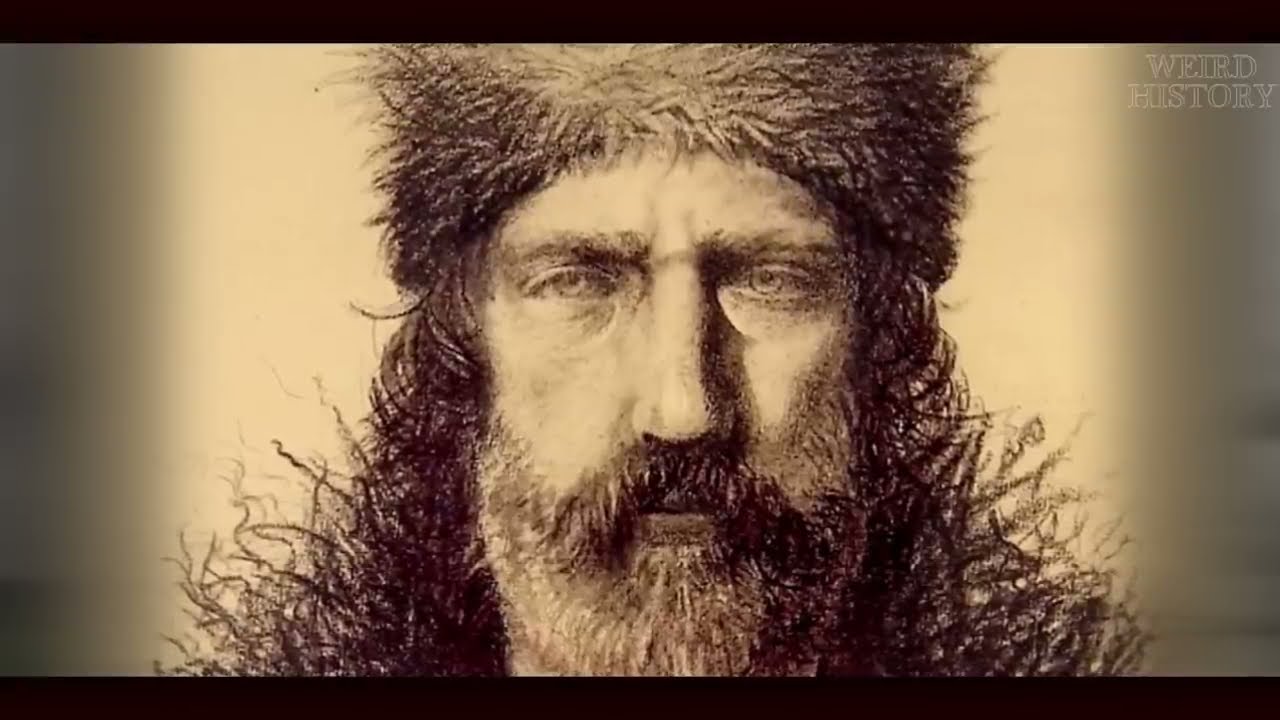
Days earlier, a grizzly bear had knocked him down, torn chunks from his flesh, slashed him repeatedly and left him so mutilated that the men traveling with him were certain he would never survive.
They had carried him for as long as they could.
Then they stopped.
Two men remained behind.
John Fitzgerald—
and a teenage Jim Bridger.
Their orders were simple.
Wait.
When Glass dies—
bury him.
But Hugh Glass refused to die.
Five days passed.
He was still breathing.
And Fitzgerald began thinking about something else.
The Arikara were nearby.
The same people Glass’s company had recently fought.
Staying with a dying man could get all three of them killed.
So Fitzgerald made his decision.
Take the gun.
Take the equipment.
Take what they needed.
Leave Glass beside a creek.
Then tell everyone he was dead.
When Glass finally regained consciousness—
he understood exactly what had happened.
He had been mauled almost beyond recognition.
Abandoned hundreds of miles from safety.
Left without his rifle.
Left without food.
And left by men who apparently expected the wilderness to finish the job.
Instead, Hugh Glass became furious.
And according to the legend that grew around him, that anger gave him one reason to keep moving.
Fitzgerald.
He wasn’t crawling toward civilization merely to survive.
He wanted the man who had left him there.
And that is where the real story behind The Revenant becomes even stranger than the movie.
Because according to the version preserved in frontier legend, the bear attack wasn’t even Hugh Glass’s first impossible escape.
Before he became a mountain man—
he had already survived pirates.
Captivity.
And another encounter in which the man beside him was allegedly killed while Glass waited for his own turn.
His entire life seemed to follow one brutal pattern:
Someone decides Hugh Glass is about to die.
And Hugh Glass survives anyway.
Glass was reportedly born around 1783 in Pennsylvania to Scotch-Irish parents.
The details of his early life are murky.
Like many frontier figures, parts of his biography sit somewhere between documentation and legend.
But one famous version of the story places him at sea.
And that’s where the first extraordinary chapter begins.
According to later accounts, Glass’s ship was captured by pirates associated with Jean Lafitte.
The choice given to the captured men was not complicated.
Join them—
or die.
Glass chose life.
For roughly two years, according to the tale, he lived among pirates.
Raids.
Violence.
Ships.
A world where refusal could mean death.
But Glass never intended to remain there.
Eventually he escaped.
He jumped from a vessel—
swam toward the Texas coast—
and reached land.
For most people, that would have been the rescue.
For Glass—
it was simply the next danger.
The Gulf Coast was inhabited by Indigenous peoples including the Karankawa.
Later frontier stories often portrayed the Karankawa as cannibals, though nineteenth-century accounts of Indigenous peoples frequently mixed observation, rumor, prejudice and sensationalism.
Whatever Glass believed about the people around him—
he understood that he was alone in unfamiliar territory.
No map.
No road.
No settlement waiting ahead.
According to the traditional story, Glass and another escaped man began moving inland.
Eventually they reached territory farther north.
And once again—
they were captured.
This time by Pawnee.
Then Glass watched the man traveling with him die.
According to the story passed down about this episode, his companion was tortured and killed while Glass stood waiting for the same fate.
Glass was next.
Then he did something extraordinary.
He reached for what he had.
Vermilion.
Bright red pigment.
Valuable for decoration and ceremonial use.
Glass offered it to the Pawnee.
And somehow—
the gift changed everything.
Instead of killing him—
they accepted him.
According to some versions of the story, Glass lived among the Pawnee for roughly two years.
He learned their survival methods.
Learned more about the landscape.
And may even have taken a Pawnee wife.
Whether every detail happened exactly as later storytellers described is difficult to establish.
But the importance of this chapter to the Hugh Glass legend is enormous.
Because years later—
when everyone else thought a mutilated Glass had no chance of surviving alone—
the wilderness knowledge attributed to this period becomes the reason he does.
Eventually Glass left.
He made his way toward St. Louis.
And there—
he entered the business that would make his name legendary.
The fur trade.
Early nineteenth-century America was pushing deeper into the West.
Beaver pelts were enormously valuable.
European fashion created demand.
Fur companies needed men willing to leave settlements and enter country that could kill them in a hundred different ways.
Cold.
Hunger.
Accidents.
Animals.
Violence.
Disease.
Rivers.
Mountains.
And conflict between rival groups competing for land and trade.
These men became known as mountain men.
Glass joined them.
In 1822, William Henry Ashley placed a famous advertisement calling for roughly one hundred enterprising young men to ascend the Missouri River and participate in a fur-trading expedition.
Glass answered.
This was not employment in the modern sense.
There was no comfortable workplace.
Your workplace was the wilderness.
You trapped.
Hunted.
Traded.
Navigated rivers.
Carried everything you needed.
And if something went wrong—
help could be hundreds of miles away.
Glass became part of Ashley’s expedition.
Then the group encountered the Arikara—
also known historically in English sources as the Ree.
Relations deteriorated violently.
Men were killed.
The expedition became part of an armed conflict.
Retaliatory actions followed.
The frontier had become a war zone.
Glass survived.
Again.
Then he joined a smaller group heading farther west toward the Yellowstone region.
And somewhere along the route—
he walked into the moment that would define his life.
He saw the cubs first.
Or perhaps—
according to some versions—
he realized what he had walked into only when it was too late.
A grizzly bear with cubs.
There are few encounters in the North American wilderness more dangerous.
The bear charged.
Glass fired or attempted to defend himself.
It didn’t matter.
The animal hit him.
Dragged him.
Bit him.
Clawed him.
His body opened beneath the attack.
The wounds were catastrophic.
Accounts accumulated over time and vary dramatically in detail.
Later retellings describe pieces of flesh being torn away and the cubs joining the attack.
What is consistent in the legend is the essential fact:
Glass was mauled so badly that his companions expected him to die.
The men eventually killed or drove off the bear.
Then they looked at Hugh.
He could barely move.
Some accounts say he could not speak.
His wounds were deep.
His ribs were damaged.

His scalp or throat may have been injured.
Whatever the precise injuries—
there was no surgeon.
No hospital.
No antibiotic.
No helicopter.
No emergency evacuation.
Only mountains.
So the men bandaged him as best they could.
And waited for him to die.
Morning came.
Glass was still alive.
So they built a stretcher.
They carried him.
Try to picture this.
A group of men moving through rough wilderness—
possibly under threat from enemies—
carrying an adult man who appears almost mortally wounded.
Every mile costs time.
Every obstacle becomes harder.
And every day Glass refuses to die makes the decision worse.
Eventually the expedition’s leader made the call.
They could not continue carrying him.
Two volunteers—or men assigned to the task—would remain.
Wait for death.
Then bury him properly.
Fitzgerald and Bridger stayed.
Glass breathed.
One day.
Then another.
Then another.
Five days.
Still alive.
And according to the traditional account, Fitzgerald eventually decided they could wait no longer.
The Arikara threat was too serious.
So he and Bridger took Glass’s rifle and equipment—
and left.
Later they reportedly told the others Glass had died.
But Glass hadn’t.
And when he finally woke—
the revenge story began.
At first, he couldn’t walk.
So he crawled.
There was no dramatic music.
No perfectly timed rescue.
Only distance.
Water.
Pain.
And whatever food he could find.
He drank from the creek.
Ate berries.
His body had been destroyed, but as days passed, some movement returned.
He cleaned his wounds as best he could.
He knew enough about survival to understand that infection could kill him even if the bear hadn’t.
Then came one of the most famous episodes in the Glass legend.
Wolves.
He allegedly found a pack feeding on a buffalo carcass.
Glass, still terribly weak, drove them away—
or waited until he could reach what remained—
then ate raw meat from the carcass.
Imagine the desperation required.
You are injured so badly that people literally abandoned you as a corpse.
You crawl toward the remains of an animal killed by predators.
And that carcass becomes medicine.
Calories.
Protein.
Strength.
Enough energy to move farther.
Glass continued.
Later versions add another grotesque survival episode.
An abandoned Indigenous camp.
Dogs remained.
According to the story, Glass killed one and ate it.
Again—
the frontier legend is trying to tell you something.
Civilization is gone.
Rules are gone.
Food is food.
Survival is the only morality left.
But Glass’s worst problem may have been his back.
The bear wounds had opened deeply.
Infection set in.
Maggots appeared in the damaged flesh.
In a modern setting, this would demand immediate medical attention.
Glass had none.
Then he encountered Indigenous people described in later accounts as Sioux.
They reportedly helped him.
Treated his wounds.
And in one particularly vivid version of the story—
covered or patched the damaged area of his back with bearskin.
Whatever precisely happened medically, frontier traditions repeatedly emphasize that Indigenous assistance was critical in Glass’s survival.
Eventually—
Glass reached Fort Kiowa.
He had traveled roughly 250 miles through wilderness after being abandoned.
A journey that should have been impossible.
He could have stopped.
He didn’t.
Because Fitzgerald was still somewhere ahead.
At Fort Kiowa, Glass encountered fur traders.
He could recover.
Eat.
Sleep.
Let his body heal.
Instead, he wanted transport upriver.
He was still hunting the men who had taken his rifle and abandoned him.
A boat could take him hundreds of miles closer.
So he went.
Then—
because apparently Hugh Glass’s life was incapable of allowing one journey to happen normally—
violence found him again.
According to the story, Glass traveled with French fur traders toward a Mandan village.
But the settlement had become dangerous.
The party encountered hostile Arikara.
The men with Glass were killed.
Once again—
Glass survived.
Once again—
he was alone.
And once again—
he escaped.
Later accounts credit Mandan people with helping rescue or protect him and getting him toward safety.
Glass reached another trading post.
And still he would not stop.
Months had passed.
His body had healed enough to travel.
The man had been mauled.
Abandoned.
Starved.
Infected.
Dragged himself hundreds of miles.
Survived repeated frontier violence.
And yet the thing occupying his mind remained Fitzgerald.
Roughly six months after the bear attack—
Glass finally reached the place where his old company was stationed.
Fort Henry.
He walked in looking for two men.
Bridger.
Fitzgerald.
Only Bridger was there.
And this confrontation did not end the way a revenge movie would write it.
Bridger was young.
Still a teenager.
Glass listened.
And according to the traditional account—
he forgave him.
Maybe Glass believed Fitzgerald had been responsible.
Maybe he understood how much influence an older man could have over a frightened teenager.
Whatever the reason—
Bridger lived.
Fitzgerald remained the target.
But winter stopped Glass.
Severe weather made further travel difficult.
So he waited.
Imagine the frustration.
You have spent six months thinking about the man you want to kill.
You finally get close.
And the mountains themselves say:
Not yet.
Glass stayed until travel became possible.
Then headed toward Fort Atkinson.
Fitzgerald was supposedly there.
This time—
Glass was finally going to finish it.
Then the frontier tried to kill him again.
Glass joined another group moving downriver.
They encountered Indigenous people they initially believed were friendly Pawnee.
According to the story—
they were Arikara.
Violence erupted.
Some of Glass’s companions escaped by boat.
Glass did not.
Once again—
he was stranded.
No proper equipment.
No comfortable supply line.
In some retellings, almost nothing but a knife.
And the man he wanted was still hundreds of miles away.
So Hugh Glass walked.
Again.
Hundreds of miles.
Again.
Through one of the most unforgiving environments on the continent.
Again.
Eventually—
Fort Atkinson appeared.
And there he was.
Fitzgerald.
This is the scene a Hollywood writer dreams about.
Glass walks through the gate.
Fitzgerald turns.
The man he left for dead is standing there.
Alive.
The rifle Fitzgerald had taken is nearby.
Months of pain collapse into one moment.
The bear.
The crawling.
The raw meat.
The infections.
The frozen wilderness.
Every mile.
Every night.
Every thought of revenge.
Glass has finally reached him.
And then—
nothing.
Because Fitzgerald had joined the United States Army.
He was now a soldier.
Glass could not simply murder a member of the Army inside a military fort and walk away.
An officer intervened.
According to later versions, Glass was warned against taking revenge.
Fitzgerald ultimately returned Glass’s rifle.
And that was it.
No duel.
No knife fight.
No violent final confrontation.
The entire journey ends with bureaucracy.
Hugh Glass crossed hundreds upon hundreds of miles of wilderness to kill a man—
and the United States Army essentially told him:
No.
That may be the most unbelievable part of the story.
Not the bear.
Not the crawling.
Not the raw buffalo.
The fact that the revenge never happened.
Hollywood couldn’t leave it that way.
Because revenge stories require endings.
Real life doesn’t.
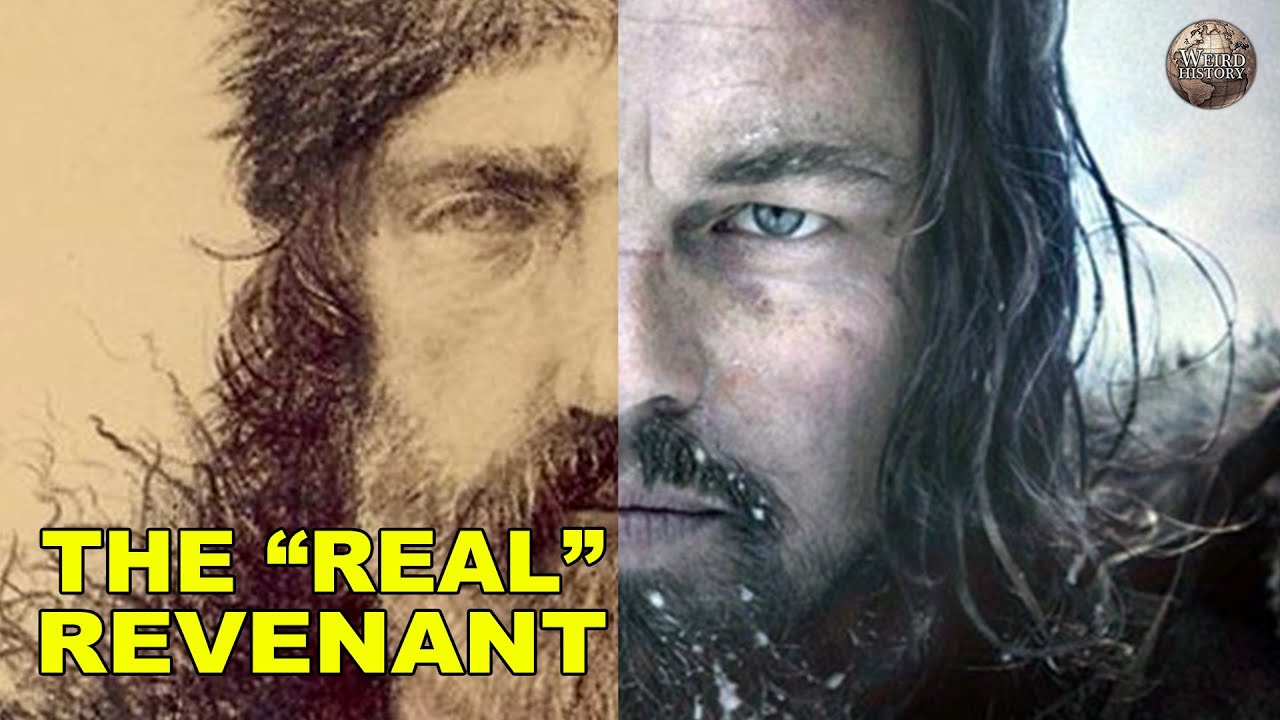
And this is where The Revenant separates most dramatically from the traditional Hugh Glass story.
The movie transforms Glass’s journey into a deeply personal revenge narrative.
It gives him a son.
It gives Fitzgerald a murder that makes revenge emotionally unavoidable.
It drives the story toward a violent final confrontation.
It works brilliantly as cinema.
But the historical Glass legend is stranger.
His rage centers primarily on abandonment—
and the theft of his rifle.
On the frontier, a rifle was not simply property.
It was survival.
Food.
Defense.
Without it—
Fitzgerald had left Glass not only injured but nearly helpless.
Yet when Glass eventually reached him—
he apparently did not kill him.
And Glass’s life continued.
He returned to the frontier.
Returned to trapping.
Returned to exactly the world that had nearly killed him.
That may be the detail that tells you more about Hugh Glass than any revenge story ever could.
After everything—
he went back.
Most people who survived a grizzly mauling alone would spend the rest of their lives avoiding bears.
Glass returned to mountain-man country.
He continued working.
Continued traveling.
Continued living among the same rivers, mountains and conflicts that had destroyed his body once already.
Then in 1833—
the frontier finally caught him.
Glass and two other trappers were traveling near the Yellowstone region when they encountered Arikara warriors.
This time—
Hugh Glass did not walk away.
He was killed.
Approximately fifty years old.
After pirates—
captivity—
war—
a grizzly—
abandonment—
infection—
hunger—
and journeys that made him one of the most famous survivors of the American frontier—
his luck finally ran out.
But by then—
the story was already becoming something larger than one man’s life.
The Hugh Glass legend spread because frontier America desperately loved stories like his.
Mountain men lived in a world that eastern readers found almost mythical.
Grizzly bears.
Indigenous nations.
Rivers barely mapped.
Snowbound passes.
Fur trappers disappearing into country most Americans would never see.
Stories became exaggerated.
Retold.
Improved.
Combined.
A journey becomes longer.
A wound becomes worse.
A fight becomes more violent.
A man becomes a legend.
That means separating the fully documented Hugh Glass from the Hugh Glass of frontier storytelling can be difficult.
Some of the most spectacular episodes from his early life—
piracy under Jean Lafitte—
his Pawnee captivity—
marriage into the tribe—
survive largely through later narratives rather than abundant contemporary documentation.
Even the famous crawl has accumulated different distances and details depending on who tells it.
But the core is remarkable enough.
Hugh Glass was a real mountain man.
He was mauled by a grizzly in 1823.
He was left behind by companions who believed he would die.
He survived.
He traveled an extraordinary distance through frontier country.
And he eventually confronted the men who had abandoned him.
You do not need the legend to make the story incredible.
The history is already brutal.
But the legend adds something history alone cannot easily capture.
What did it feel like?
Wake up.
Nobody there.
Your gun missing.
Your body torn apart.
Look toward the horizon.
Nothing.
No settlement.
No rescue.
No certainty that you can even stand.
Most people would think:
I am going to die here.
Hugh Glass apparently thought something closer to:
Not before I find Fitzgerald.
That is why his story survived.
Not because he never felt pain.
Not because he was somehow physically impossible to kill.
But because every time his story should have ended—
he moved.
One arm.
One leg.
Crawl.
Eat.
Heal.
Stand.
Walk.
Then walk farther.
And perhaps that is why the ending is actually better without the Hollywood revenge.
Because after hundreds of miles—
Glass discovers the thing keeping him alive does not necessarily need to become the thing that defines how he kills.
He reaches Fitzgerald.
He could have destroyed everything to satisfy the obsession.
He doesn’t.
He gets his rifle back.
And returns to the wilderness.
So if you’ve only seen The Revenant, remember this:
The bear attack is not the craziest part of the Hugh Glass story.
The craziest part is what happened after everyone decided the bear had already killed him.
They took his gun.
They took his supplies.
They left him beside a creek.
And walked away.
Then months later—
one of those men looked up inside an American fort—
and saw the dead man walking toward him.