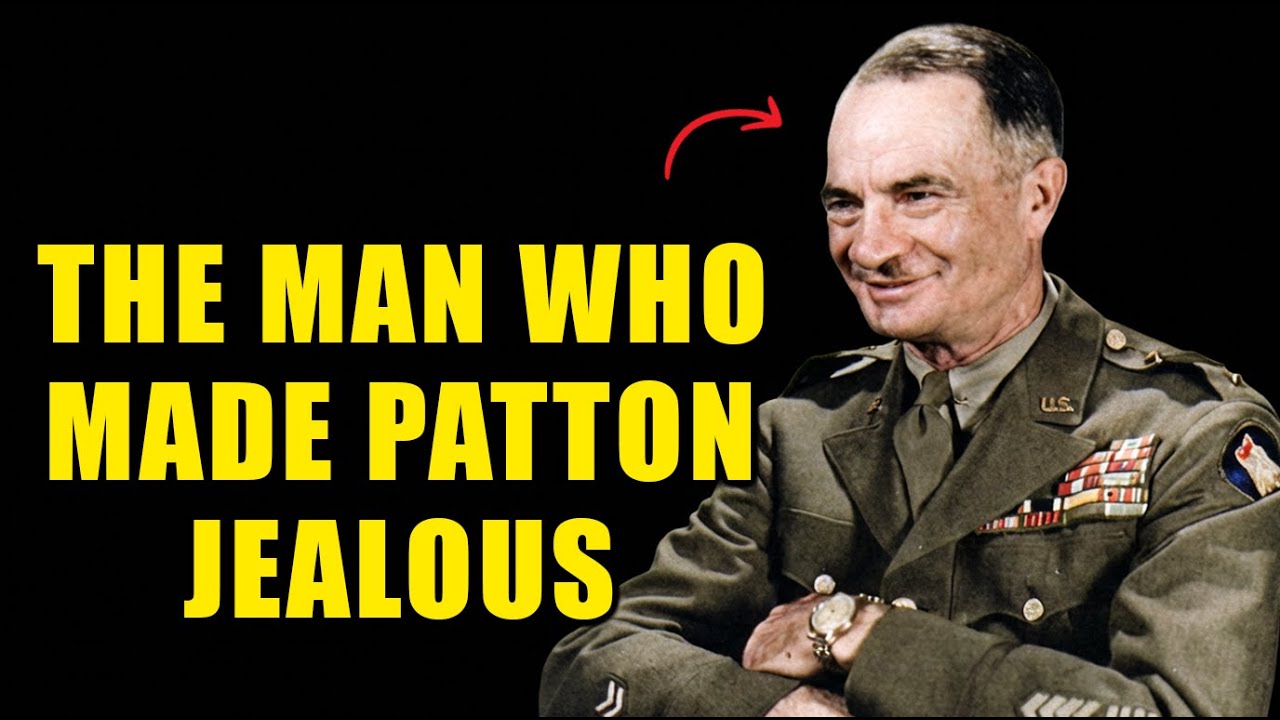
The American army that waded ashore onto the beaches of North Africa in November 1942 was a force of untested theory, and the man leading one of its most critical divisions was a 54-year-old general who had failed out of West Point. That man, Major General Terry de la Mesa Allen, was about to forge a reputation that would make him one of the most effective, and controversial, field commanders of the Second World War.
Allen’s path to high command was anything but conventional. He entered the United States Military Academy in 1907, but struggled with the academic rigors and was ultimately dismissed. For most officers of his generation, this failure would have been a permanent stain, a closed door to any hope of senior leadership.
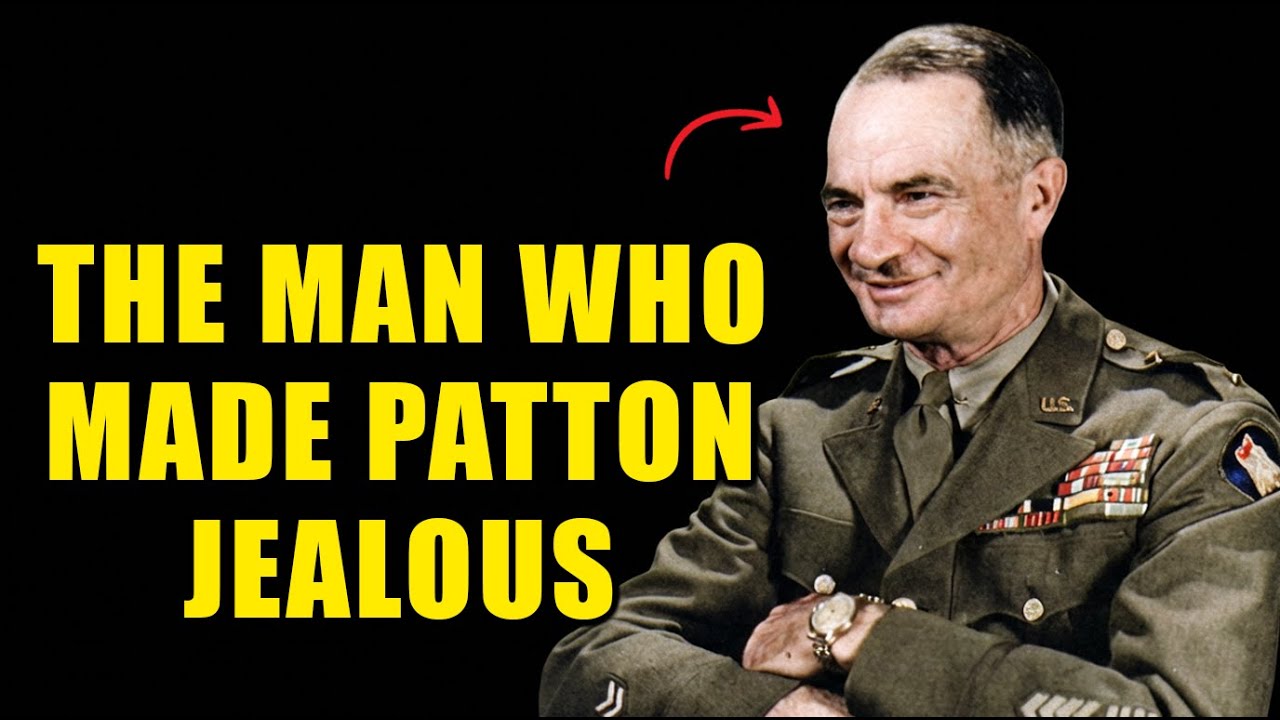 Allen, however, refused to accept that fate, earning his commission through an alternative route and joining the cavalry, a branch dominated by academy graduates who often viewed him as an outsider.
When the United States entered the First World War, Allen found his true calling on the battlefield. He led patrols into the deadly no-man’s land, was wounded twice, and by the war’s end commanded an infantry battalion. His style was forged in the trenches: he preferred to be forward with his men, more concerned with their fighting ability than the polish of their uniforms.
This reputation for aggressive, frontline leadership caught the attention of Army Chief of Staff George Marshall, who in 1940 was building a new army for a new war.
Marshall reached past more senior officers to promote Allen to brigadier general, a move that bred resentment but proved prescient. By 1942, Allen was commanding the 1st Infantry Division, the famed “Big Red One,” and leading it into its first major test: Operation Torch, the Allied invasion of North Africa. The landings near Oran, Algeria, were chaotic, with landing craft scattered by sandbars and French coastal batteries opening fire on the inexperienced Americans.
In the confusion, Allen focused on pushing his units forward, absorbing more than 400 casualties in the initial days as his division learned the brutal realities of modern war.
The winter of 1942-43 was a harsh teacher for the American army in Tunisia. The shocking defeat at Kasserine Pass exposed the inexperience and poor coordination that plagued U. S.
forces against seasoned German armor. Allen, however, was determined his division would not suffer the same fate. A month after Kasserine, at the Battle of El Guettar, the Big Red One was ready.
They had dug in, laid extensive minefields, and pre-registered their artillery on likely approaches.
 When the German 10th Panzer Division attacked on March 23rd, 1943, they ran straight into a wall of fire. Allen, refusing to pull his headquarters back even as enemy tanks threatened his position, watched his artillery and tank destroyers decimate the German advance. The attack was a resounding success, proving that a well-prepared American division could stand toe-to-toe with a veteran German armored formation.
For Allen, it reinforced his core doctrine: prepare meticulously, fight close to the front, and refuse to yield ground.
The next test came in July 1943 with the invasion of Sicily. Landing near Gela, the Big Red One faced a furious counterattack from German and Italian armor that threatened to push them back into the sea. Allen relied on naval gunfire and the tenacity of his infantry, who held their positions in foxholes as tanks rolled over them, engaging the following infantry in the open.
The beachhead held, and the division pushed into the island’s mountainous interior toward the key objective of Troina.
The battle for Troina was a brutal, week-long slugging match. Allen coordinated a massive artillery bombardment, bringing over 160 guns to bear on German positions, while his infantry fought through repeated counterattacks. The division suffered nearly 1,700 casualties but captured the town and opened the road through central Sicily.
Allen was now a public figure, lauded by war correspondents like Ernie Pyle for his rough manner and effectiveness. Yet, this success was breeding a different kind of tension among his superiors.
While Allen’s division was feared by the enemy, it was also gaining a reputation in rear areas for its aggressive, dismissive attitude toward non-combat units, heavy drinking, and a casual approach to discipline. General George Patton praised their offensive spirit, but General Omar Bradley saw a growing problem. Bradley believed that a division’s discipline in the rear was essential for its endurance in a long war, and he viewed Allen’s relaxed style as a direct threat to that principle.
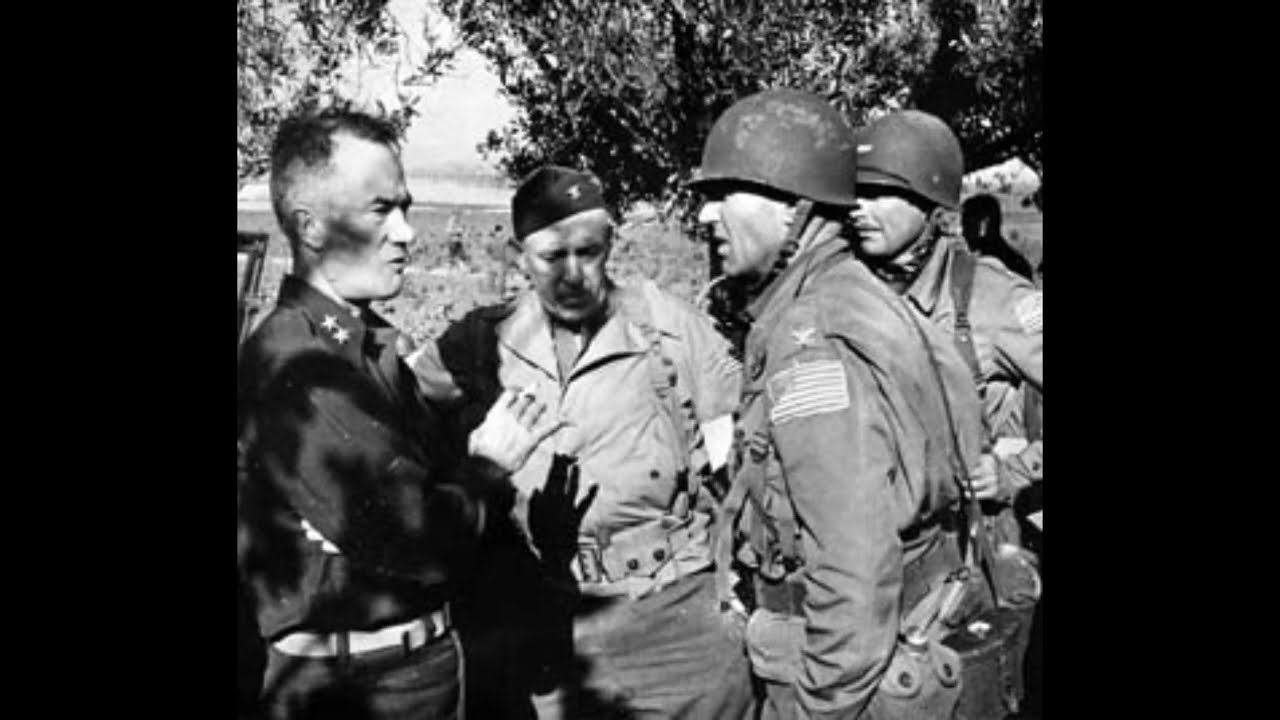 In August 1943, in the middle of the Sicily campaign, Allen and his assistant division commander, Brigadier General Theodore Roosevelt Jr. , were relieved of command. The official reason cited a need for tighter control.
Allen left his beloved division in tears, his career seemingly over. For many, a relief in the field was the end of any hope for another combat command, but Allen’s story was far from finished.
Instead of being relegated to a training post, Allen was given a new challenge. In October 1943, he took command of the 104th Infantry Division, the “Timberwolves,” a newly activated unit of draftees with no combat experience. Allen immediately set about transforming them in his own image, discarding parade-ground drill for realistic field training.
His specialty was night fighting, a tactic most American commanders considered too risky. Allen drilled his men relentlessly, teaching them to navigate, move, and coordinate in darkness until it became second nature.
In September 1944, the Timberwolves entered combat in the flooded lowlands of Belgium and the Netherlands, tasked with helping clear the Scheldt Estuary. Attached to Canadian forces, the untested American division launched a series of aggressive night attacks, slipping through gaps in German lines and hitting strongpoints from close range. The Canadian and British commanders, initially cautious, were soon impressed by the division’s “dash” and effectiveness.
In just over two weeks, the Timberwolves had taken over 1,400 casualties but had broken the German defenses, opening the vital port of Antwerp to Allied shipping.
Allen’s vindication was complete when Omar Bradley, the man who had relieved him, came to inspect the 104th. Bradley was surprised by how quickly the division had become a “first rank assault division.” Allen, with his usual blend of pride and humor, replied that his Timberwolves belonged in the same company as veteran divisions like the 1st and 9th.
 The general who had been judged too lax to keep the Big Red One was now commanding one of the most reliable shock formations in Northwest Europe.
The Timberwolves continued their relentless advance through the Roer and Rhine campaigns, crossing into Germany and moving faster than the enemy could regroup. On April 11th, 1945, they reached Nordhausen and discovered the horrors of the Mittelbau-Dora concentration camp complex, finding thousands of unburied corpses and starving survivors. The war had a new, stark focus.
Days later, Allen accepted the surrender of Halle, negotiating through a German nobleman to spare the city from prolonged street fighting.
By the end of the war in Europe, the 104th had been in continuous combat for 195 days, suffering nearly 5,000 casualties. Allen’s methods—speed, shock, and night attacks—were designed not just to win battles but to shorten them and reduce the time his men spent under fire. He was a commander who asked for immense courage from his soldiers, but he was always willing to share the danger, often pushing his own headquarters closer to the front than was considered prudent.
After the war, Allen retired to El Paso, Texas, but the weight of his decisions never left him. His only child, Terry Allen Jr. , followed him into the army and served in the same 1st Infantry Division his father had commanded.
In October 1967, Lieutenant Colonel Terry Allen Jr. was killed in action in Vietnam. The loss struck the elder Allen deeply.
The man who had spent the war asking for courage from other men’s sons had now lost his own in another distant conflict. Terry Allen Sr. died in 1969, and father and son were buried together at Fort Bliss National Cemetery.
Terry Allen’s career challenges easy assumptions about military leadership. It demonstrates that the path to greatness is not always through the academy, and that a strict adherence to discipline does not always correlate with combat effectiveness. His record is a testament to a consistent philosophy: fight close to the front, move faster than the enemy expects, and drill one key skill until it is second nature.
From the beaches of North Africa to the heights of Sicily and the flooded fields of the Scheldt, Allen’s legacy is one of a commander who refused to settle for half measures, who prepared as thoroughly as time allowed, and who kept pressing until the objective was taken, forging an untested army into a force that could defeat the best the Axis could field.