In May 1570, 20-year-old Anna of Austria married King Philip II of Spain, a union that shocked Europe so deeply that even Pope Pius V tried to prevent it. The controversy was not merely the 23-year age gap between bride and groom. Philip was Anna’s uncle, and the marriage deepened the pattern of intermarriage within the Habsburg dynasty that would ultimately contribute to its genetic decline and extinction. Anna was born on November 2, 1549, in Cigales, near Valladolid, Spain.
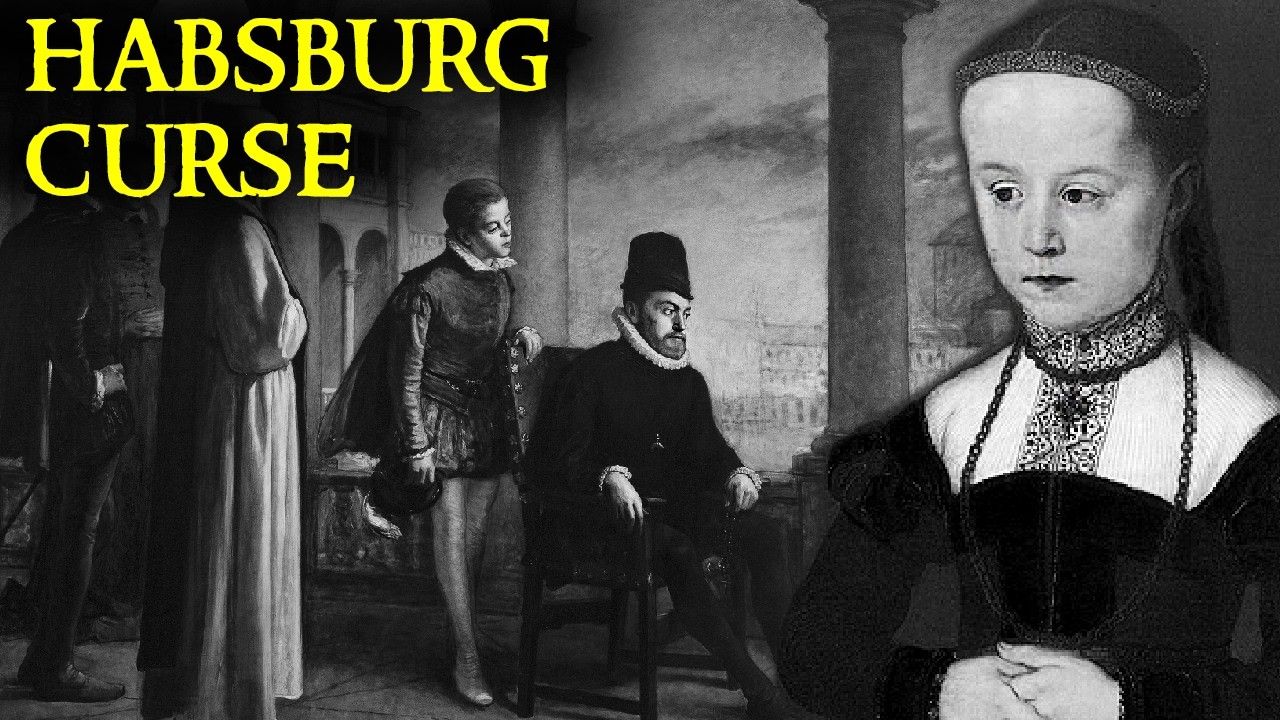
Her father was the future Holy Roman Emperor Maximilian II, and her mother was Maria of Spain, daughter of Emperor Charles V. Because Charles V and his brother Ferdinand I were both Habsburgs, Anna’s parents were first cousins, making their marriage one of the earliest unions between the Spanish and Austrian branches of the dynasty. Anna spent her earliest years at the Spanish court, but was largely raised in Vienna after 1551, when her parents returned to Austria. She was the eldest of nine surviving children and became a favorite of her father.
As she grew, European politics were dominated by rivalry between Spain and France, and the Habsburg alliance between Madrid and Vienna was considered essential to containing French ambitions. The original plan was for Anna to marry her first cousin, Don Carlos, Prince of Asturias, the only son of Philip II and his first wife, Maria Manuela of Portugal. Marriages between cousins were common among European royals at the time, and the match seemed suitable both politically and personally. But Don Carlos had suffered a head injury in 1562 after falling down a staircase, and his physical and mental health deteriorated sharply.
By his twenties, he was known for violent outbursts and erratic behavior. In early 1568, Philip II had his own son arrested, and Don Carlos died in prison on July 24, 1568. Suspicion that Philip ordered his son’s death has persisted for centuries. At the time of Don Carlos’s death, Philip was married to his third wife, Elizabeth of Valois, but she died on October 3, 1568, following a stillbirth.
Left without a male heir and without a wife, Philip proposed what many considered unthinkable: that he should marry his niece, Anna, himself. Astonishingly, Anna’s father agreed. The marriage was conducted by proxy in Vienna in May 1570, over the objections of Pope Pius V, who was appalled by the union. In autumn 1570, Anna traveled to Spain with a large retinue.
The journey took her through the Low Countries, where tensions from the Dutch revolt were rising, and she encountered both cheers and hostility along the way. During the voyage, she became involved in a diplomatic controversy when relatives of Florez de Montmorency, a Dutch noble imprisoned for his role in the revolt, petitioned her to intervene. She arrived in Spain on October 3, 1570, and formally requested that his life be spared, but before she could reach the king, Montmorency was secretly executed on October 16, reportedly on Philip’s orders. Anna settled into Spanish court life surprisingly well.
Described as bright, cheerful, and vivacious, she brought warmth to the stiff and solemn court. Diplomats reported that Philip was genuinely in love with her, and there are no records of him taking mistresses during their marriage. The couple was close, and Anna also acted as a loving mother to Philip’s daughters from his marriage to Elizabeth of Valois. Anna became pregnant quickly, and in December 1571 she gave birth to a son named Ferdinand, who received the title Prince of Asturias.
But Ferdinand died in October 1578 of a possible case of dysentery. Another son, Carlos, was born in 1573 and died in 1575. A third son, Diego, was born in 1575 and briefly became heir after Ferdinand’s death, but he died of smallpox in 1582. A daughter, Maria, born in 1580, died in 1583.
Only one of the couple’s five children, a son named Philip, born in 1578, survived to adulthood. In 1578, King Sebastian I of Portugal died in North Africa without heirs, and after a brief succession crisis, Philip claimed the Portuguese throne. In September 1580, Philip, Anna, and the Spanish court traveled to Portugal to solidify his claim. Anna was briefly queen consort of Portugal, but she contracted a severe form of influenza during or shortly after the journey and died in Badajoz on October 26, 1580, one week short of her 31st birthday.
She was initially buried in Portugal, but her remains were later moved to the royal crypt at El Escorial in Spain. Philip never remarried and died in 1598. Anna’s marriage, however unsettling by modern standards, was successful from the perspective of securing the Spanish succession. Prince Philip did live to succeed his father as King Philip III.
But the precedent set by the union was not forgotten. In 1646, Mariana of Austria was betrothed to her Spanish cousin Balthasar Charles, Prince of Asturias. When Balthasar died before the marriage could take place, King Philip IV married Mariana himself, just as Philip II had done eight decades earlier. Mariana was his niece.
That marriage produced Carlos II, who was severely disabled and cognitively impaired due to generations of inbreeding. He could not produce an heir, and the Spanish Habsburg line died out in 1700. The practice of intermarriage that began with Anna and Philip II in 1570 as a means of preserving the royal line ultimately contributed to its extinction 130 years later.