The most widely read journalist in the Red Army, a man personally condemned to death by Adolf Hitler, was publicly disgraced by his own government just three weeks before the fall of Berlin, a calculated act of political surgery that revealed the brutal mechanics of Soviet power. Ilya Ehrenburg, whose incendiary wartime prose had transformed him into a symbol of total resistance and a primary target of Nazi hatred, was suddenly branded a liability by the very system that had elevated him to global infamy. The public rebuke, published in the official party newspaper Pravda on April 14, 1945, was not an execution but a recalibration, a stark reminder that in the Soviet Union, a writer’s value was measured solely by his immediate utility to the state.
The article, titled “Comrade Ehrenburg simplifies matters,” was authored by Georgy Alexandrov, the head of the Central Committee’s Propaganda Department, signaling that the criticism came directly from the highest echelons of power. It accused Ehrenburg of painting the entire German population with a single brush of guilt, a rhetorical strategy that had been permissible, even encouraged, during the desperate years of the invasion but had become a diplomatic and strategic liability as Soviet forces prepared to occupy German territory. The reprimand was a masterclass in political signaling, using a beloved figure to redefine the official narrative without acknowledging that the previous narrative had ever been officially sanctioned.
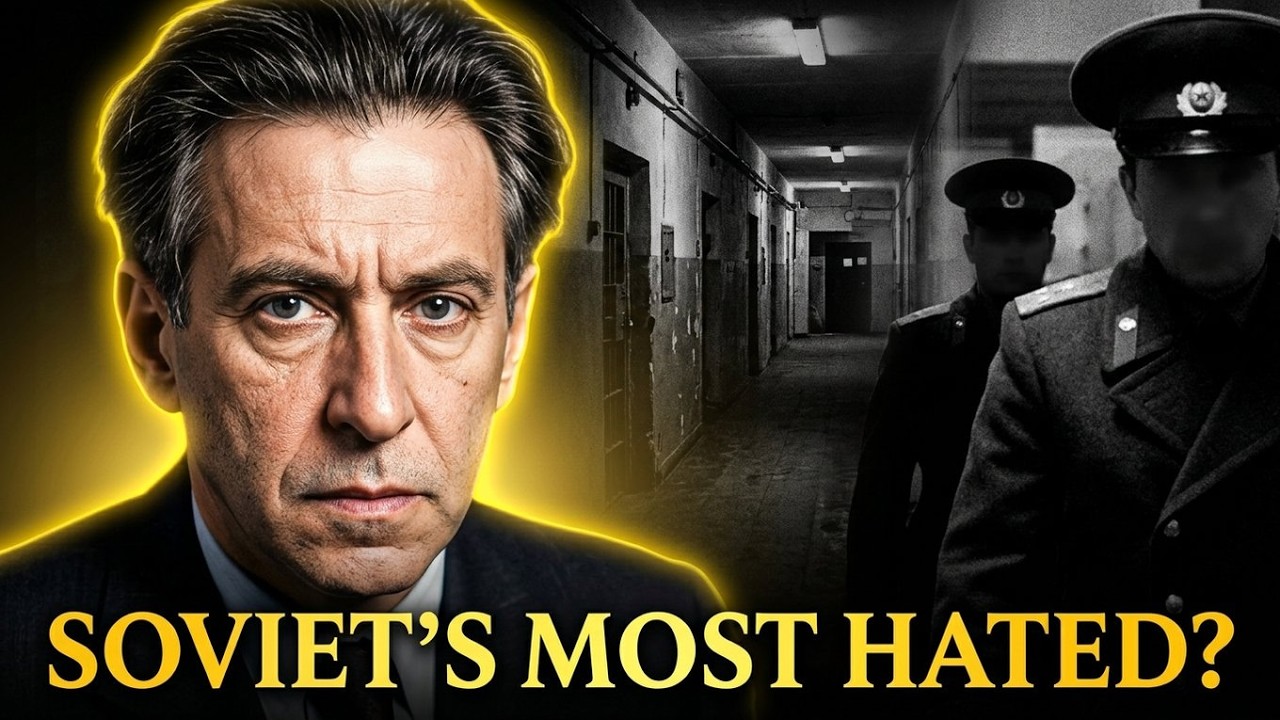 It was a message to the world, to the Western Allies, and to the Red Army itself that the war’s endgame required a different kind of language.
Ehrenburg’s story is not a simple tale of a propagandist falling from grace; it is a profound case study in the symbiotic, often parasitic, relationship between a totalitarian state and its most effective instruments. Born in Kiev in 1891 into a middle-class Jewish family, Ehrenburg’s path to becoming the Soviet Union’s literary voice of total war was circuitous and marked by a lifelong ambivalence toward the revolution he eventually served. His early life was steeped in the bohemian intellectual ferment of Paris, where he fled as a young man after being arrested and beaten by the Tsarist secret police for anti-tsarist activities.
In the cafes of Montparnasse, he mingled with the future giants of modern art, Picasso and Modigliani, and engaged in endless political debates with fellow exiles, including Nikolai Bukharin, who would later become a celebrated Bolshevik theorist before being executed in Stalin’s purges.
This cosmopolitan background made Ehrenburg an anomaly in the Soviet literary firmament. He was a writer who understood the West, who could speak its cultural languages, and who could move with ease in intellectual circles that the standard party apparatchiks could never penetrate. This unique value proposition became his shield.
He returned to Russia in 1917, experienced the revolution with a skepticism he was careful to suppress, and spent the intervening years as a correspondent in Paris, honing his craft as a novelist and observer of European politics. When the Spanish Civil War erupted in 1936, he found his true calling as a war correspondent, reporting for Izvestia with a morally absolute and emotionally direct style that made readers feel the conflict’s stakes rather than simply understand them.
Spain was his rehearsal for the apocalypse. When Germany invaded the Soviet Union in June 1941, Ehrenburg had a fully developed instrument ready to apply to a new, far more massive subject. From the first days of Operation Barbarossa, he became the primary literary voice of the Great Patriotic War, writing for Krasnaya Zvezda, the military newspaper that reached soldiers at the front almost daily, as well as for Pravda and Izvestia.
His articles were visceral, personal, and designed to produce a feeling of righteous fury rather than ideological clarity. He described specific villages destroyed, specific families erased, and constructed individual human stories out of the aggregate catastrophe of the German occupation. He named names and created a narrative of absolute good versus absolute evil that resonated deeply with a traumatized and desperate population.
The soldiers’ response was unprecedented. They wrote him letters by the thousands, describing how they read his pieces aloud to their units and carried newspaper clippings in their breast pockets as talismans. He was not merely popular; he was the voice that translated their lived horror into language they could hold onto.
His effectiveness was so profound that Hitler named him a personal enemy, and Goebbels’ propaganda machine devoted significant attention to him, portraying him as the embodiment of “Jewish Bolshevism.” The Nazi regime issued a specific order that if Ehrenburg were captured, he was to be executed on the spot, a rare distinction that underscored his impact on German military consciousness.
The piece that became most associated with his wartime work, and which would later become a focal point of his critics’ attacks, was published in 1942 during the darkest days of the war. The article, titled simply “𝓀𝒾𝓁𝓁,” contained the central line that would haunt him: “If you have not killed at least one German a day, you have wasted that day.” This framing, which defined the enemy in collective rather than individual terms, was a deliberate rhetorical choice designed to maximize hatred and resolve.
It did not distinguish between a Nazi party member and a conscripted soldier, nor between a soldier and a civilian. It created a category of absolute enmity, and for three years, this approach was not only tolerated but actively encouraged by the state because it served the immediate, existential need to motivate a massive army to fight and 𝓀𝒾𝓁𝓁 without hesitation.
 Yet, even among his colleagues, there was a noted discomfort with the extremity of his position. Konstantin Simonov, himself the author of powerful wartime poetry that called for the killing of enemy soldiers, later drew a distinction between his own work, which he claimed was directed at the armed enemy, and Ehrenburg’s framing, which extended the category of guilt far beyond the battlefield. This distinction, whether entirely accurate or a post-hoc rationalization, highlights that Ehrenburg occupied an extreme position within the Soviet propaganda ecosystem.
He was the sharpest edge of the blade, and while a sharp edge is useful for cutting, it is also dangerous to handle.
The practical implications of this rhetorical strategy began to concern the Soviet Union’s Western Allies as the war entered its final phase. American Ambassador to Moscow, Averell Harriman, sent classified dispatches to Washington in 1944 and 1945 documenting the diplomatic establishment’s unease. The idea that the entire German population was collectively and equally culpable created significant administrative and political complications for the Allied plans for post-war governance and occupation.
The Western powers were preparing to administer a defeated Germany and needed a population that could be rehabilitated and governed, not one that had been told by a prominent Soviet voice that they were all irredeemably guilty and deserving of annihilation. These concerns were conveyed to Stalin, who understood them perfectly.
Stalin had been managing a deliberate tension in his propaganda strategy throughout the war. He maintained an official line that distinguished the Nazi leadership from ordinary German workers and soldiers, a line useful for diplomatic purposes and for potential post-war reconstruction. Simultaneously, he allowed and encouraged the emotional register that Ehrenburg represented, a line useful for motivating the Red Army.
Both lines served their purpose at different moments. As the war moved onto German territory in late 1944 and early 1945, the need for the second line diminished dramatically, and the need for the first became paramount. The Red Army was now the occupier, and its behavior toward the German civilian population would be under intense international scrutiny.
The rhetoric of total hatred had to be dialed back, and the man who embodied it had to be publicly corrected.
The April 14th article in Pravda was a carefully calibrated instrument of control. It did not accuse Ehrenburg of a crime, nor did it call for his arrest or execution. The word “simplifies” was chosen with precision.
In Soviet institutional language, it meant that someone had deviated from the official line by going too far, without having crossed into the territory that warranted complete destruction. The article made two specific charges. First, it stated that Ehrenburg had treated all elements of the German population as equally guilty, implying that the Red Army’s task extended to the entire population rather than its armed and political leadership.
Alexandrov explicitly quoted Stalin to support this position, leaving no doubt about the source of the correction. Second, it accused Ehrenburg of having attributed German resistance on the Eastern Front primarily to fear of Soviet retribution, a framing that potentially served German propaganda interests by suggesting the German military was fighting harder against the Soviets than against the Western Allies. This risked sowing division among the Allied coalition at a critical moment.
 The response from Ehrenburg was immediate and total. He wrote a personal letter to Stalin on April 15th, the day after the article appeared, but received no reply. His publication output slowed to a trickle and then stopped almost entirely.
The journalist who had appeared in Soviet newspapers nearly every day for four years vanished from public view within days. The correction lasted only weeks. After Germany surrendered on May 8th, his name reappeared in Pravda.
He was published again. He was not expelled from the Writers’ Union, nor was he subjected to the formal show trials and executions that had consumed so many others during the preceding two decades. The disavowal was real, but its consequences were precisely bounded because the system had decided in advance what those consequences should be.
He was not broken; he was simply put back in the drawer.
The question of why the Soviet system protected Ehrenburg, using him when he was useful, publicly humiliating him when his approach created complications, and then restoring him rather than destroying him, has a structural answer that reveals the true nature of Soviet power. The system was not a monolith driven by irrational rage; it was a rational, if brutal, calculator of utility. Ehrenburg was too valuable in too many different ways to permanently discard.
He was the Soviet writer who could credibly address Western European intellectual audiences, a crucial asset in the early Cold War years that followed the conflict. He had spent years in Paris, spoke the cultural language of the European left, and provided the regime with a sophisticated, world-aware face that could not be easily replaced.
Furthermore, he had, alongside Vasily Grossman, compiled The Black Book, the first major documentary record of the organized destruction of Jewish communities in Soviet territory during the German occupation. This was a work of genuine historical significance, involving testimony from survivors and documentation of specific events across dozens of locations. While the state eventually suppressed the book in 1947, destroying the typeset edition, it was Ehrenburg who had built the documentary record in the first place.
He was also, by the evidence of the thousands of letters he received, genuinely connected to the people the Soviet system most needed to keep motivated. This connection between a writer and his audience cannot be manufactured on command, and the system understood that it was not a replaceable commodity.
Finally, and perhaps most importantly, Ehrenburg was not a threat to anyone’s power. He had no independent institutional base, no military command, no regional political organization, and no administrative machinery of his own. He was a writer.
His authority derived entirely from the platform the state provided him. Reduce the platform, and he became simply a man with manuscripts. The system could calibrate his visibility without any of the political complications that would have attended a more complete destruction.
 This is where the analogy to a figure like Julius Streicher, the Nazi propagandist, falls apart. Streicher had built something of his own, a newspaper, a regional party organization, and a following that gave him leverage independent of Hitler’s direct support. Ehrenburg had none of these things.
His dependence on the system’s goodwill was total, which made him far easier to manage.
The story of Ilya Ehrenburg is not primarily about one writer’s particular approach to wartime journalism. It is a profound revelation of how systems of power manage the people they use. The Soviet propaganda apparatus needed, between 1941 and 1945, something Ehrenburg could provide better than almost anyone else: the capacity to translate mass conflict into emotional language that ordinary people could act on.
He delivered this with a reach and consistency that genuinely served the war effort at a moment when the war’s outcome was genuinely uncertain. When the need changed, the system adjusted his position without destroying him because destroying him would have cost more than it gained. This calculation, use, adjust, do not destroy, is a form of institutional management that is less dramatic than the purges but in some ways more revealing.
The men who were shot were the ones who had become genuine threats or who had lost their utility entirely. Ehrenburg remained useful, and he was handled accordingly.
In the years following the war, Ehrenburg navigated the late Stalinist period with the same careful positioning that had kept him functional through everything that preceded it. He received the Stalin Peace Prize in 1952 and attended international peace conferences as the face of Soviet cultural diplomacy. After Stalin’s death in 1953, he moved with surprising speed toward a more open cultural position.
His novel The Thaw, published in 1954, gave its name to the entire era of post-Stalin liberalization, suggesting that the preceding period had been frozen and that something was now beginning to melt. His memoirs, People, Years, Life, published in serial installments through the 1960s, introduced a generation of Soviet readers to writers who had been officially erased, including Babel, Tsvetaeva, and Mandelstam. He used the form of personal reminiscence to conduct a quiet rehabilitation effort, reintroducing figures the system had destroyed by presenting them as people he had known.
He defended younger artists under official criticism and pushed, carefully and with invisible limits, against the most stifling aspects of Soviet cultural control in his final years. He died on August 31st, 1967, at the age of 76. He received a state funeral.
His papers were sent to Yad Vashem in Israel, a final, quietly significant destination for the archive of a man whose entire public career had been conducted inside the Soviet system and who had spent his last years trying to preserve the memory of what that system had destroyed. The public humiliation of April 1945 was not the end of his story but a defining chapter in it. It demonstrated that he was a tool, a valuable one, but a tool nonetheless.
The party made him famous for his language, publicly corrected him for it, and then restored him, decorated him, and allowed him to die with his reputation substantially intact. The instrument, when it was no longer needed in quite the same form, was not broken. It was simply put back in the drawer, a testament to the cold, calculating logic that governed the relationship between the Soviet state and the individuals it chose to elevate and, when necessary, to humble.