
NUREMBERG, Germany — The trapdoor swung open at 1:34 a.m. on October 16, 1946, and the man who had orchestrated the military machinery of the Third Reich plunged into the darkness of the gymnasium gallows, but the snap that should have ended his life never came.
Field Marshal Wilhelm Keitel, the 64-year-old chief of the German Armed Forces High Command, did not die quickly. He did not die peacefully. According to eyewitness accounts and the official records of the execution, the hangman’s rope failed to deliver the fatal cervical fracture.
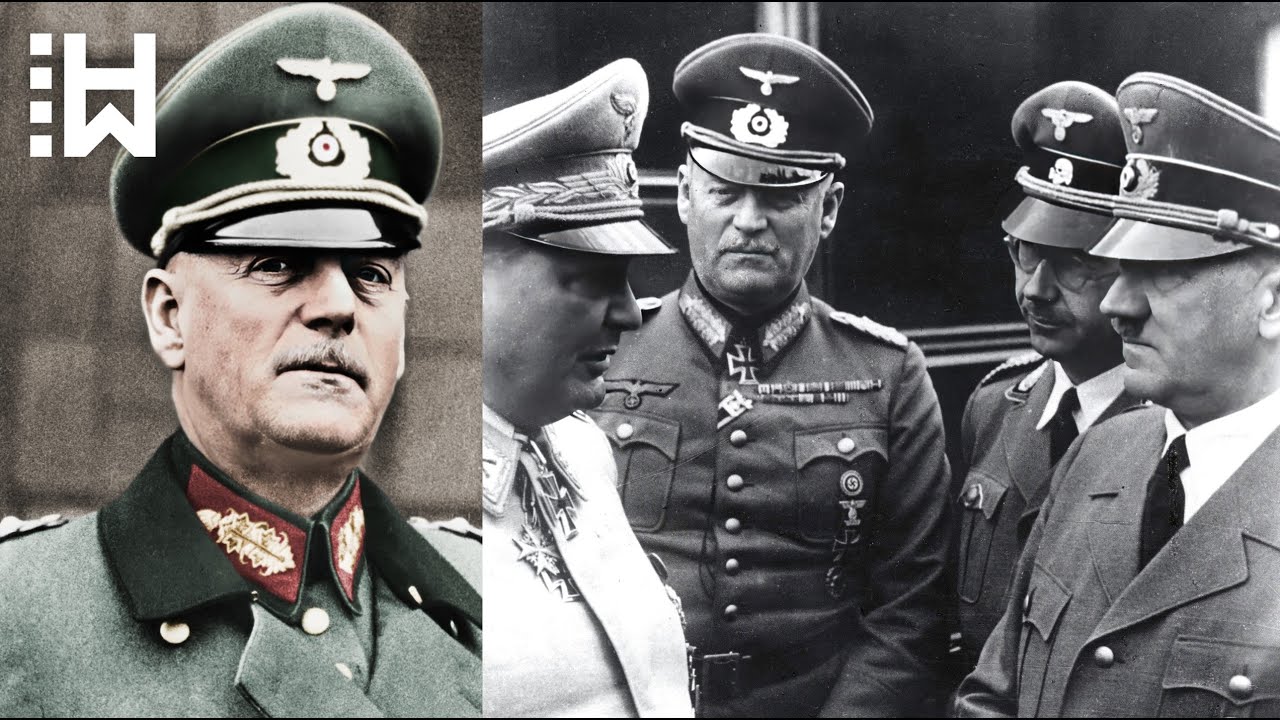 Instead, the condemned war criminal strangled slowly, his body convulsing violently at the end of the rope for a harrowing 28 minutes before the pulse of life finally extinguished.
The scene inside the Nuremberg prison gymnasium was one of grim, calculated justice, yet it descended into a macabre spectacle of suffering that even the most hardened Allied observers found difficult to watch. Sergeant John C. Woods, the American executioner, had miscalculated the drop.
The trapdoor itself was too small, causing Keitel to strike his head painfully as he fell. The result was not a merciful death but a prolonged, agonizing strangulation that served as a brutal final chapter to a life defined by blind obedience and complicity in genocide.
Keitel’s final words, spoken moments before his death, were a plea for divine mercy for the German people. “I call on God Almighty to have mercy on the German people. More than two million German soldiers went to their death for the fatherland before me.
I follow now my sons – all for Germany,” he declared. But the mercy he sought from heaven was not mirrored in the mechanics of his earthly punishment.
This was the culmination of a trial that had laid bare the horrors of the Nazi regime. For over ten months, the International Military Tribunal had heard testimony of unspeakable atrocities, from the systematic murder of six million Jews to the brutal subjugation of occupied Europe. Of the 21 defendants who stood in the dock, twelve were sentenced to death.
Keitel, found guilty on all four counts—conspiracy, crimes against peace, war crimes, and crimes against humanity—was among them. His request to be shot by a firing squad, a death he considered befitting a soldier, was denied. The tribunal ruled that his crimes were criminal, not military, and he would hang like a common criminal.
The death of Wilhelm Keitel was not an isolated act of vengeance but a foundational moment in international law. It established a precedent that political and military leaders could be held personally accountable for their actions, a warning to dictators and war criminals across the globe. Yet, the manner of his death, and the deaths of the nine other men executed that night by Sergeant Woods, cast a long shadow over the proceedings.
Woods, a man with no documented pre-war experience as a hangman, has been the subject of intense historical scrutiny. It is widely believed that his technical incompetence, whether born of inexperience or deliberate cruelty, turned the executions into a drawn-out ordeal. The drop was insufficient to snap the necks of the condemned, leading to death by strangulation that lasted several minutes for most.
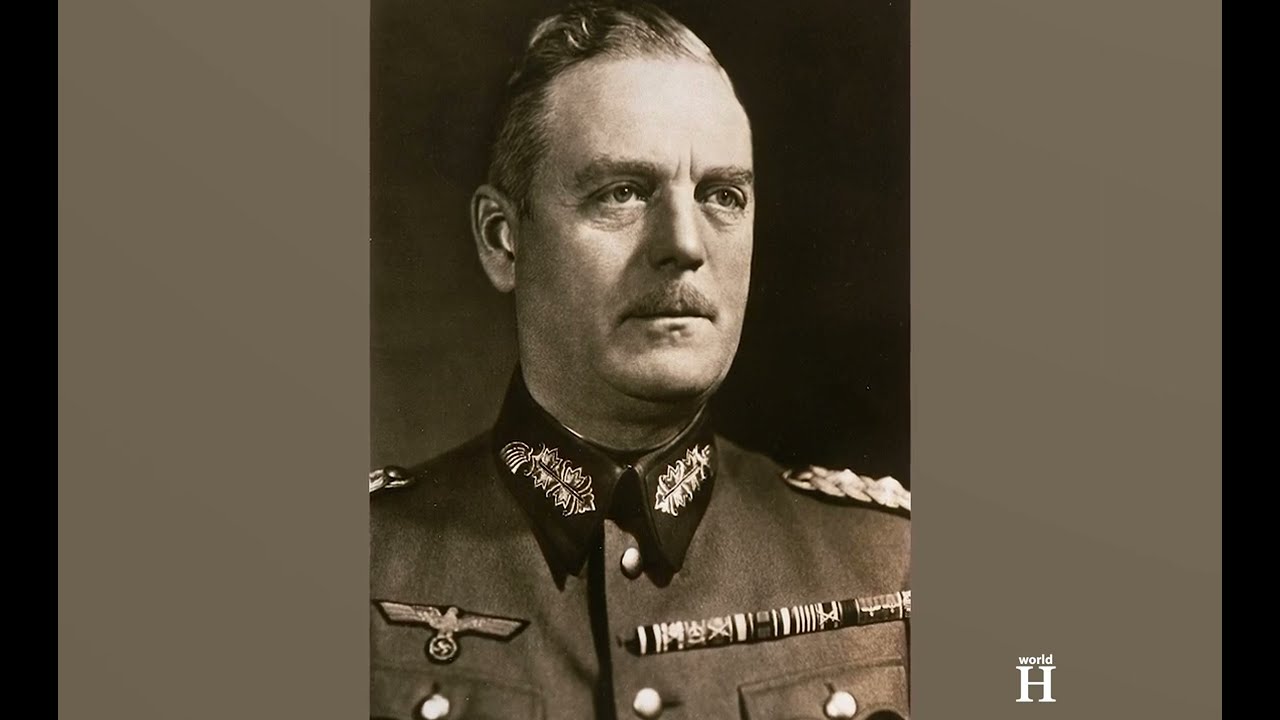 For Keitel, it was far worse. The combination of the small trapdoor and the short drop resulted in a catastrophic physical trauma that prolonged his suffering to nearly half an hour.
The irony of Keitel’s agonizing end was not lost on those who had studied his career. This was a man who had signed orders authorizing the execution of 50 to 100 “Communists” for every German soldier killed. He had signed the “Commando Order” mandating the summary execution of Allied special forces, even those in uniform.
He had signed the “Night and Fog” decree, which allowed for the abduction and disappearance of resistance fighters in occupied Western Europe, leaving their families in perpetual uncertainty. He had added Poland’s intelligentsia to the Nazi death lists, condemning thousands of scientists, teachers, and doctors to execution in the first months of the war.
Born on September 22, 1882, in the village of Helmscherode, Keitel was a career soldier who rose through the ranks of the Prussian army. His path to infamy was paved not with ambition for power, but with a pathological loyalty to Adolf Hitler. Peers derisively called him “blindingly loyal toady,” a “stupid follower of Hitler,” and a man with “a sergeant’s mind inside a field marshal’s body.”
Hitler himself valued Keitel not for his strategic brilliance, which was notably absent, but because he was “as loyal as a dog.”
Keitel’s rise to the pinnacle of the German military establishment was as surprising to him as it was to his colleagues. In 1938, after the abolition of the War Ministry, he was appointed Chief of the Armed Forces High Command (OKW), making him the second most powerful figure in the military hierarchy, answerable only to the Führer. He was instrumental in the secret rearmament of Germany, a direct violation of the Treaty of Versailles.
He helped orchestrate the Anschluss with Austria in 1938, the first act of territorial aggression that would eventually plunge the world into a second global conflict.
When Hitler’s plans turned to the invasion of Poland in 1939, Keitel was fully complicit. He was not merely a passive observer but an active participant in planning the criminal war of aggression. He was aware of the mass arrests, population transfers, and mass murders that were planned long before the first shots were fired.
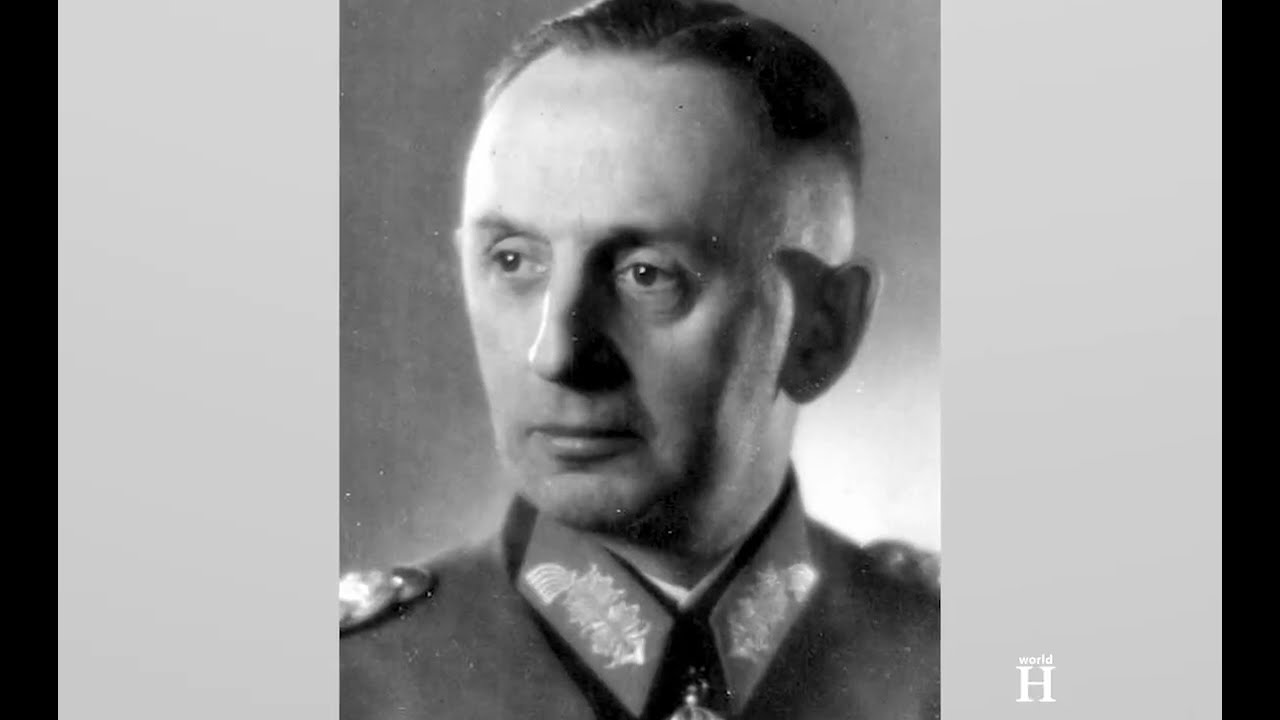 On September 12, 1939, he added Poland’s intelligentsia to the list of those to be eliminated, a directive that resulted in the deaths of approximately 60,000 people in the first months of the occupation.
His loyalty was rewarded with lavish bonuses, including 100,000 Reichsmarks after the fall of Poland. After the swift defeat of France in 1940, he described Hitler as “the greatest warlord of all time” and was promoted to field marshal. He was present at Compiègne to sign the armistice with France, a deliberate act of humiliation staged in the same railway car where Germany had surrendered in 1918.
As the war expanded, so did Keitel’s criminality. From April 1941, he issued a series of orders that legalized the murder of Jews, civilians, and non-combatants. He dismissed logistical warnings about the invasion of the Soviet Union, Operation Barbarossa, with a wave of his hand, insisting that Hitler would not want to see the problems.
The invasion, launched on June 22, 1941, would become a theater of unparalleled brutality, where his orders for “unusual severity” and collective reprisals were implemented with devastating effect.
Even personal tragedy did not temper his fanaticism. His youngest son, Hans-Georg, was killed in July 1941 during the invasion of the Soviet Union—an attack Keitel had helped plan and execute. Yet, he continued to sign orders that sent countless other sons to their deaths.
After the failed assassination attempt on Hitler on July 20, 1944, Keitel personally led the wounded Führer from the wreckage of the conference room. He then sat on the Army “Court of Honour” that handed suspected conspirators over to the People’s Court for execution. He was also instrumental in the fate of Field Marshal Erwin Rommel, the famed “Desert Fox,” who was implicated in the plot.
On Hitler’s orders, Keitel sent two generals to Rommel with a stark choice: suicide by cyanide or a public trial that would destroy his family. Rommel chose the cyanide pill and was given a state funeral, his death falsely attributed to war wounds.
The end of the war brought no redemption for Keitel. After Hitler’s suicide on April 30, 1945, and Germany’s unconditional surrender, Keitel was forced to sign the definitive Instrument of Surrender in Berlin on May 8, 1945. The Soviets had insisted that the supreme commander of German forces, not a civilian deputy, sign the document to prevent the creation of a new “stab-in-the-back” myth.
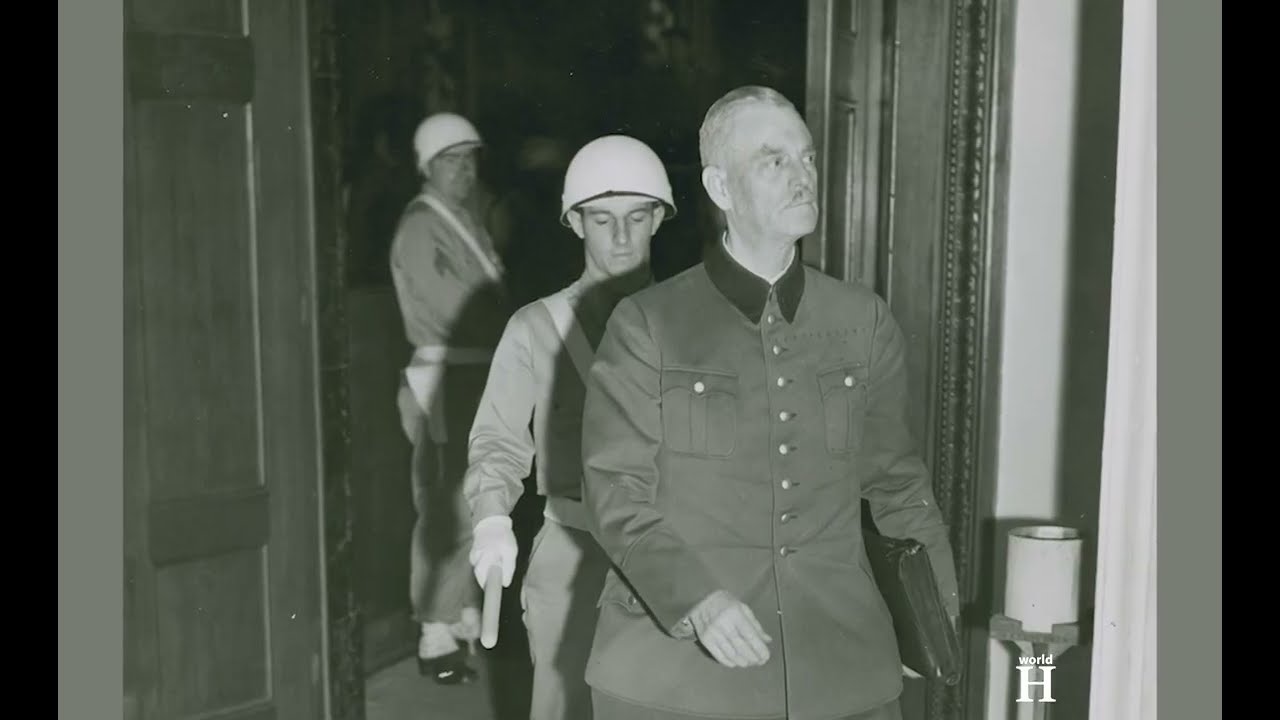 Keitel, in his field marshal’s uniform, signed the document that formally ended the war in Europe.
Arrested by the Allies, he was brought to Nuremberg to face justice. In the dock, he admitted that he knew many of Hitler’s orders were illegal. He insisted, however, that he was merely a soldier following orders, that all responsibility lay with the dead Führer.
He claimed that the atrocities “developed, one from the other, step by step and without any foreknowledge of the consequences, destiny took its tragic course.” Prison psychiatrist G. M.
Gilbert observed that Keitel “had no more backbone than a jellyfish.”
The tribunal was not swayed by his defense of superior orders. The principle that a soldier must disobey illegal orders was established, and Keitel was condemned. His final plea for a military execution was dismissed.
The criminal nature of his acts, which included the murder of commandos and the systematic starvation and enslavement of civilians, precluded any honor in death.
As the rope tightened around his neck and the trapdoor gave way, the world witnessed the final, painful fall of a man who had once stood at the apex of Nazi power. The 28 minutes of his dying struggle were a stark, physical manifestation of the moral weight of his crimes. The body of the field marshal, who had sent millions to their graves with the stroke of a pen, was placed in a coffin.
His corpse, along with those of the other executed men, was cremated at a secret location. The ashes were scattered into the river Isar, ensuring there would be no grave, no shrine, no place for future generations to mourn or glorify him.
The execution of Wilhelm Keitel was a landmark in the pursuit of international justice. It sent an unequivocal message that the architects of war and atrocity would be held accountable. Yet, the manner of his death, the agonizing minutes on the gallows, serves as a haunting reminder of the raw, human cost of justice in the aftermath of the most devastating conflict in human history.
There were no tears shed for Wilhelm Keitel, only the silent, grim satisfaction of a world that had finally seen justice served.