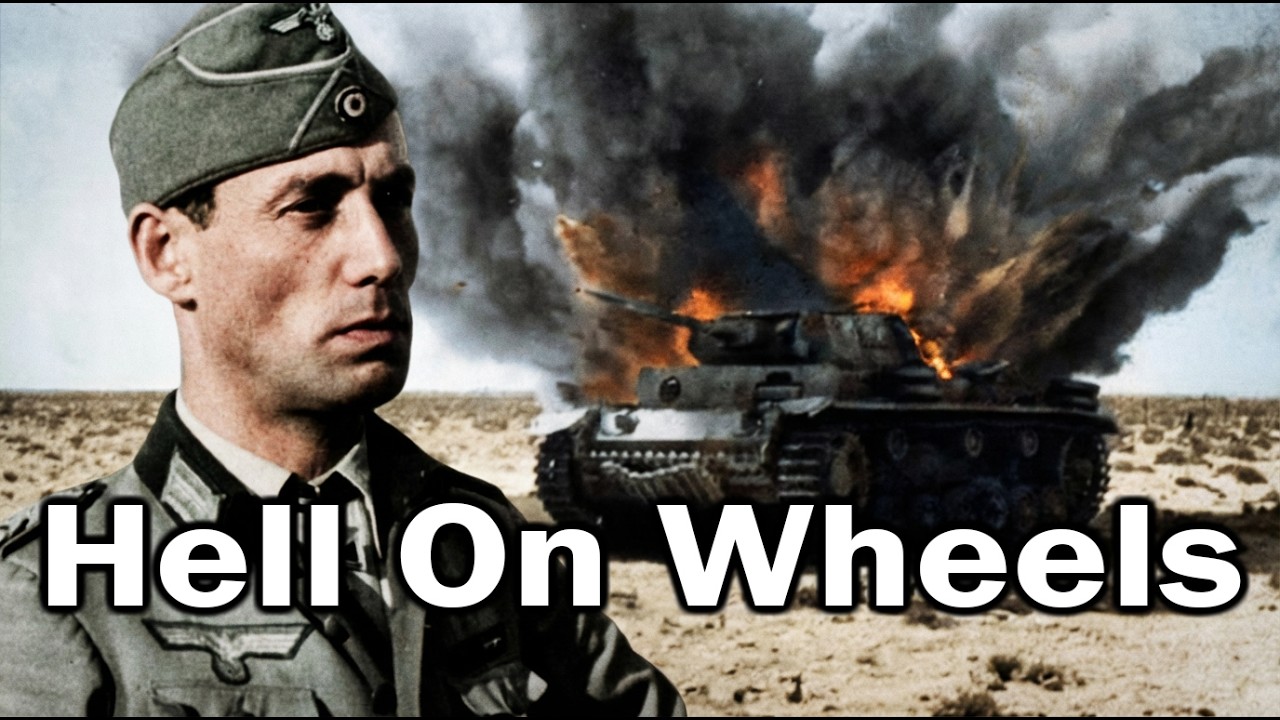
CELLES, Belgium – The frozen earth of a shallow valley here is littered with the blackened carcasses of Panther tanks, their turrets twisted and their tracks snapped like dead branches. For the German officers who planned the great winter gamble, the sight was unthinkable. In the span of roughly three hours on Christmas Day, 1944, a force of about 50 American Sherman tanks did what many believed impossible: they stopped the last serious armored push in the West and cut the spearhead of the elite 2nd Panzer Division to pieces.
To understand how a handful of platoons from the U. S. 2nd Armored Division achieved this crushing victory, one has to rewind the clock eight days.
 In the predawn darkness of 16 December 1944, the Ardennes forest was a quiet sector, a rest area for worn-out American infantry units. But shortly after 5:30 a. m.
, the silence was shattered along an eighty-mile front as roughly 1,400 German guns opened fire. Shells crashed into foxholes, command posts, and dugouts that had never been built to withstand a major assault. The barrage was a curtain, and behind it waited the tanks of Colonel Meinrad von Lauchert’s 2nd Panzer Division.
On paper, the division was the perfect weapon for this final gamble. It was backed by a plan of stunning audacity: three German armies, comprising more than 200,000 men, were to drive a wedge through the weakened American lines, race to the Meuse River, and capture the bridges before the engineers could blow. The objective was Antwerp, the principal supply port for the Western Front.
If the steel spearhead reached the Meuse in force, Allied logistics would collapse and the war in Europe might turn on a dime. There was, however, a shadow hanging over that plan, an accounting ledger attached to every movement of a tank since 1944.
German planners, staring at the ruin of their synthetic fuel plants at Leuna and Pölitz, knew they lacked the fuel to run the panzers for the entire campaign. Their only solution was to capture American gasoline dumps on the ground. The assumption that U.
S. forces would turn and run, leaving fuel stores intact, was the very gambit the 2nd Panzer Division hinged upon. They were not a worn-out formation of boys and old men.
Many of the Veterans in the Panther crews had survived the terrifying killing fields of the Eastern Front and the hedgerows of Normandy. They knew exactly how to read a battlefield. Moving fast and exploiting a gap was their religion, and their Panther tank looked like the divine instrument of war.
The Panther was a lethal predator. Its high-velocity 75mm cannon could skin a Sherman from a thousand yards away, sloped plate frontal armor was a nightmare for its adversaries, and the Zeiss optics were unrivaled. But that power came at a terrifying price.
 Panthers burned about one and a half gallons of fuel per mile over country roads. The Ardennes, however, were not smooth highways; they were narrow, twisting, forested lanes that transformed the advance into a straight mathematical equation. The spearhead had to stay ahead of the fuel supply that could feed them.
And for the first two days, it worked. The offensive achieved total surprise. American units were scattered in the fog, communications bled to white noise, and the 2nd Panzer Division carved a deep dent into Belgium.
By 18 December, they had bypassed Bastogne, leaving its capture to other divisions, and angled northwest toward the Meuse. To the German officers, the race felt like 1940 again, their eyes and everything seemed to fall into place.
But the cruel trick of history that Christmas was that the supply lines were sputtering as they were stretching thinner and thinner. The spearhead of 2nd Panzers, known as Kampfgruppe von Böhm, was running on fumes. Every time a Panther shot a Sherman, it was a feat of tactical brilliance.
Yet, on the operational map, the division was driving into a trap where the lines were filled with fuel shortages and they ran out of gas for the next sector. The twists and turns and fuel.
Instead of driving forward, the decision was made to halt just short of the Meuse. Cleared on 24th December, the hunters of 2nd Armored Division were already on the move. Major General Ernest Harmon, the commander of the U.
S. division, had a doctrine: aggressive reconnaissance, combined arms, and the constant ability to re-supply and strike using a network of logistics. He had fuel, he had ammunition, he had had a full repair bay.
 The 50 Shermans that would face the Germans were flush with fuel and confident.
They attacked at dawn on Christmas. The German spearhead at Ce with around forty operational vehicles was low on fuel, waiting for a truck that would never arrive. The result was not an armored duel as much as a massive slaughter.
The Americans advanced not in a single line but in armored combat commands, outflanking the Germans. The fire was directed by using their inspirers and the Sherman crews used their one true advantage: speed and mobility. The Panther’s armor stood up well, but the American gunners were clever.
They aimed for the tracks, for the narrow flanks, or targeted the ground around to scatter units. Even when a division 82nd tank was, more always came forward.
As the heat wave of the 500, they started to overheat. One by one, Panzers were left. By afternoon, a few hundred crew members, battered by Allied aircraft and without fuel, abandoned the tanks.
Colonel Lauchert was forced to destroy his own vehicles to avoid capture. The field ended with about 80 German armored vehicles burned out on a field; a total of 300 of their soldiers lay in the snow or became prisoners. The 2nd Panzer Division had ceased to exist as an offensive formation.
The battle teaches a brutal, conclusive lesson about industrial warfare. This event at Celleas was the exact mirror image of the German winter gamble—the mismatch had not only been in the mesh, but in the inventory itself. The German artillery commander, Zerohero, held his tanks even as better.
 were pounding furiously. He was not just fighting a Corps of tanks, but a logistics system. When they fought during the Battle of the Bulge on equal numbers, the Americans lost more individual Shermans, and those moments, the combat ratios were comparable.
But look at the war in total. In 1944 alone, the Americans built more than 17,000 tanks. The German industry, heavily bombed and short of material, was only able to produce a few thousand Panthers.
It came down to numbers. For every armored spear that the Germany put forward, four Americans would poke it back. With a capacity of more than two million trucks, the U.
S. forces could refuel, resupply and reinforce the rear lines. German logistics still consisted of unreliable horses and broken tracks, and burnt German fuel trucks added to their em place.
The cavalry doctrine of slashing supply lines and being in a battle of annihilation was outdated in the face of sheer global production.
Only Minor loss, this became a tragedy of the 1944 winter. The battle at Chells had crushed not valued fuel connectors. This was termination object.
Now, nest around the clear, a cleanly dotted. The speeding chest. Clruction.
The last armored operation of the German forces in the west was halted and no column of trapped since.