
Tamara de Lempicka, the artist who distilled the intoxicating, fragile spirit of the Jazz Age onto canvas with blades of color and a gaze of unflinching power, has been reclaimed from the ash heap of art history. Her resurrection is not merely a market correction, but a cultural reckoning, forcing critics to confront a legacy that was once dismissed as decorative, scandalous, or simply too commercial to matter. From the gilded ruins of St.
Petersburg to the smoky salons of Paris, from the glittering desperation of Hollywood to a final, defiant stand in Mexico, her life was a masterclass in reinvention, a relentless performance of self-creation that blurred the lines between artist, muse, and myth.
 Her story begins not with a birth certificate, but with a fog of deliberate obfuscation. Born Maria Górska, she would later claim Warsaw in 1898, though other records suggest Moscow two years earlier. This ambiguity was her first act of artistry, a refusal to be pinned down by facts when a more compelling narrative could be forged.
Her childhood was one of opulent privilege, the granddaughter of a wealthy Polish banker, educated in Swiss boarding schools, surrounded by the trappings of aristocratic ease. But this gilded cocoon was shattered when she was ten, her father vanishing under circumstances she would later embellish with tales of suicide or gangland murder, depending on the audience. It was a formative lesson in the power of narrative, the utility of erasing inconvenient truths and replacing them with something more theatrical, more useful to the legend she was building.
The cataclysm that would define her generation arrived with the Russian Revolution. She had married Tadeusz Łempicki, a devastatingly handsome lawyer, in 1916, already pregnant with their daughter, Kizette. Their life was one of Petrograd’s glittering chaos, champagne flowing even as the Tsar’s world crumbled.
But the Bolsheviks’ seizure of power in October 1917 ended the revelry with brutal finality. One night, secret police kicked in their door and dragged Tadeusz from their bed at gunpoint. Tamara, chasing after them, was struck down into the snow, waking to find herself face to face with the carcass of a dead horse, its ribs a cage of despair.
Her husband’s release came at a terrible price. With forged papers secured through a harrowing bargain with the Swedish consul, a man who demanded sexual favors in exchange for her salvation, she fled across the border, the taste of ash and humiliation burning in her throat. She had survived, but the woman who emerged from that frozen nightmare was forged in steel, determined never to be so powerless again
Paris, the city of light, initially felt like a gray purgatory. The family, exiled and impoverished, lived in cramped quarters, their jewels pawned one by one. Tadeusz, broken by his imprisonment, had become a hollow shell, his violence a new, terrible language.
The bruises on her body were hidden beneath high collars and strategic strands of pearls. But Tamara, whose sense of entitlement had been honed since childhood, refused to accept this fate. Her sister’s sharp rebuke, a challenge to use her talent instead of enduring her misery, ignited a fierce, desperate ambition.
In late 1919, she enrolled at the Académie Ranson, throwing herself into her studies with a feverish intensity, chain-smoking three packs a day and painting through the night. She rejected the avant-garde’s worship of chaos, the muddy earth tones of the left bank, dismissing even Picasso as a destroyer rather than a creator. Her guiding star was André Lhote, whose soft cubism, with its glamorous, stylized figures, offered a path to something she craved, precision, elegance, a modern beauty infused with the grandeur of the past.
She would take his lessons, sharpen them, and make them her own
 Her rise was meteoric. By 1922, she was debuting at the prestigious Salon d’Automne, marking the occasion with a vow that was pure Tamara, for every two paintings sold, she would buy herself a diamond bracelet, stacking them on her wrists until her arms glittered from elbow to hand. Her portraits were not mere likenesses, but distilled fantasies, capturing the glossy, self-possessed women of the new era, the garçonnes who drank in cafes, took lovers, and answered to no one.
Her female subjects, with their luminous skin and smoky, knowing gazes, often seemed to be looking at each other rather than at the viewer, a subtle, sapphic charge that set her work apart. Her first great muse was Ira Perrot, a flame-haired heiress who lived across the street, who became her lover and the subject of some of her most charged early works. Their trip to Italy together in 1921 was an awakening, a rediscovery of luxury and pleasure that infused her canvases with a new, golden sensuality.
Works like “Perspective,” with its entwined female nudes, announced her intentions unambiguously, scandalizing some, but captivating the powerful lesbian salons of Paris, where Natalie Barney and the Princesse de Polignac held court, wielding the power to launch or destroy reputations. Tamara, ever the strategist, inserted herself into this world, understanding that desire and ambition could be painted with the same brush stroke
Her private life grew increasingly decadent, a whirlwind of lovers of every gender, cocaine and ether, and parties that became the stuff of legend. She hosted soirées where waitresses shed their clothing as trays emptied, where food was served from the naked body of a young woman, where the atmosphere was wicked but never threatening, always choreographed, always controlled. Her marriage to Tadeusz, already frayed, unraveled completely when he left her for another woman.
The shock was profound, a wound to her pride as much as her heart. She chased him to Poland, begged, pleaded, even brought their daughter as a bargaining chip, but ultimately, her contempt was too sharp. You’re a nobody, she spat, too dumb even to have an affair with a pretty girl.
He walked out for good. She collapsed, moaning on a hotel floor, but she did not stay down for long. She painted him, capturing his dark allure, but deliberately leaving his left hand, where his wedding ring would have sat, unfinished.
The title was, of course, “The Unfinished Man.” A tribute, a condemnation, and a final, masterful act of control
Professionally, she was peaking. In 1929, she painted her most iconic work, “Autoportrait (Tamara in the Green Bugatti).” She depicted herself helmeted, gloved, eyes half-lidded with power, speed, beauty, and detachment fused into a single unyielding image.
 It was her brand, her legend, sealed in paint. She was wealthy, earning over a million dollars by decade’s end, and she spent it lavishly, buying a three-floor apartment that was part home, part studio, and entirely a monument to herself, with chrome staircases, glass panels, and gray velvet sofas embroidered with her initials. She married Baron Raoul Kuffner, a Hungarian nobleman and collector, in 1934, believing she had secured immunity from the gathering storms of history.
But the world was darkening. The Depression had ended the Jazz Age’s heedless extravagance. Fascism was rising in Europe, and as a woman of Jewish descent, she could smell the fear in the streets of Berlin.
The era that had made her, that had given her subject, style, and stage, was over. She sensed it, confessing to her diary, I hate my life which is useless, without scope. The vitality that had once seemed inexhaustible was flagging, replaced by anxiety, depression, and a creeping sense of dislocation
In 1939, she and Raoul fled Europe for America, hoping for a new beginning. Hollywood shimmered like Paris in its prime, full of oil barons and movie stars, and she threw herself into its world with determination, hosting lavish parties, resuming her role as the glamorous, mysterious baroness. But the artistic currents had shifted.
A new generation, led by Jackson Pollock and the abstract expressionists, was splattering paint with violent, physical energy, dismissing her crisp lines and invisible brushwork as relics of a dying order. When Peggy Guggenheim opened her revolutionary gallery, Art of This Century, in 1942, Tamara’s work was nowhere to be found. She had misjudged the moment.
She was still celebrated, but as a decorative curiosity, a gossip column fixture, not as a serious artist. Her marriage to Kuffner, one of elegant distance, ended with his sudden death from a heart attack in 1961, leaving her a very rich, but profoundly lonely, widow. She moved to Houston to be near her daughter, but the relationship was brittle, marked by disappointment and a lifetime of neglect.
She tried to dominate her granddaughters, molding them into the exceptional beings she felt she had failed to create in her own daughter, but her efforts were cold, judgmental, and often cruel. Houston society, with its neat, practical values, found her absurd, her language vulgar, her theatrical glamour grotesque in a woman pushing seventy. She loathed it, calling it this uncivilized location
But then, unexpectedly, the tide turned. The art deco revival of the 1970s began to resurrect her reputation. A 1972 Paris exhibition of her early works was a revelation to a new generation, and she was featured in major shows celebrating women artists.
 Her name, once a punchline, became a reference point. Her paintings, once dismissed as decadent, began selling for millions. “Autoportrait” became shorthand for a whole aesthetic, appearing on book covers, in music videos, and in the collections of celebrities like Jack Nicholson.
Madonna, the ultimate curator of image, built an altar of aesthetic worship around her. Angelica Huston played her in a cult play. She was no longer just a relic of the 20s, she was their embodiment, their apotheosis.
Tamara, who had always believed in resurrection, orchestrated her own with the same meticulous control she had applied to her art. She moved to Cuernavaca, Mexico, a haven for eccentrics and exiles, where she painted daily, even into her 80s, surrounded by a new court of admirers. She died on March 16th, 1980, a wisp of what she had been, but her myth remained intact.
She asked to have her ashes scattered over Popocatépetl, the great volcano towering above the city. It was not sentiment, it was staging. She wanted to rise from fire, and like a phoenix, she did
Her legacy is now secure, but it remains contested. Critics still debate whether she was a great artist or a brilliant stylist, whether her work was a profound commentary on female power or a glossy celebration of elite indulgence. But such questions miss the point.
Tamara de Lempicka did not just paint glamour, she painted the gaze of power, of sensuality without apology, of a woman who insisted on being seen. She captured the intoxicating, fragile excess of an era, its beauty, its indulgence, its collapse, with a precision that no photograph could match. And she did it on her own terms, refusing to conform, refusing to apologize, refusing to be diminished.
She was a woman who climbed from the ruins of revolution to the salons of Paris, who fell in America and then rose again, who defined an art movement and then outlived it, only to see it reborn in her own image. The woman in the green Bugatti had raced ahead of history, and when it finally caught up, she was waiting, hand on the wheel, eyes forward, flames at her back, already immortal. Her story, with all its scandal, its ambition, its genius, and its pain, is not just a cautionary tale or a celebration, it is a testament to the relentless, transformative power of self-invention, a reminder that in the end, the only legacy that matters is the one we forge for ourselves, brushstroke by brushstroke, diamond by diamond, from the ruins of everything we once knew
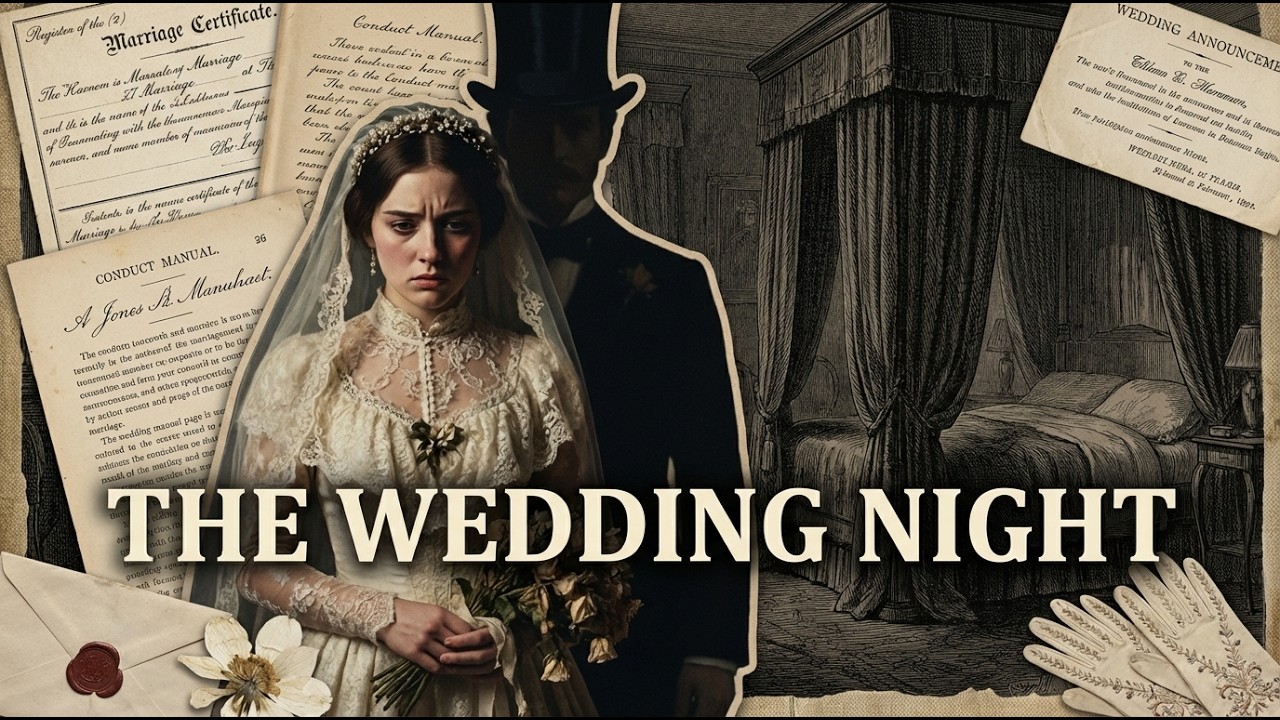
 The preparation, or rather the deliberate lack thereof, was not an accident of Victorian modesty. It was by design, a managed requirement enforced through education, social pressure, and the threat of complete social destruction. Medical texts of the era were written in language so abstract and remote from the physical body that even women who actively sought out information came away no more informed than when they started.
 The weeks that followed brought their own particular weight. The expectation of pregnancy was immediate and unambiguous, as marriage in the Victorian moral framework was inseparable from reproduction. A woman who did not conceive within a reasonable period became the subject of quiet concern, whispered speculation, and the particular diminishing pity that polite society reserves for those who fail at what has been designated their primary purpose.
 The message written into that law could not have been clearer. Marriage was an institution that women were expected to endure. Even a woman who successfully navigated the courts and obtained a divorce faced consequences that amounted to a second and longer punishment.
 And yet, amidst all of this, there was also love, complicated, real, sometimes extraordinary love. Diaries from the period describe women who came to regard their husbands as their closest companions and most intimate confidants. Men who wrote to their wives in language of such tenderness that it still pierces across a century and a half of silence.
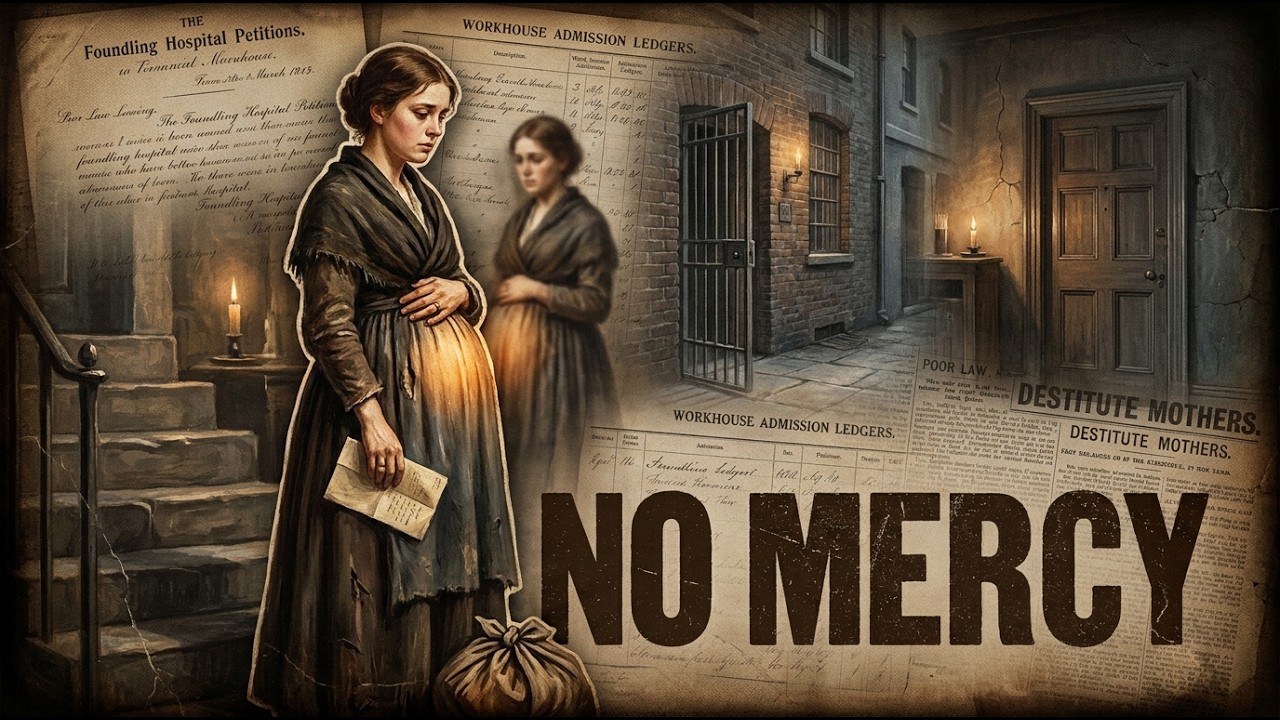
 Beneath the polite veneer of church, parliament, and the drawing-room, a parallel civilization existed, a brutal infrastructure for the dispossession of the “fallen woman” which operated with the cold, dispassionate efficiency of a public utility.
 From the moment she steps onto the cold London pavement, every subsequent door is not a door; it is a trap designed to clamp shut. The law, specifically the Poor Law Amendment Act, had been the first and most lethal assault. By abolishing the legal right of a woman to compel a father to contribute to his child’s maintenance, Parliament created a grotesque equation.
 The woman had to provide a written petition and two character references from respectable householders. She had to prove she had been seduced, not chosen; seduced, not seductive—all within the strict framework of male governors who decided her own fate, demanding proof of employment beyond her. The hospital only accepted first offenders and would evaluate her entire story before deciding if she was worthy of mercy.
 The Magdalene Laundries were the final, grim warehouse for those who did not manage to mechanically dispose of the child but couldn’t keep them. Institutions presented as refuges for the fallen, they were systematized forced labor camps. The women, sealed behind walls with their infants relinquished for adoption or death, were worked as unpaid servants, their labor sold to laundries in the city block while the institution collected the profits.