What if the opinion you’re most proud of—
was planted there by someone you’ve never met?
What if the breakfast you think you chose…
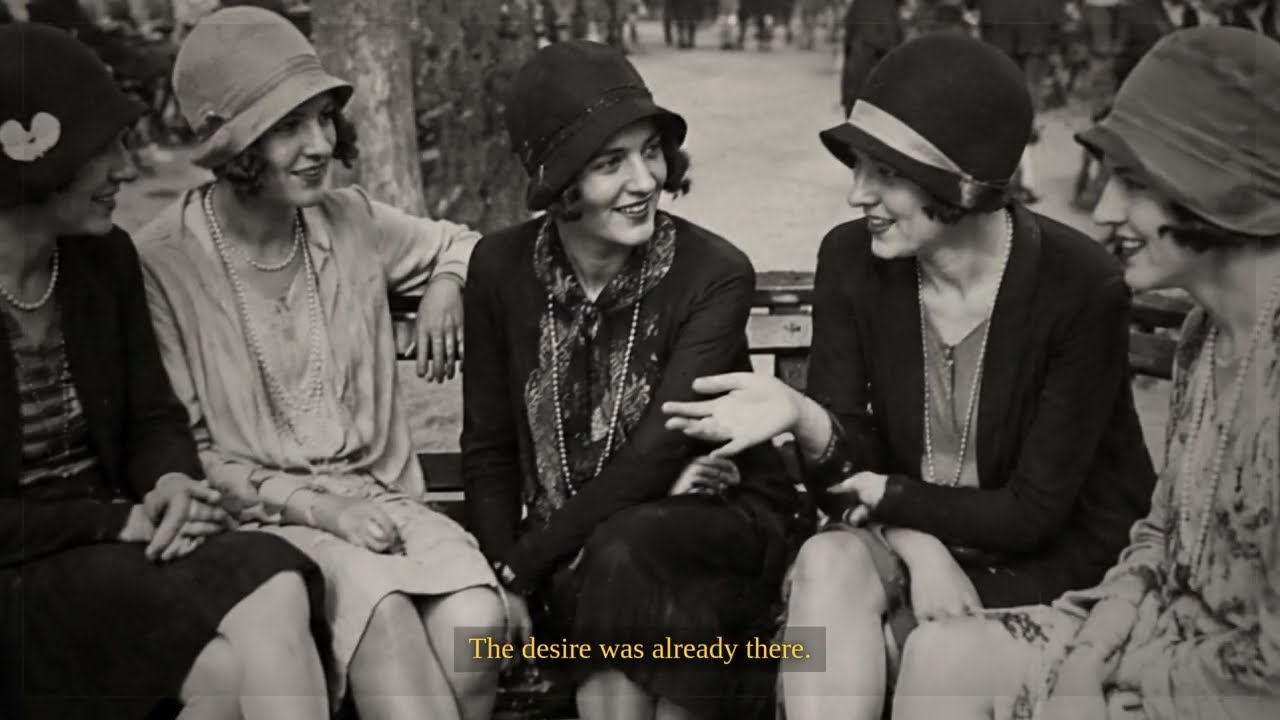
the cigarette women were told symbolized freedom…
the politician you suddenly “felt better about”…
the product review that looked independent…
the news story that seemed neutral…
were all built using the same psychological trick?
Not persuasion.
Not advertising.
Something deeper.
A way of making people believe an idea was theirs—
when someone else had designed the emotional path that led them to it.
More than a century ago, one man figured out how to do this at scale.
He studied fear.
Desire.
Status.
Sex.
Authority.
Crowd behavior.
He learned that people rarely make decisions for the reasons they think they do.
Then he gave corporations and governments a terrifying new weapon:
Don’t tell people what to think.
Make them feel something—
and let them think the conclusion was their own.
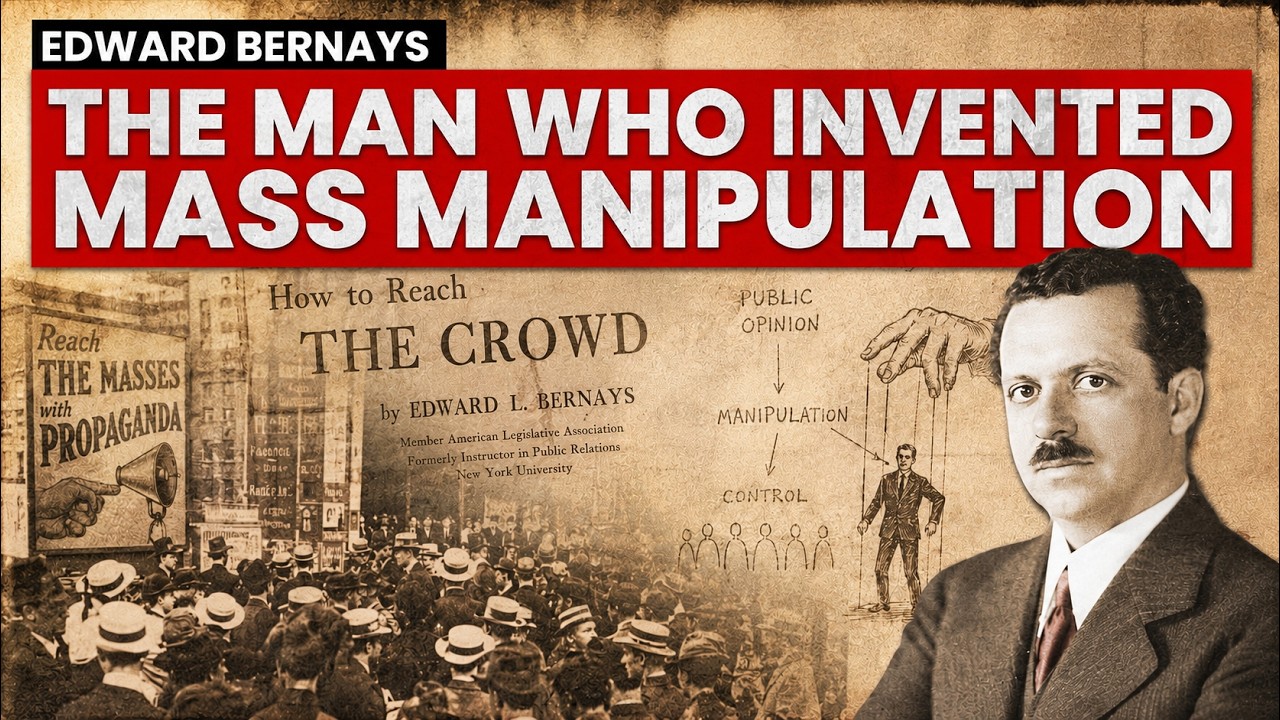
His name was Edward Bernays.
And before the world had influencers, viral marketing, political spin, native advertising, astroturf campaigns, or algorithmic persuasion—
Bernays had already built the blueprint.
The disturbing part?
He never hid it.
He wrote it down.
Published it.
Explained exactly what he believed.
He called it—
the engineering of consent.
And to understand how he arrived there, you have to begin with the man whose ideas haunted almost every part of Bernays’ career.
Sigmund Freud.
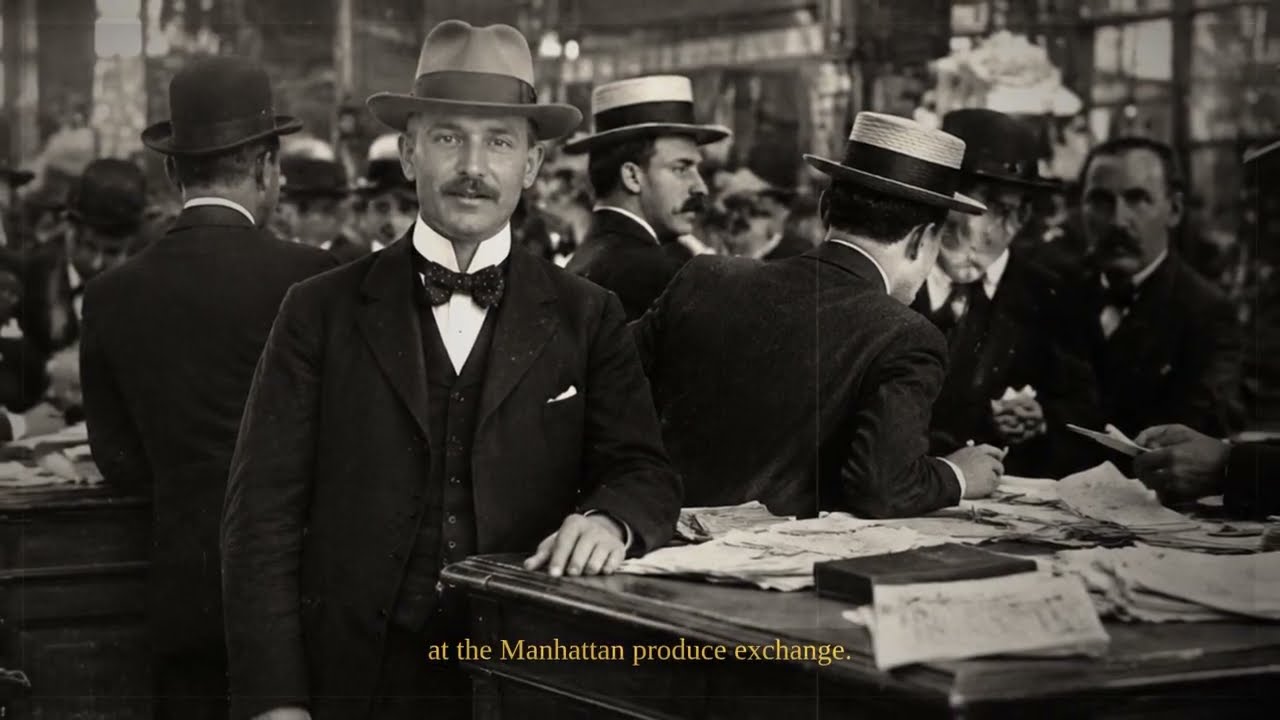
Edward Bernays was born in Vienna in 1891.
His connection to Freud wasn’t distant.
It was almost bizarrely close.
Bernays’ mother, Anna Freud Bernays, was Sigmund Freud’s sister.
His father, Eli Bernays, was the brother of Freud’s wife, Martha.
Meaning Freud was Bernays’ uncle through both sides of the family.
The ideas that would later redefine advertising—
the unconscious mind,
hidden desire,
irrational impulses—
were not just academic theories Bernays discovered as an adult.
They were part of the intellectual world surrounding his family.
When Edward was still a child, the family moved to New York.
He later attended Cornell University and graduated in 1912 with a degree in agriculture.
Agriculture.
Not psychology.
Not communications.
Not politics.
Nothing about his formal education suggested he would become one of the most influential manipulators of mass opinion in modern history.
Then he began discovering something he found far more interesting than agriculture.
Meaning.
How do you change what something means?
Not the product itself.
Not the facts.
The meaning wrapped around it.
One of his first great lessons came from a controversial play.
The play was called Damaged Goods.
It dealt openly with syphilis.
At the time, respectable New York society considered the subject almost untouchable.
Promoting the play directly would have created scandal.
So Bernays did something different.
He changed the frame.
He didn’t sell the play as entertainment.
He sold it as public health.
Doctors.
Clergymen.
Prominent citizens.
A sponsorship committee.
Suddenly, attending the controversial production didn’t mean you were seeking scandal.
It meant you were being socially responsible.
The content hadn’t changed.
The audience’s relationship to it had.
That was the revelation.
You don’t always need to change the thing.
Change what the thing represents—
and people will change their behavior themselves.
Bernays moved into theatrical publicity.
But then the United States entered World War I.
And Bernays was about to see persuasion practiced at a scale far beyond anything commercial advertising had attempted.
The United States entered the war.
President Woodrow Wilson faced a difficult problem.
Large parts of the American public had been skeptical of involvement in a European conflict.
The government needed support.
Not reluctant obedience.
Enthusiasm.
The Committee on Public Information was established under journalist George Creel.
Its mission was mass persuasion.
Posters.
Pamphlets.
Speeches.
Films.
Newspapers.
Volunteer speakers known as Four Minute Men delivered short patriotic speeches in movie theaters around the country.
Bernays worked within this wider propaganda effort.
And he watched something extraordinary happen.
Millions of people could be emotionally organized around an idea.
“Make the world safe for democracy.”
Simple.
Moral.
Powerful.
Whether an individual understood every geopolitical detail of the war was almost irrelevant.
The phrase gave people a story.
A reason.
An identity.
When the war ended, Bernays traveled to the Paris Peace Conference with the American delegation.
He saw Wilson greeted by enormous crowds.
To Bernays, the lesson was obvious.
If mass persuasion could mobilize a population during war—
why should the technique disappear during peace?
If you could attach emotion to a political cause—
you could attach emotion to soap.
To cigarettes.
To breakfast.
To a corporation.
To a president.
To almost anything.
So Bernays returned to America and helped build a profession.
Except he needed a new name.
Because “propaganda” was becoming ugly.
He chose something much friendlier.
Public relations.
In 1919, Bernays began working with Doris Fleischman.
Journalist.
Writer.
Later his wife.
And by many accounts, a crucial intellectual and professional partner whose role has often been overshadowed by Bernays’ fame.
Together they developed campaigns for corporations, entertainers, politicians and institutions.
Bernays began describing himself as a “counsel on public relations.”
That title was brilliant.
It sounded respectable.
Neutral.
Almost civic.
But what Bernays was really doing was applying psychology to mass behavior.
He pulled ideas from Freud.
From crowd psychologist Gustave Le Bon.
From Wilfred Trotter’s ideas about herd instinct.
From Walter Lippmann’s work on stereotypes and mediated public opinion.
And Bernays reached a conclusion that would define everything he did:
People are not primarily rational.
They are driven by hidden motives.
Social pressure.
Fear.
Desire.
Status.
Identity.
If you want to influence behavior—
facts are often not enough.
You must connect your client’s goal to something deeper.
Then, in 1923, Bernays published Crystallizing Public Opinion.
Five years later came the book that made his philosophy impossible to misunderstand.
Propaganda.
And the opening argument was startling.
Bernays declared that the conscious manipulation of the habits and opinions of the masses was an important part of democratic society.
He described the people performing that manipulation as an—
“invisible government.”
He wasn’t warning readers.
He was explaining the system.
To Bernays, democracy did not mean leaving public opinion untouched.
Quite the opposite.
He believed modern societies were too large, too complicated and too irrational to function without organized guidance.
Someone had to shape the crowd.
The only question was who.
And companies were already paying him to find out.
One of them sold bacon.
Beech-Nut had a problem.
Americans were beginning to eat lighter breakfasts.
Toast.
Coffee.
Juice.
That wasn’t ideal if your company wanted to sell more bacon.
A normal advertising campaign would say:
“Buy more bacon.”
Bernays thought that was crude.
Instead, he approached a physician associated with the company and asked whether a heavier breakfast might be better than a light one.
The doctor agreed.
Then thousands of physicians were contacted.
The responses were turned into publicity.
The story reaching the public was no longer:
“A bacon company wants you to buy bacon.”
It became:
“Doctors recommend a hearty breakfast.”
Authority had entered the room.
And once a hearty American breakfast became associated with health—
what appeared naturally beside the eggs?
Bacon.
Bernays had changed the product from indulgence—
to medical recommendation.
That was his genius.
Never stand behind the product and shout.
Stand somewhere else entirely.
Find an expert.
Create a social conversation.
Let newspapers carry the message.
Make the audience believe they discovered the conclusion themselves.
But bacon was harmless compared with what happened next.
Because Bernays was about to take one of the most powerful social movements of the era—
women’s liberation—
and attach it to cigarettes.
American Tobacco wanted more female customers.
Women smoked, but public smoking by women was still stigmatized.
The problem wasn’t simply desire.
It was social permission.
George Washington Hill of American Tobacco wanted that barrier destroyed.
Bernays consulted psychoanalyst A.A. Brill.
What did cigarettes mean psychologically?
Brill suggested that cigarettes could symbolize male power.
Authority.
Independence.
If women smoked publicly, the act might be framed as rebellion against male control.
Bernays immediately understood the opportunity.
He didn’t need to sell cigarettes.
He needed to sell liberation.
Easter Sunday.
New York.
The Easter Parade.
Bernays arranged for a group of fashionable young women to walk publicly while smoking cigarettes.
The press had been tipped off.
But the corporate machinery remained hidden.
The event was framed as a feminist protest.
The cigarettes received a new name.
“Torches of Freedom.”
Think about the transformation.
A commercial tobacco product—
became a political symbol.
A woman lighting a cigarette no longer looked like a customer helping American Tobacco expand its market.
She could look like someone asserting independence.
The company disappeared.
The meaning remained.
Newspapers covered the event.
Photographs spread.
And the taboo weakened.
The brilliance of the campaign is also what makes it so disturbing.
Bernays took a genuine movement for freedom—
and connected it to a product that caused addiction and disease.
He never needed to say:
“Smoking makes you free.”
He created a scene in which the audience could arrive at the association themselves.
That technique would appear again.
And again.
And again.
Dixie Cup wanted Americans to stop sharing drinking cups.
Bernays helped turn reusable communal cups into symbols of contamination.
He created an organization with an authoritative-sounding name to promote sanitary dispensing.
The campaign didn’t look like:
“Buy Dixie Cups.”
It looked like:
“Protect yourself from disease.”
Ivory Soap wanted deeper emotional loyalty.
Bernays helped organize soap-sculpting contests for children.
Now soap wasn’t merely soap.
It was creativity.
Play.
Childhood.
Lucky Strike had green packaging.
Problem?
Green wasn’t fashionable enough.
So Bernays didn’t immediately change the packaging.
He tried changing fashion.
A major “Green Ball.”
Designers.
Department stores.
Editors.
Decorators.
Thousands of letters and promotional materials.
Create the cultural environment—
and the product fits naturally inside it.
That became one of the defining Bernays methods.
Don’t adapt the product to culture.
Manipulate culture until the product looks inevitable.
And he understood politicians exactly the same way.
Calvin Coolidge had an image problem.
He was widely perceived as stiff.
Cold.
Boring.
How do you advertise a president without making it look like advertising?
Bernays organized a White House breakfast with popular entertainers.
Suddenly newspapers weren’t writing policy analysis.
They were showing Coolidge surrounded by celebrity, humor and warmth.
The product was the president.
The campaign was his personality.
This seems completely ordinary today.
Candidates stage events.
Appear with celebrities.
Eat at diners.
Pose with workers.
Release carefully prepared behind-the-scenes footage.
Every gesture communicates identity.
But in the early era of mass media, Bernays was helping professionalize the idea that a political leader could be packaged.
And then he took his methods into something much darker than breakfast, fashion or presidential image.
Guatemala.
United Fruit Company was extraordinarily powerful in Central America.
Bananas were only part of the story.
Land.
Railroads.
Ports.
Infrastructure.
Political influence.
In Guatemala, the company possessed enormous landholdings.
Then the country’s politics changed.
The dictatorship of Jorge Ubico fell.
Elections followed.
Juan José Arévalo became president.
Then Jacobo Árbenz.
Árbenz pursued land reform.
Large unused estates could be redistributed to landless peasants.
And United Fruit was directly affected.
The company rejected the compensation offered for expropriated property and fought aggressively to protect its interests.
Bernays had already been working for United Fruit.
Now the campaign moved into geopolitics.
The United States was entering the darkest atmosphere of Cold War anti-communism.
McCarthyism.
Soviet expansion.
Fear of communist influence in the Western Hemisphere.
Bernays understood the emotional trigger.
Don’t frame the story as:
“An American corporation is fighting a foreign government’s land reform.”
Frame it as:
“Communism is establishing a beachhead near the United States.”
Journalists received material.
Information bureaus distributed reports.
Reporters were brought to Guatemala.
Narratives about communist infiltration spread through American media.
Meanwhile, powerful people in Washington had connections to United Fruit.
Then came the CIA.
Operation PBSuccess.
Psychological warfare.
Radio broadcasts.
Political pressure.
A small externally backed invasion force.
Árbenz resigned.
The elected government fell.
A new regime took power.
Guatemala entered a devastating period of repression and conflict that would last decades.
Bernays did not command the CIA.
He did not personally order the coup.
But his work for United Fruit helped create a media and political environment in which Guatemala could be represented to Americans primarily through the frame of communist threat.
This is where public relations stops looking clever.
Because when perception changes policy—
people can die.
The stakes are no longer bacon sales.
Or cigarettes.
Or presidential personality.
The story attached to reality can become more powerful than reality itself.
And Bernays understood stories better than almost anyone.
But then he learned something chilling about his own influence.
Germany.
At a dinner in New York, Bernays heard a disturbing report.
Joseph Goebbels—
Hitler’s Minister of Propaganda—
had reportedly kept Bernays’ work in his propaganda library.
Bernays was Jewish.
The tools he had developed to influence mass opinion were now being studied by one of the most notorious propaganda machines in history.
According to Bernays’ later account, the discovery shocked him.
But he treated the problem as one inherent to tools themselves.
Techniques could be used for good.
Or evil.
The method wasn’t necessarily immoral.
The person using it determined the outcome.
And that may be the most unsettling part of Bernays’ worldview.
He believed manipulation could coexist with democracy.
Perhaps even support it.
But manipulation requires a manipulator.
And once you accept that the public should be guided without always knowing it—
another question becomes unavoidable:
Who decides where they should be guided?
The government?
Corporations?
Public relations firms?
Experts?
Political parties?
Who decides what is “good”?
Bernays never fully solved that problem.
Instead, he continued professionalizing the machinery.
By the middle of the twentieth century, public relations was no longer an eccentric experiment.
It was an industry.
Companies employed specialists to manage image.
Politicians employed consultants.
Organizations learned to create third-party groups that looked independent.
Experts became messengers.
Events became news.
News became marketing.
Marketing became identity.
The boundary between information and persuasion began disappearing.
Bernays lived long enough to see much of this transformation.
He died in 1995.
Age 103.
Just before the internet fully detonated the world he had helped create.
He never saw Instagram.
TikTok.
YouTube influencers.
Microtargeted political ads.
Algorithmic feeds.
Sponsored content disguised as personal recommendation.
Synthetic grassroots campaigns.
AI-generated persuasion.
But would any of this have surprised him?
Probably not.
Because the technology changed.
The psychology didn’t.
Open your phone.
Scroll.
Someone is holding a product.
They aren’t saying:
“This is an advertisement.”
They’re saying:
“I’ve been obsessed with this lately.”
Scroll again.
A short political video appears.
It makes you angry before you’ve even processed the facts.
Scroll.
A news article cites an expert.
Who funds the organization that employs the expert?
You don’t know.
Scroll.
A viral movement seems to have appeared spontaneously overnight.
Did it?
Scroll.
Thousands of people suddenly use the same phrase.
Why?
Scroll.
A product becomes part of an identity.
Buy this—
and you’re successful.
Buy this—
and you’re healthy.
Wear this—
and you’re rebellious.
Drive this—
and you’re environmentally responsible.
Support this—
and you’re a good person.
Oppose this—
and you’re part of the enemy.
This is Bernays’ world.
The product is never merely the product.
The idea is never merely the idea.
Everything carries emotional meaning.
And once the meaning is strong enough—
facts become secondary.
That’s exactly what Bernays learned a century ago.
People do not simply buy objects.
They buy identities.
They buy belonging.
They buy social permission.
They buy status.
They buy rebellion.
They buy reassurance.
They buy fear relief.
The genius of modern persuasion is finding the emotion first—
then attaching the commercial or political objective afterward.
The cigarette becomes freedom.
The bacon becomes health.
The banana company becomes national security.
The politician becomes warmth.
The product becomes you.
That is why Edward Bernays matters.
Not because he invented manipulation.
Human beings have manipulated one another forever.
Not because he invented propaganda.
Governments used propaganda centuries before he was born.
His innovation was combining mass media—
psychology—
third-party authority—
social symbolism—
and corporate strategy—
into something systematic.
Repeatable.
Professional.
He helped create a world where persuasion could hide inside culture itself.
And that’s the most powerful form of influence.
The kind you never identify as influence.
Because once you recognize propaganda—
you can resist it.
But if it feels like your own preference?
Your own discovery?
Your own identity?
Your own outrage?
Then the work is already done.
Bernays understood that.
He said it openly.
The public could be engineered.
Consent could be manufactured.
Invisible people could guide visible behavior.
He didn’t consider that a bug in modern democracy.
He considered it part of the machinery.
And more than a hundred years later—
we live inside a persuasion system Bernays could barely have imagined.
Not thousands of newspaper readers.
Billions of smartphones.
Not one national press cycle.
Personalized feeds.
Not one message for everyone.
A different message for each person.
Measured.
Tested.
Optimized.
Delivered at the exact moment an algorithm predicts you’re most vulnerable to it.
Bernays had newspapers.
We have data.
Bernays had press agents.
We have influencers.
Bernays had surveys.
We have behavioral tracking.
Bernays had staged events.
We have viral content.
Bernays wanted to understand the unconscious mind.
Modern platforms record its behavior in real time.
Which brings us back to the question we started with.
The opinion you’re most proud of.
The thing you desperately want.
The brand that feels like “you.”
The political figure you instinctively trust.
The person you instinctively hate.
How much of that began with you?
Nobody can answer that completely.
And perhaps that’s exactly the point.
Edward Bernays’ greatest achievement wasn’t convincing Americans to eat bacon.
Or convincing women to smoke cigarettes.
Or helping United Fruit shape the story of Guatemala.
His greatest achievement was teaching institutions a much more dangerous lesson:
The easiest person to control—
is the person who believes nobody is controlling them.
And the machine built from that idea never stopped.
It simply became invisible.