
The knife went straight into the Duke of Buckingham.
For a moment, George Villiers remained standing.
Then he pulled the blade from his own body.
“Villain!”
He tried to move toward his attacker—
managed only a few steps—
and collapsed.
Within moments, one of the most powerful men in England was dead.
But the truly shocking part came afterward.
His killer became a hero.
People celebrated the man who murdered him.
Poems praised the assassin.
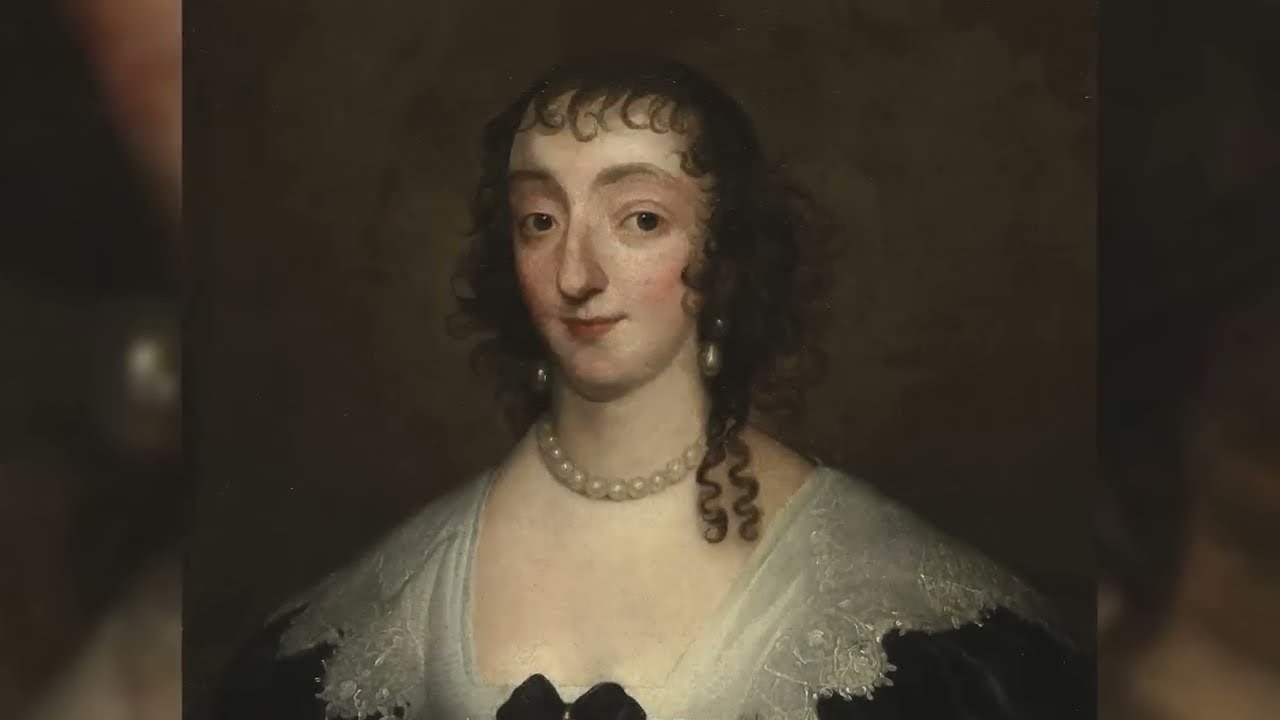
Satirists attacked the dead duke as corrupt, sexually scandalous and cowardly.
Because Buckingham had been hated almost as intensely as he had once been loved by the king.
And centuries later, some believe one tiny children’s rhyme may preserve an echo of that hatred:
“Georgie Porgie, pudding and pie,
Kissed the girls and made them cry.
When the boys came out to play,
Georgie Porgie ran away.”
We teach it to children as playground nonsense.
But what if Georgie was real?
Because historians and folklorists have connected the rhyme with not one—
but two scandalous Georges.
The first slept at the center of royal power, accumulated lovers, enriched his family and became so despised that his assassin was publicly celebrated.
The second secretly married a Catholic widow, abandoned another wife, accumulated enormous debts and mistresses, became grotesquely caricatured for his appetite—
and eventually became King George IV.
Both men fit parts of the rhyme disturbingly well.
But only one question matters:
Who was Georgie Porgie?
And why was everyone crying when he kissed the girls?
The first suspect enters history in 1614.
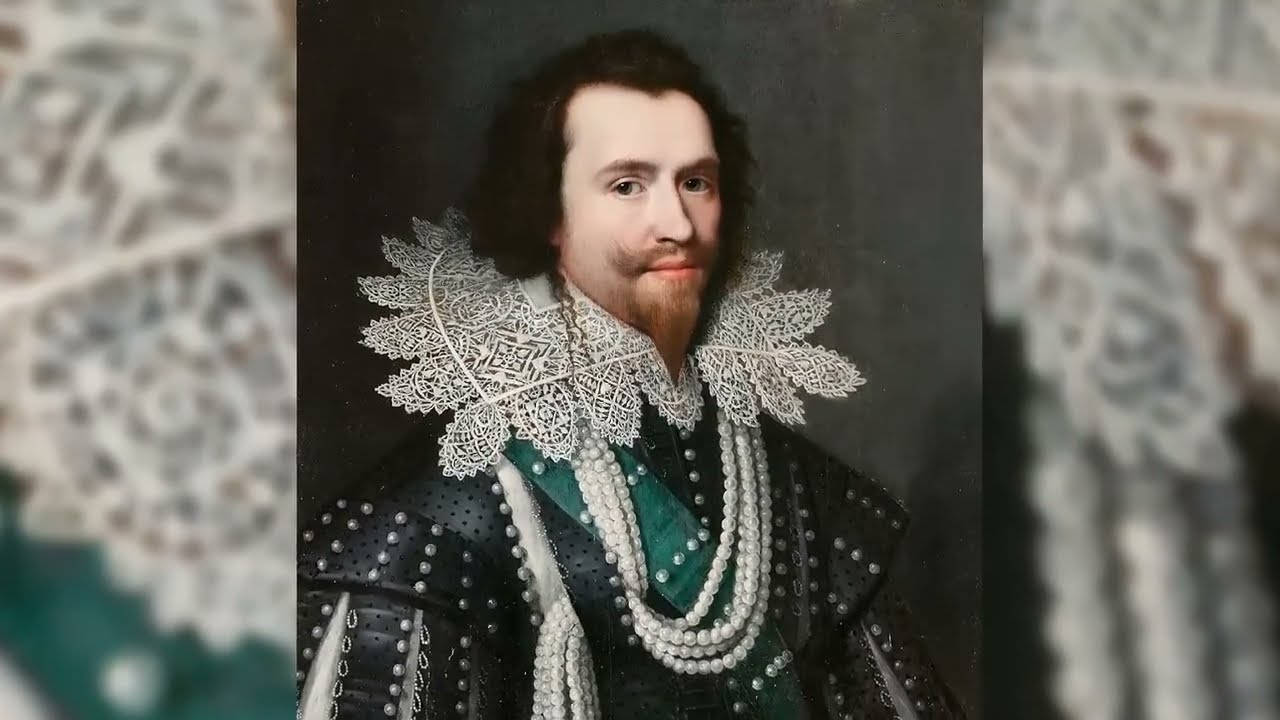
His name was George Villiers.
He was twenty-one years old.
And he was extraordinarily handsome.
Contemporaries described Villiers in almost glowing terms.
John Hacket, later Bishop of Lichfield and Coventry, famously praised his physical appearance and charm.
But Villiers possessed something far more valuable than beauty.
He attracted the attention of King James I.
That changed everything.
James had a succession of close male favorites.
Villiers became the most powerful of them.
The king affectionately called him “Steenie,” a reference to Saint Stephen, traditionally imagined as possessing the face of an angel.
But the surviving correspondence between James and Villiers goes far beyond ordinary political affection.
In one letter, James addressed Villiers with language that sounds astonishingly intimate to modern ears—
calling him his “sweet child and wife.”
Villiers responded with equally intense declarations of love and devotion.
The precise sexual nature of their relationship has been debated, but many historians regard the bond as deeply intimate and likely sexual.
Whatever happened privately—
its political consequences were very public.
Villiers rose with breathtaking speed.
Titles.
Land.
Influence.
Access.
Eventually—
the dukedom of Buckingham.
A young man who had entered the king’s orbit because of his attractiveness became one of the most powerful figures in England.
And that made him dangerous.
Because Buckingham did not simply enjoy royal affection.
He used it.
He became involved in politics.
Patronage.
Diplomacy.
Military affairs.
His relatives benefited.
His enemies multiplied.
To people watching from outside the royal court, Buckingham appeared to have discovered the ultimate shortcut to power:
Become indispensable to the king.
Then make the kingdom pay for it.
But royal politics was only one source of scandal.
There were women too.
Buckingham had affairs.
Some involved married women.
And even his own marriage emerged from circumstances that generated gossip.
His mother, Mary Villiers, wanted an extraordinarily advantageous match for her son.
She set her sights on Lady Katherine Manners.
Katherine was immensely wealthy.
Her father, the Earl of Rutland, did not initially welcome the match.
Then came a suspiciously convenient evening.
Katherine visited the Villiers household.
She remained overnight.
According to the explanation later offered, illness prevented her from returning home.
But reputation mattered brutally in seventeenth-century aristocratic marriage politics.
An unmarried woman spending the night under the same roof as a potential suitor could create exactly the scandal necessary to force a father’s hand.
Whether the situation was deliberately engineered remains uncertain.
But Katherine’s position became compromised.
The marriage eventually happened.
If someone centuries ago wanted a model for:
“Kissed the girls and made them cry”—
Buckingham certainly supplied enough gossip.
But the rhyme contains another accusation.
“When the boys came out to play,
Georgie Porgie ran away.”
And Buckingham’s enemies would have loved that line.
Because by the 1620s, his political reputation was collapsing.
King James died in 1625.
Buckingham survived the transition.
That was remarkable.
Royal favorites often fell when their patron died.
Buckingham didn’t.
Charles I continued trusting him.
But now Buckingham was associated with disastrous military ventures.
One major expedition against Spain descended into chaos.
Poor planning.
Supply failures.
Disease.
Discipline problems.
Drunkenness.
Humiliation.
Men returned home without achieving what had been promised.
And the public knew exactly whom to blame.
Buckingham.
Parliament moved against him.
Impeachment proceedings began.
But Buckingham possessed the one shield Parliament could not easily penetrate.
The king.
Charles dissolved Parliament.
Buckingham survived.
Again.
To his enemies, this confirmed everything they already believed.

He was incompetent.
Corrupt.
Protected by royal favoritism.
Untouchable.
Until August 23, 1628.
Buckingham was in Portsmouth preparing another military expedition.
Among the soldiers nursing grievances against him was John Felton.
Felton believed he had been denied advancement.
He also absorbed the wider political hostility surrounding Buckingham.
Then he approached the duke.
Knife in hand.
One thrust.
Buckingham cried out.
Pulled the weapon from his body.
Tried to confront his attacker.
Collapsed.
Dead at thirty-five.
Felton did not escape.
But the reaction to the murder revealed how profoundly Buckingham was hated.
Instead of universal horror—
some people treated Felton like a patriot.
Verses praised him.
Crowds sympathized with him.
The assassin became, to sections of the public, the man who had removed a national parasite.
Eventually Felton was executed.
But Buckingham’s enemies continued attacking the dead duke.
And this is where Georgie Porgie becomes tempting.
“Pudding and pie” has been interpreted by some writers as sexual wordplay.
“Kissed the girls and made them cry” could evoke Buckingham’s reputation for affairs.
And “when the boys came out to play, Georgie Porgie ran away” fits the accusations of cowardice and failed military leadership thrown at him by hostile satirists.
There is even the intriguing possibility that the verse mocks both his relationships with women and his intimate relationship with James.
It’s almost perfect.
Almost.
Because there is a devastating problem with the theory.
Buckingham died in 1628.
The familiar rhyme does not appear in surviving print until more than two centuries later.
That doesn’t prove Buckingham wasn’t the inspiration.
Nursery rhymes often circulated orally long before anyone printed them.
Documents disappear.
Songs evolve.
Words change.
But two hundred years is an enormous gap.
And the earliest surviving printed form reportedly differs from the version most people know today.
Instead of:
“When the boys came out to play…”
one early version uses girls.
That tiny change matters.
Because suddenly our second George becomes much harder to ignore.
And unlike Buckingham—
this George actually lived much closer to the period when the rhyme appears in print.
Prince George.
The future George IV.
A man whose appetite for women, alcohol, food and money became legendary.
George was born into privilege almost beyond imagination.
He was the eldest son of George III.
Future king.
Future Prince Regent.
Future ruler of Britain.
And when he reached adulthood—
he spent money as if mathematics were a personal insult.
At twenty-one, he received an enormous parliamentary grant and a substantial annual income.
It wasn’t enough.
It was never enough.
George wanted clothes.
Palaces.
Decorations.
Banquets.
Wine.
Entertainment.
Women.
His debts exploded.
His waistline eventually followed.
Political cartoonists had found their dream target.
But before the disastrous royal marriage for which he became infamous—
George fell deeply in love with Maria Fitzherbert.
Maria presented a constitutional nightmare.
She was older than George.
Twice widowed.
And Catholic.
That last detail was especially dangerous for the heir to the British throne.
Yet George wanted to marry her.
So in 1785—
they secretly went through a marriage ceremony.
Romantically, George may have considered Maria his wife.
Legally and constitutionally, the marriage was invalid because he had not obtained the sovereign’s consent required under the Royal Marriages Act.
And his association with a Catholic created additional succession problems.
George now possessed a secret wife—
but still had very public debts.
Eventually the financial crisis became impossible to ignore.
A politically acceptable marriage offered a solution.
Enter Caroline of Brunswick.
His cousin.
His future queen.
And one of the most catastrophically mismatched royal spouses in British history.
George agreed to marry her in 1795.
Their mutual dislike became legendary.
Accounts of their first meeting describe immediate disappointment.
Whatever possibility of affection existed collapsed quickly.
They produced one child—
Princess Charlotte.
Then essentially separated.
George returned to his lovers.
Caroline lived increasingly apart from him.
The future king continued his relationship with Maria Fitzherbert at various periods while maintaining other mistresses as well.
“Kissed the girls and made them cry.”
If you wanted to build a nursery rhyme around a scandalous George—
you could hardly ask for better material.
But the crying girls weren’t George’s only problem.
There was also:
“Pudding and pie.”
Because George’s appetite became political comedy.
He loved extravagant food.
Alcohol.
Banquets.
Luxury.
And over time, his weight became a favorite subject for caricaturists.
George’s body was publicly mocked.
His excess became symbolic.
He wasn’t merely overweight.
To critics, his appearance represented everything wrong with him.
Greed.
Indulgence.
Waste.
Selfishness.
The country could struggle—
George would feast.
Creditors could wait—
George would decorate another room.
His marriage could collapse—
George would find another mistress.
So “Pudding and pie” seems almost suspiciously appropriate.
A rhyme beginning with food—
attached to a prince infamous for overeating.
But again:
Appropriate does not mean proven.
The strongest part of the George IV theory is not a single phrase.
It is the overall caricature.
A spoiled George.
Women.
Tears.
Indulgence.
Ridicule.
Cowardice.
And public hatred.
Then George became Prince Regent.
His father, George III, suffered severe illness and could no longer rule effectively.
The prince stepped into power.
In 1820—
George III died.
The Regent became King George IV.
And suddenly his disastrous marriage returned to destroy him.
Caroline had spent years separated from George.
But separation did not erase her title.
Her husband was now king.
Which meant she was queen.
George hated that.
He wanted her gone.
He sought a divorce.
But there was an enormous problem.
If George publicly accused Caroline of adultery—
his own sexual history could become part of the scandal.
And George’s history was catastrophic.
So the government pursued an extraordinary political mechanism:
The Pains and Penalties Bill.
It was designed to dissolve the marriage and strip Caroline of her status.
Instead—
the affair turned Caroline into a popular symbol.
Crowds rallied behind her.
George became even more hated.
The king who had spent years pursuing women now wanted his estranged wife publicly disgraced for alleged sexual misconduct.
The hypocrisy was impossible to miss.
The bill ultimately failed politically and was withdrawn.
George still refused to accept Caroline.
Then came his coronation.
July 19, 1821.
Caroline attempted to enter Westminster Abbey.
She was denied entry.
Imagine the humiliation.
The wife of the king—
physically excluded from her husband’s coronation.
Crowds watched.
Doors closed.
Caroline was turned away.
Within weeks—
she was dead.
She had become ill soon after the coronation.
Rumors inevitably followed.
Poison.
Murder.
Royal revenge.
There is no solid evidence establishing that George poisoned her.
But public suspicion reveals how poisonous their relationship had become.
Now read the rhyme again.
“Georgie Porgie, pudding and pie,
Kissed the girls and made them cry…”
Suddenly George IV seems almost impossible to ignore.
The glutton.
The womanizer.
The husband who humiliated his wife.
The prince mocked relentlessly by cartoonists.
The king whose private appetites became public entertainment.
And unlike Buckingham—
George IV died in 1830.
The rhyme appears in print soon afterward.
Chronologically, the fit is much tighter.
But then comes another complication.
The earliest known printed wording doesn’t perfectly match the modern rhyme.
And that tells us something important about nursery rhymes.
They mutate.
A child hears a verse.
Repeats it incorrectly.
Another child changes a word.
A parent adds a line.
A printer chooses another version.
A playground invents an action.
Decades pass.
Eventually everyone assumes the newest version is ancient.
That makes tracing the origin extraordinarily difficult.
Suppose Buckingham inspired an early political verse in the 1620s.
Could it have survived orally?
Yes.
Could its meaning have been forgotten?
Yes.
Could later generations have reshaped it until it accidentally began resembling George IV?
Absolutely.
Now reverse the theory.
Suppose the rhyme developed around George IV.
Could later historians notice that George Villiers also fit the words—
and retroactively attach him to it?
Also yes.
Or perhaps neither man had anything to do with it.
That possibility is far less exciting.
But historically—
it may be the safest.
Nursery rhymes do not owe us secret meanings.
Sometimes words exist because they rhyme.
“Porgie.”
“Pie.”
“Cry.”
“Play.”
“Away.”
The rhythm works.
Children remember it.
That’s enough for a verse to survive.
But the Georgie Porgie mystery remains compelling because both candidates embody something larger than the rhyme itself.
George Villiers shows us the dangerous politics of royal favoritism.
A beautiful young man rises because a king loves him.
Power follows intimacy.
Family follows power.
Military disasters follow political ambition.
Public fury follows failure.
Then—
a knife.
George IV shows us a different kind of royal corruption.
A prince born into extraordinary privilege.
Money disappearing.
Mistresses multiplying.
A secret marriage.
A disastrous public marriage.
A humiliated wife.
A population turning its ruler into a joke.
Both men became caricatures.
And nursery rhymes thrive on caricature.
You don’t need a biography.
You need four lines.
Georgie likes women.
Georgie makes them cry.
Georgie indulges himself.
Georgie runs away.
That is how complicated history becomes folklore.
But there is something even more revealing in the possibility that the rhyme refers to both men.
Perhaps “Georgie” accumulated meaning.
One scandalous George becomes attached to the verse.
Then another appears.
People recognize the resemblance.
New associations form.
Words change.
The rhyme becomes a container.
Buckingham’s sexuality.
George IV’s gluttony.
Royal cowardice.
Female suffering.
Political satire.
Different centuries collapsing into the same childish rhythm.
That would explain why attempts to identify one definitive Georgie become so frustrating.
We may be searching for a single man—
inside a rhyme that evolved through generations.
And that brings us back to Portsmouth.
August 23, 1628.
Buckingham is bleeding.
The knife has entered his body.
He turns toward his attacker.
“Villain!”
Then collapses.
His murderer becomes a folk hero to some.
Two centuries later—
another George sits on Britain’s throne.
Obese.
Extravagant.
Surrounded by scandal.
Despised by his estranged wife.
Mocked by cartoonists.
And somewhere in Britain—
children begin repeating:
“Georgie Porgie,
Pudding and pie…”
Maybe they are singing about Buckingham.
Maybe George IV.
Maybe both.
Maybe neither.
But if the rhyme really was political satire—
then something extraordinary happened.
Kings died.
Dynasties changed.
Palaces emptied.
Mistresses vanished.
Parliaments fought.
Wars ended.
The scandals that once filled England with gossip became chapters in dusty books.
Yet the insult survived.
Reduced to four lines.
Small enough for a child to memorize.
Catchy enough to cross generations.
And cruel enough that the man inside it—
whoever Georgie really was—
is still running away.