In early 1950s Prague, fear ruled the Czechoslovak capital. Ministers avoided each other on the street, and a knock on the door after midnight could signal the end of a career—or a life. The Communist Party, which had seized control in 1948, was turning on its own leaders. At the center of this storm was Rudolf Slánský, the party’s general secretary and for years one of the most powerful men in the country.
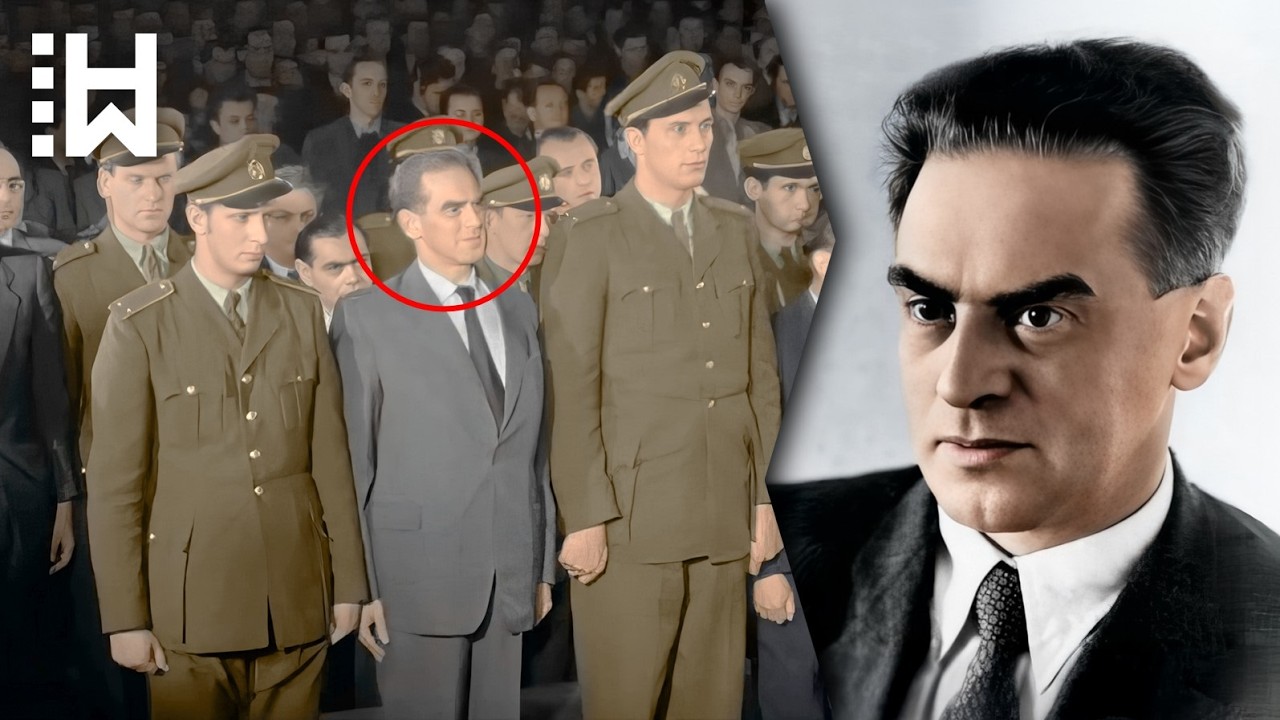
By the winter of 1951, he was under arrest. Within months, his trial would become one of the most infamous symbols of Stalinist terror in Eastern Europe. Slánský was born on July 31, 1901, in Nevěsty, a small village in western Bohemia, then part of the Austro-Hungarian Empire. His father, Šimon, was a Jewish shopkeeper, and the family lived modestly but respectably.
Young Rudolf excelled at school, showing a seriousness that set him apart from his peers. World War I shattered his world. By 1918, the Austro-Hungarian Empire had collapsed, and Czechoslovakia emerged as a new democratic republic. Slánský was only 17 but already searching for meaning in turbulent times.
Like many young men, he was drawn to radical left-wing politics. After the war, he moved to Prague and joined the Communist Party in 1921, committing himself to a cause that demanded total loyalty. Through the 1920s, he built a career as an organizer—methodical, disciplined, and dependable. These were the qualities the party valued most.
At times, he co-led the Communist Party in Czechoslovakia, particularly when party leader Klement Gottwald was hiding in Moscow between 1934 and 1936. For Slánský, Moscow became more than a center of strategy; it was a model state. His loyalty to Stalin’s system earned him trust, and he emerged as one of the party’s most reliable cadres. As fascism rose across Europe in the 1930s, Slánský threw himself into anti-fascist propaganda, following Moscow’s lead.
The Munich Agreement of September 1938 was a breaking point. Britain and France forced Czechoslovakia to cede the Sudetenland to Germany, confirming for communists like Slánský that only the Soviet Union could be trusted as an ally. When German troops marched into Prague in March 1939, the Communist Party went fully underground. Slánský had already fled to Moscow in the autumn of 1938, after Germany occupied the Czechoslovak borderlands.
He went into exile with his wife, Josefa, whom he had married in April 1937, and their young son, Rudolf. They later had two daughters, Naděžda and Marta. Exile in the Soviet Union shaped Slánský profoundly. He and other Czechoslovak communists witnessed the purges, show trials, and constant suspicion that defined Stalin’s regime.
They were shocked by the Molotov-Ribbentrop Pact of August 1939, when Stalin and Hitler divided Eastern Europe between themselves, but they obediently repeated the party line until Germany attacked the Soviet Union in June 1941. During the war, Slánský worked on propaganda broadcasts in Czech, urging resistance at home. He met regularly with Gottwald, his closest political ally. He also suffered personal tragedy: most of his family was murdered in Nazi extermination camps, and his daughter Naděžda was kidnapped in Moscow in 1943 when she was just three months old.
He never saw her again. When World War II ended in 1945, Slánský returned to Prague as a key figure. The Communist Party had emerged as the strongest political force in the country. Slánský became general secretary, effectively the chief of the party apparatus.
Gottwald was the public figure, but Slánský was the organizer in the shadows. Between 1945 and 1948, the communists tightened their grip on Czechoslovakia. In February 1948, when ministers from other parties resigned in protest, the communists seized power. Mass demonstrations filled the streets, and armed militias occupied key points in Prague.
President Edvard Beneš, under immense pressure, accepted a communist-led government. For Slánský, the coup was the culmination of his career. As general secretary, he directed purges against political opponents, supervised propaganda, and worked tirelessly to align Czechoslovakia with Moscow. He was efficient, loyal, and feared.
Yet power in Stalinist systems was never secure. By the early 1950s, purges swept across the Eastern Bloc. In Hungary, foreign minister László Rajk was executed in 1949 after a show trial. In Bulgaria, Traicho Kostov met the same fate.
The pattern was consistent: the accused were forced to confess to imaginary crimes at staged trials, and executions demonstrated vigilance against enemies of the state. In Czechoslovakia, the purges soon turned against party members. The economy was struggling, shortages were mounting, and the leadership needed scapegoats. Despite his long service, Slánský became a target.
He had been too powerful, too central—and his Jewish origin made him vulnerable at a time when Stalin was pushing anti-Semitic campaigns. On November 23, 1951, Slánský was arrested. His fall was dramatic: one day he was the second most powerful man in the country, the next he was in a cell, cut off from family and comrades. His interrogations were brutal.
Beatings, sleep deprivation, and threats against his loved ones broke him down, and twice he tried to kill himself. Eventually, he signed confessions admitting to treason, espionage, and conspiracy—accusing himself of working with Western intelligence, being a Zionist agent, and plotting with Tito’s Yugoslavia. The trial began in Prague on November 20, 1952. Fourteen men were accused, most of them senior communists, many of them Jews.
All the defendants had to memorize statements written for them by their investigators, and they were rehearsed several times before the main trial began. Slánský appeared broken. He read his confession in a flat, emotionless voice, repeating the lies he had been forced to sign. He admitted to espionage, to conspiracy, to trying to destroy socialism from within.
The trial was less about him than about the message it sent: no one was safe, vigilance had to be constant, and Moscow’s line must always be obeyed. The verdicts were announced: eleven people, including Slánský, were sentenced to death. Three received life imprisonment. Inside the party, fear deepened.
If Slánský could be destroyed, then no one was beyond suspicion. In society, the trial shocked many. Some believed the propaganda; others whispered doubts, but open protest was impossible. Only after Stalin’s death in March 1953 did the tide begin to turn.
As de-Stalinization took hold in the following years, doubts grew. By 1963, Slánský was rehabilitated—but long after his trial and after his family had suffered years of stigma. On December 3, 1952, the executions took place in Prague’s Pankrác prison. Slánský, once the tireless organizer of communist power, was hanged alongside his comrades.
His last words were, “I got what I deserved. ” His body was cremated, and his ashes were allegedly scattered on a road behind Prague, leaving no grave. Rudolf Slánský died as a victim of the brutal regime he had once loyally built and served.
He was 51 years old.