The final act of the Third Reich was not confined to the suffocating concrete chambers of the Führerbunker, where Adolf Hitler awaited his self-inflicted demise. As Soviet artillery reduced central Berlin to a smoldering ruin on the morning of April 29, 1945, a desperate and largely forgotten operation was unfolding above ground. Hitler, having just married Eva Braun and dictated his last will and testament, dispatched a series of couriers into the hellish urban battlefield.
Their mission was not to fight, but to flee—carrying the physical documents that would define the Nazi succession and, ironically, become the primary evidence of its collapse for the Allied powers that would soon divide the world.
 The urgency of the situation was absolute. By the 27th of April, the military situation had deteriorated beyond any hope of relief. The remnants of the Ninth Army were encircled south of Berlin, their eleven worn-out divisions unable to break through the Soviet ring.
The Twelfth Army, under Walther Wenck, was equally impotent, its three divisions stalled in a futile attempt to reach the capital. Inside the bunker, morale plummeted as Soviet tanks reached the Wilhelmplatz, the very heart of the government district. Hitler, betrayed by Hermann Göring’s overtures to the Allies and horrified by Heinrich Himmler’s secret peace negotiations, turned his attention to the legacy of the Nazi state, focusing on the two men he still deemed loyal: Field Marshal Ferdinand Schörner and Grand Admiral Karl Dönitz.
The Führer’s last will and testament, dictated to his secretary Traudl Junge, was a political bombshell. It expelled Göring and Himmler from the party, appointed Joseph Goebbels as Reich Chancellor, and named Grand Admiral Dönitz as Reich President. Martin Bormann, Hitler’s private secretary, was designated as the executor of the will.
But these proclamations were worthless if they remained trapped in the bunker. Therefore, Hitler and Borman organized a desperate relay of human messengers, men tasked with breaking through the Soviet encirclement to deliver the documents to their designated recipients. The first group of four men departed at 6 a.
m. on April 29, just as the Soviets launched a massive artillery barrage against the government quarter.
This initial party was led by Major Willy Johannmeyer, Hitler’s army adjutant, who was ordered to deliver a copy of the will to Field Marshal Schörner in Czechoslovakia. He was accompanied by his batman, Corporal Hummer. The second courier was Heinz Lorenz, Goebbels’ deputy chief press secretary, tasked with delivering a copy to Gauleiter Paul Giesler in Munich.
The third was SS Colonel Wilhelm Sander, Bormann’s adjutant, who carried orders for Dönitz in the north. Dressed in combat gear and heavily armed, they slipped out of the bunker, crossing the Tiergarten under fire to reach the relative safety of the Zoo Flak Tower, then the Olympic Stadium, before resting near the Pichelsdorf Bridge, held by a battalion of inexperienced Hitler Youth.
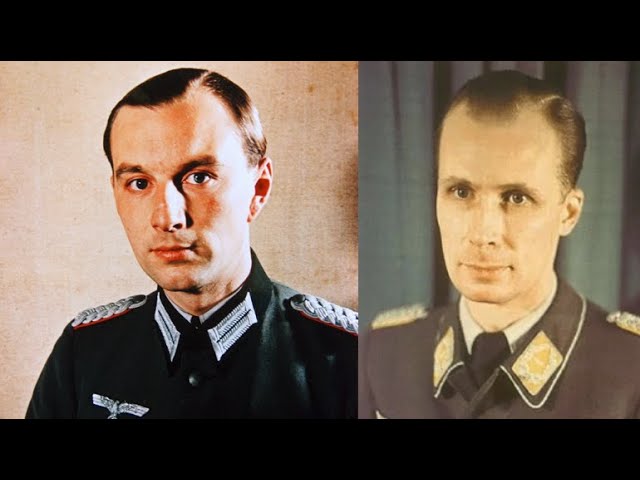
While the first group rested, a second wave of couriers was preparing to leave. Major Baron Freytag von Loringhoven, adjutant to General Burgdorf, Lieutenant Colonel Rudolph Weiss, and Cavalry Captain Gerhard Boldt were granted permission to attempt to reach Wenck’s Twelfth Army. Bormann furnished them with additional copies of the will and covering letters.
 They departed in the afternoon, following the same perilous route. As midnight fell on April 29, a third and final group emerged from the bunker. This party consisted of Colonel Nicolaus von Below, Hitler’s Luftwaffe adjutant, along with his batman and an orderly.
Bormann ordered von Below to deliver the will and messages to Field Marshal Keitel, confirming Dönitz’s appointment as Hitler’s successor.
The journey was a harrowing gauntlet of fire and chaos. The second and third groups joined forces near the Olympic Stadium, resting throughout the day of April 30 while the first group, led by Johannmeyer, attempted to navigate the Havel River by small boat. They reached Wansee Island, still held by elements of the German 20th Panzergrenadier Division.
Using the unit’s radio, they sent messages to Dönitz and Schörner, who both promised to send aircraft for extraction. A Fieseler Storch liaison plane was dispatched by Schörner’s staff, and a flying boat was ordered by Dönitz to land near Peacock Island. However, heavy Soviet fire doomed both rescue attempts.
The Storch was shot at and turned back, while the flying boat, having landed, was forced to take off immediately under a hail of bullets, leaving the couriers stranded.
With the air evacuation aborted, the couriers were left to their own devices. The second group, containing von Loringhoven and Weiss, caught up with the first at Peacock Island, while the third group, led by von Below, crossed the Havel and began heading west on foot. The documents, intended to secure the future of a thousand-year Reich, were now a liability.
In the chaos of the collapsing front, the primary goal shifted from delivery to survival. The men buried, destroyed, or simply abandoned their precious cargo as they sought to evade capture by the advancing Soviet and American forces.
 The fate of these couriers is a stark testament to the randomness of war. Willy Johannmeyer managed to reach his hometown of Iserlohn in North Rhine-Westphalia, where he buried his copy of the will in a waterproof container in his garden. He was arrested by US troops shortly afterward, who recovered the documents.
Johannmeyer survived the war, becoming a company director and dying in 1970 at the age of 54. SS Colonel Wilhelm Sander went into hiding in the US occupation zone under the assumed name of “Pon,” working as a gardener. He was eventually picked up by the US Army, and the documents he carried were also recovered.
Sander died in Munich in 1974. Heinz Lorenz, the deputy press secretary, was arrested by the British and later worked in the West German Parliament. He died in 1985.
The members of the second group experienced even more harrowing ordeals. Baron von Loringhoven and Captain Boldt discarded their uniforms and procured civilian clothing, managing to reach Wittenberg, where they registered at a camp under false names. They crossed the Elbe River by boat and swam across the Mulde River before splitting up on May 12, 1945.
Von Loringhoven reached his family in Leichlingen but was arrested by the US Army and handed over to the British for interrogation. He later rejoined the German military, rising to the rank of Lieutenant General in the Bundeswehr and holding high NATO positions. He died in 2007 at the age of 93.
His companion, Gerhard Boldt, was less fortunate in the immediate aftermath; he lost all hope during the escape and attempted suicide with a dose of morphine. Von Loringhoven forced him to vomit, saving his life. Boldt was eventually reunited with his family in Lübeck but was arrested by the British.
He later wrote a book that served as source material for the 2004 film Downfall. He died by his own hand in 1981.
 Lieutenant Colonel Rudolph Weiss was the unluckiest of the group. He was captured by the Soviets and spent five years in prisoner-of-war and labor camps. He died in a labor camp in Kazakhstan in 1958 at the age of 47.
The third group’s couriers also survived the war. Colonel Nicolaus von Below was arrested in the British sector in 1946. He was unique among the couriers in that he destroyed the documents he carried out of the bunker.
He died in Detmold, West Germany, in 1983, after writing a book about his experiences at Hitler’s side.
In the end, the mission was a strategic failure. None of the couriers delivered their documents to the intended Nazi leaders. Dönitz, Schörner, and Keitel never received the physical copies of the will that would have legitimized their fleeting authority.
Yet, the documents themselves survived. Copies of Hitler’s last will and testament, recovered by the British, the Americans, and the Soviets, now reside in the National Archives of all three nations. They serve as the definitive historical record of the Nazi regime’s final, desperate moments.
Few who read those documents today realize the harrowing journey the couriers undertook to get them out of the bunker, a journey through the burning remnants of Berlin that encapsulates the utter destruction of a regime that had once conquered Europe. The couriers, tasked with preserving the Nazi legacy, instead became the unwitting archivists of its doom, their escape a final, tragic footnote to the Battle of Berlin.