

The silence in that Philadelphia hotel room on August 14th, 1987, was absolute, broken only by the soft ticking of a clock and the shallow, final breaths of a man who had once stood as the unshakeable pillar of America’s most famous comedy family. When Edgar Rosenberg, 62, was found dead from an overdose of prescription medication, he left behind a devastating puzzle. The world was told Joan Rivers’ ambition had driven her husband to suicide, but sealed envelopes and cassette tapes he left behind revealed a marriage, betrayal, and despair that bore little resemblance to the glittering image of success the public had consumed for over two decades.
The aftermath was a waking nightmare. In a moment of searing agony, only weeks after her father’s death, a 19-year-old Melissa Rivers looked directly at her mother and accused her, saying, “You killed Dad.” The accusation cut deeper than any critical review or canceled contract.
 With her husband gone, her mentor Johnny Carson refusing to speak to her, and her network television career in ruins, Joan retreated into a darkened room, placing a cold handgun on her lap, contemplating whether the pain of existence was worth the effort required to continue surviving.
To understand the tragedy that shattered the family, one must first understand the woman before Edgar Rosenberg. Born Joan Alexandra Molinsky June 8, 1933, in Brooklyn, she grew up in a Jewish immigrant household where her father, Meyer, worked tirelessly as a physician while her mother, Beatrice, yearned for the wealth of high society. In that home, Joan was consistently told she lacked the traditional beauty of her older sister, Barbara, and was far too “clever” for her own good.
The constant comparison to societal standards of prettiness festered, creating a deep insecurity that she would later weaponize into her comedy.
Despite achieving a degree from Barnard College in 1954, her family’s primary obsession was securing a wealthy husband for her. To appease them, she married James Sanger in 1955, but the marriage ended in annulment after six months when she discovered he hadn’t been upfront about not wanting children. That swift collapse served as a liberation, allowing her to ignore the conventional script of the 1950s housewife and hurl herself into the unforgiving world of stand-up, where her own father threatened to institutionalize her for her “madness” in pursuing entertainment.
It was a brutal decade of struggle. In the smoky, dim basement clubs of Greenwich Village, she worked as “Pepper January” or “Pepper Miller,” trying to find a place in a male-dominated profession. For ten years, she faced rejection from agents and audiences, enduring brutal critiques and advice to undergo plastic surgery to improve her chances.
She wrote jokes for Phyllis Diller, worked as a scriptwriter for Candid Camera, and wept in the driver’s seat of her car, enduring a relentless baptism of fire that nearly extinguished her dreams.
Her life changed forever on February 17, 1965, when, at 31, with fear making her physically ill, she stepped onto the stage of The Tonight Show with Johnny Carson. She did not perform, but instead talked about her failing love life, the pressure for her to marry, and the trials of being a woman in her early thirties. The laughter she received was explosive and Carson, the reigning king of late-night, took her hand and declared to millions, “You’re going to be a star.”
The phone, silent for so long, began to ring off the hook.
Just as her star began to rise, she met a man who was her polar opposite. In the summer of 1965, she encountered Edgar Rosenberg, a European film producer, 8 years her senior. Born in Germany, he had escaped the Nazi regime and carried a quiet sophistication and composure.
Where Joan was loud and fearless, Edgar was gentle and protective. He never felt threatened by her ambition; instead, he saw her raw talent and dedicated himself completely to building the foundation of her empire, taking over up being her sole manager, overseeing every contract and negotiation with meticulous care.
 This relationship would anchor her career, giving her the strength to sustain the demand of a 1960s and 1970s stand-up superstar, touring The Tonight Show. Their love story became complete on April 1, 1968, when their only daughter, Melissa, was born. Alongside the Gold Records and the sold-out shows, the little family traveled together, creating a bubble of joy for her in the often-toxic entertainment world.
However, Edgar struggled with several internal demons—he had battled depression for years and survived a major heart attack in the mid-1980s, adding a load of strain he kept largely hidden from the public.
The precarious pressure of Edgar’s illness collided when Joan’s star reached its highest point. In 1986, the newly formed Fox television network approached her with a $15 million contract offer to host her own late-night show, pitting her against The Tonight Show and Johnny Carson. For a woman who had absurd fear of the phone going silent if she stopped working, the chance to leave the shadow of her mentor and become an empire of her own was impossible to reject.
She accepted the deal but made the near-fatal mistake of following her lawyer’s advice in secrecy.
When she broke into the news with Johnny Carson herself, the billionaire famously felt deeply betrayed, hung up the phone, and banished Joan from his show and his life for the next 19 years. The doors that had opened for her, being the first and only woman guest host, now slammed shut, leaving Joan on the outside. Yet this hurtful conflict was a child’s game’s pain compared to the battle she faced within the Fox boardroom, where the management, including mogul Rupert Murdoch, regarded her with a ruthless suspicion.
Edgar took the position as executive producer of the The Late Show as the network was unstable and crippled by low ratings. He was a man who was already struggling from a nervous breakdown and a heart, and now he was exposed to ruthless executives and extremely abrasive politics. He slowly began to break under the massive stress that came with his wife’s career, filled with screaming matches and unexpected negotiations.
He lost his natural composure, blaming himself for the failing show, and retreated into a paranoid depression that began eating away at the core of his identity.
In May of 1987, the spiritual and moral collapse reached its zenith when Fox executives summoned Joan alone, shutting the door on Edgar. They coldly said he was being discharged for incompetence and was forbidden from ever entering the studio again; if she wanted to keep her network show, she had to continue with him out of the picture. Joan, whose loyalty was anything but surface-level, refused to abandon him and let her contract collapse.
On the chain of consequences, the Fox network fulfilled their threat, and The Late Show was officially canceled.
 A short several months after the cancellation, overcome with despair and deep feeling of failure, Edgar flew to Philadelphia. There, in that sterile heritage hotel room, he chose to end the battle. He left behind two envelopes that contained the family’s financial paperwork, meticulous as she was always, and cassette tapes.
The recordings did not contain lengthy justifications, but rather a final, colder blow: he didn’t have a suicide note, he had an accounting; the tapes were practical instructions. Yet for Joan, the loss was total and it physically and mentally collapsed the world around her.
At 54, Joan was a widow, but also a woman without a network, she had been trapped in legal dramas, and was stripped of the safety net she had built in that financial ruling. The public, unaware of Edgar’s mental illness or the boardroom pressures, divided her nightmare, turning her into a figure of emotional manipulation and obsession—the ambitious tally-centered wife pushing his fragile husband. Worse than any public criticism, the backlash crashed into her own home because Melissa, too young and myself in grief, refused to speak to her mother, blaming the tragedy entirely on Joan.
Grief came in a complete wave. Forced to sell the Bel Air home to cover mounting legal fees and debts from the collapse, she moved into a small environment in New York. In that darkness, her own life reached a final crisis point.
In a moment Jan revealed with grief, she was complete on her uniform, with the entire world seeming to darken, she saw the only logical end. “You gotta remind yourself you have the courage to pull the trigger,” she recalled of this moment, where she, alone, resolved it to be worth deciding to end it all. But she didn’t.
The moment she felt the cold gun metal on her lap was the moment she ultimately chose a different path—a path that had nothing to do this with revenge or fame, but with survival. Joan came back to stand as she had done in the 1960s, with a relentless panic. She won’t take on every job that came her way, from reprising bar shows in communities straightening into clubs to performing on cruise ships.
While he took it hard financially, it was through these grime-laden stages she found a salvageable tether back to her purpose.
Her sheer work ethic delivered her to a rebirth through a new platform in 1989, with a daytime talk show, The Joan Rivers Show. She approached it with a new version of journalism and wit. Her way connected with audience; it wasn’t long until, in 1990, she was awarded a Daytime Emmy award for Outstanding Talk Show Host.
It was a public validation that proved her worth beyond the impact of the Fox tragedy, and it was a triumph that she could not let be undervalued. The Emmy is still a trophy she called “the biggest achievement” of her television career.
 But television was not the end of income; the money came from a world she imagined would never host her, television shopping. In 1990, she at first was belittled for designing and hawking jewelry on QVC. Colleagues considered it a career-ending move, but she returned to QVC every time to pitch jewelry starting at $20.
Her products sold over a billion dollars in revenue. She wasn’t repaying debts; the “retail queen” had built a retail empire when no one thought her career would be further to climb, con or financially able to be standing.
Then she changed the very face of pop culture at 61 years old by taking the mic on the red carpet for E!. When she asked the question of “Who are you wearing?” to the actors, the world instantly changed.
Her style and outspokenness switched the mundane stride of the red carpet into a stage for culture: obsessive fashion. Seated beside her, mother and daughter, Melissa and Joan, their relationship were dueling and honestly HotTagged, carried along the monster complex of red carpet interview humor; they transformed the industry economy. Yet, a deeper intimacy – and the silence would still hurt.
Back inside her mansion, with five stories of chandelier gold and Mirò paintings on the wall, the setup seemed hers undesired. Hidden inside her room was a wall of note cards, organized by the title of her pain. One file said “death,” one “loneliness,” one “Edgar Resurrection.”
She kept a calendar literally filled blank, because the empty dates terrified her in the solitary circumstances. No matter the money, the glitz, or the achievement, the pearl palace felt echo-like in absence of her sympathetic, best friend. Even at 80-years-old, she persisted in working 300 nights a week of stand-up just to avoid staying within those silent walls.
That ferocious drive kept her in the stage until her final moments. On the morning of August 28, 2014, Rivers went into the Yorkville Endoscopy clinic in Manhattan for a routine throat endoscopy. She was expected to go home that afternoon, but the procedure turned dire when her sedative, propofol, caused a dramatic drop in blood oxygen.
The doctors failed to manage her airway, neglecting an emergency response as her heart rate fell. The life support was pulled six days later, on September 4, 2014. At 81, she’d left a schedule of bookings that ran to the last year of her death.
She left no space for the acknowledgment of her heart, but it was a house; she made her legacy with trailblazing presence. The tragic truth, the tapes, the aftermath—was her spark. Joan had loved a man who believed in her—even if his own darkness blinded him.
Her life was never a fairy tale. To the 31-year-old woman abandoned by the industry and a 54-year-old widow with a loaded gun in her lap, the rest was the lesson: the final act of survival is declared that rebuilding yourself in the lifetime after others think the story is over is the testament to your resilience.

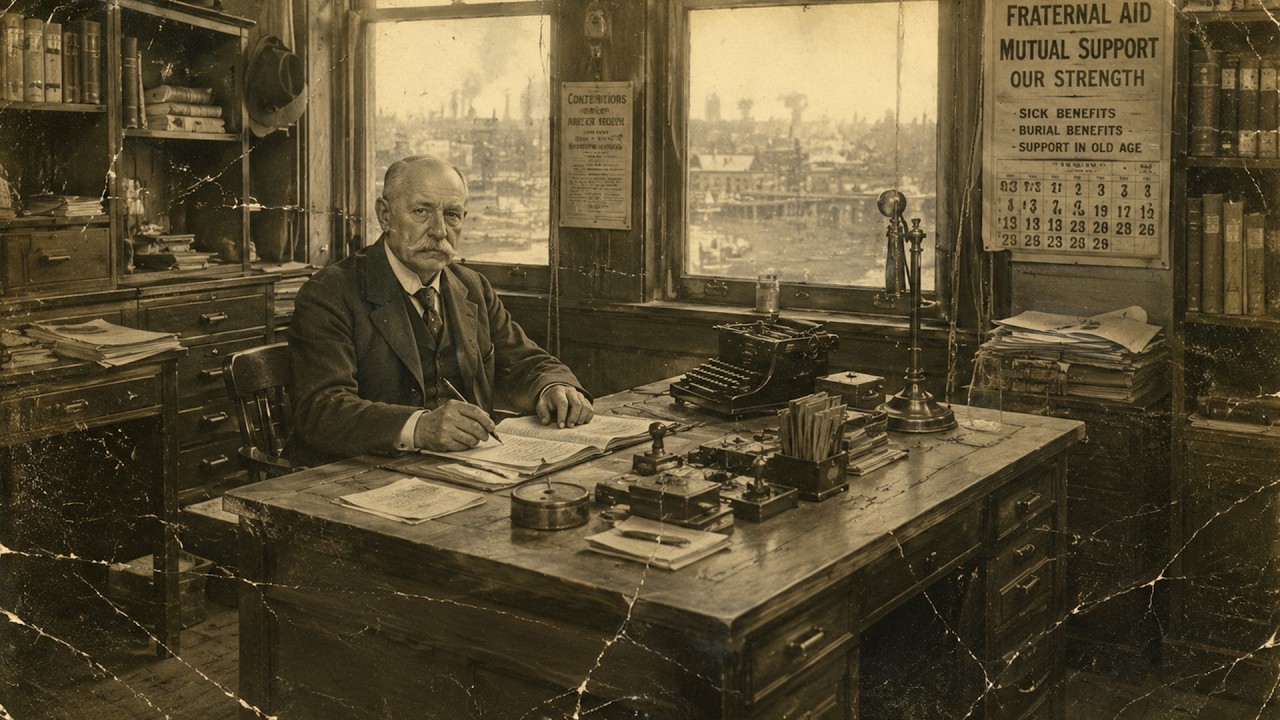

 But by 1916, US Rubber had a problem unrelated to its core manufacturing. Over the preceding decades, the company had absorbed roughly 30 separate shoe and boot manufacturers scattered across New England, each retaining its own name, its own factory, and its own inconsistent quality. A retailer in Ohio might carry three different US Rubber shoe lines without ever knowing they shared a single owner.
 That price point put Keds within reach of nearly every American household at a moment when a national brand name still meant something new to most of the country. The fourth pillar was distribution, and here US Rubber’s scale did the heavy lifting. Keds moved into department stores, general stores, and sporting goods dealers across the country simultaneously, backed by the same national sales infrastructure that already carried US Rubber’s tires and industrial goods into every region of America.
 Nike would not exist for another two decades. For a stretch of years running roughly from the late 1940s through the mid-1960s, if an American child owned a pair of canvas sneakers, there was a real chance those sneakers were Keds. Not because the shoe had been reinvented, but because nothing else had yet arrived to challenge it.
 Sold alongside comfort and children’s footwear rather than athletic and streetwear lines, the brand found itself in the aisle where the categories’ growth and cultural relevance were now concentrated, but not as a participant. The shoe that had once been distributed everywhere simultaneously now found fewer and fewer shelves where the customers who define sneaker culture were actually shopping. In 2012, Stride Rite’s parent company, Collective Brands, the same conglomerate that also owned Payless Shoe Source, was broken apart and sold off in pieces.
 The brand that had outfitted generations since the Coolidge administration was gone, not with a bang, but a corporate flip.
 By 1930, in Louisville, they opened store #1. General Shoe began building a network that gave it unprecedented control over how its inventory moved. They didn’t rely on the chain, they didn’t care.
 It saved the company, but ignored the shoe’s industry. For a decade, while they dismantled, the tide went out on the “dress shoe.”
 Two years later, spring 2004. New hal pen—Other. They looked at the dismissed Jarman, with its loyal two-decades-honest trade, but they saw the entire chain’s spirit as “dead” because the “dress up” generation had aged.
 Her family traced its roots to the old Dutch patricians, and her marriage into the Astor fortune—fur trading and real estate empire—had solidified her place in the firmament. Her power was not derived from walls or armed guards, but from the simplicity of a velvet rope drawn around precisely 400 names. Her ballroom at 350 Fifth Avenue was the epicenter of this universe, a space where a coveted invitation could make a family, and a silent snub could break a fortune.
 The old queen was faced with the one choice she could not have anticipated. On a chilly afternoon not long before the ball, a coach pulled up to the stone towers of the Vanderbilt castle, and a footman delivered a single, pristine card. It was not a message from Caroline, but her calling card.
 The fall of the mansion district, ironically, was sealed by the success of the very culture it had invented.
 Alva’s own aristocratic influence was usurped by the sheer excess of her own financial class, that got too big, too many people, and eventually fiscal depression bankrupted the old families. Modern New York real estate is not built for a few, but for the manyhundreds of condos in a tower. But there is a sense that Fifth Avenue, as it stands today, is a museum of the old power clash.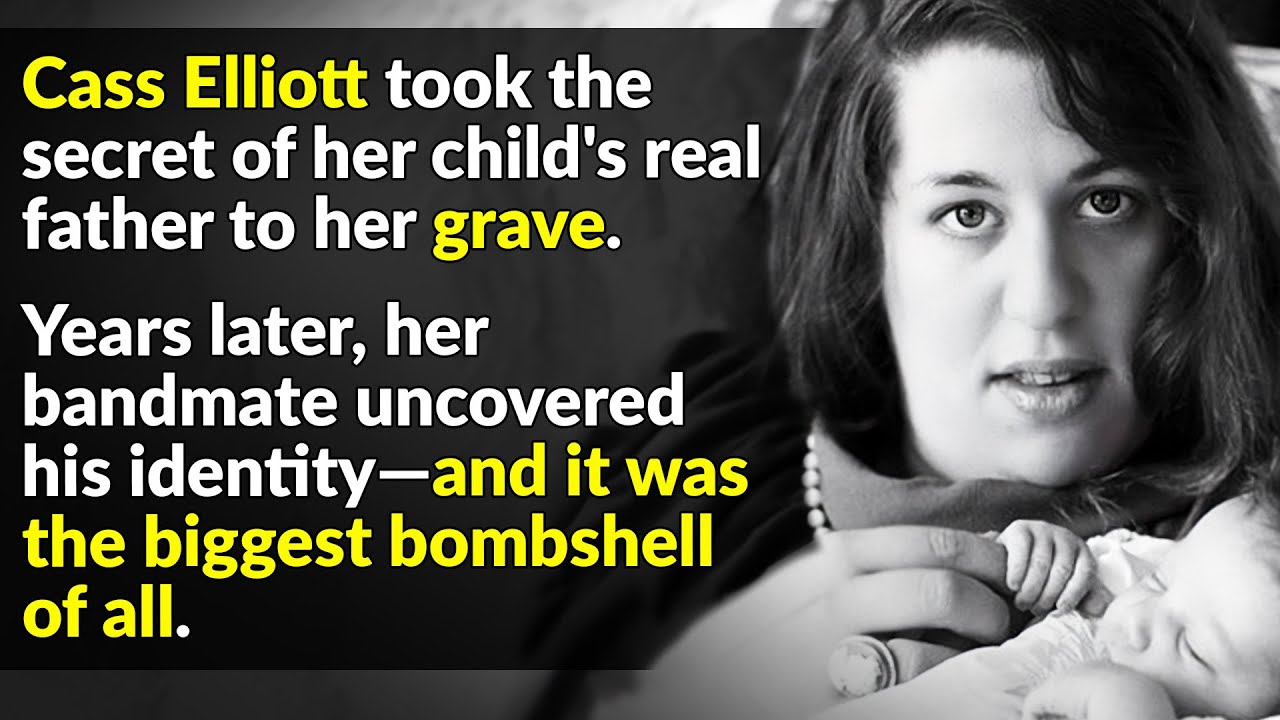
 It was this persona that would eventually conquer the folk-rock world, albeit at a devastating price.
 Once she was in the group, the music was golden. “California Dreamin'” and “Monday, Monday” became the soundtrack of the decade, with Elliot’s vocals anchoring the massive, layered sound. But the degradation didn’t cease; it infiltrated the lyrics.
 The Caesar’s Palace cancelled the remaining 3 weeks. She was humiliated.
 A cruel and visceral urban legend sprang that she died choking on a ham inked sandwich. This was a grotesque lie. It preyed on his lifelong struggles with her weight and public persona, which had been mocked.